Pete Anderson interviewed Jesse over at StyleForum. Seriously, go check it out. It’s a great read. There’s a pretty funny story about some G. Lorenzi scissors, and some “sneak peeks” on what’s to come in Season 2. 
Also, if you can get to the Bay Area, or already live there, you should definitely go to StyleFourm’s 10th Anniversary Party, which is co-sponsored by Put This On. There’s going to be a cocktail screening of O’Mast (featuring a special pre-show PTO screening), followed by a Q&A session with the director, Gianluca Migliarotti, as well as vendor showcases with a ton of great companies (LeatherSoul, A Suitable Wardrobe, Epaulet, Jack/Knife, and many, many more). There will also be dinner, drinks, music, and lots of really awesome, friendly people - including our own Jesse Thorn. You can get more information about it here. 

Pete Anderson interviewed Jesse over at StyleForum. Seriously, go check it out. It’s a great read. There’s a pretty funny story about some G. Lorenzi scissors, and some “sneak peeks” on what’s to come in Season 2. 

Also, if you can get to the Bay Area, or already live there, you should definitely go to StyleFourm’s 10th Anniversary Party, which is co-sponsored by Put This On. There’s going to be a cocktail screening of O’Mast (featuring a special pre-show PTO screening), followed by a Q&A session with the director, Gianluca Migliarotti, as well as vendor showcases with a ton of great companies (LeatherSoul, A Suitable Wardrobe, Epaulet, Jack/Knife, and many, many more). There will also be dinner, drinks, music, and lots of really awesome, friendly people - including our own Jesse Thorn. You can get more information about it here

The Custom Shirts Series, Part II: How Should a Shirt Fit?

Most men can find a well-fitting shirt off the rack. The question is just how well fitting they want it. SpooPoker, a member at StyleForum, posted a photo of himself in his made-to-measure pink Charvet shirt some years ago. I think it’s a good example of what a truly well fitting shirt should look like. Let’s talk about each dimension of a shirt’s fit in turn:

  • Shoulders: How cleanly a shirt fits will be affected by whether your shoulders curve forward or backward, and whether they slope. More often than not, they do, and usually one will curve or slope more than the other. This will create wrinkling around the collar bone or, sometimes, the rib cage. To ameliorate this, a shirtmaker has to cut the shoulders and yoke correctly in order to account for your body’s nuances.  
  • Chest: A shirt’s chest should fit cleanly, but it should also be somewhat full in order to allow movement. There shouldn’t be any pulling under the armholes or around the front’s buttons. 
  • Waist: Whether you have the waist taper in or not depends on your build. One thing is for certain, however - your shirt should flatter you when you’re standing up or sitting down. Many men opt for overly slim fitting shirts, only to realize that their shirts have unsightly pulls across the stomach when they’re seated. This should be avoided.
  • Sleeves: Correctly set sleeves should come down to the webbing between your thumb and index finger when the cuffs are unbuttoned. When the cuffs are buttoned, the sleeve should sit a little bit below your wrist. By having some extra material in the length, you’ll ensure that your sleeves won’t ride up your arm when you extend them. Above are two photos from Men’s Ex that illustrate this well. 
  • Neck: If you button your shirt all the way up, you should be able to comfortably slip just your index finger between your neck and collar. Note that this is only after a few washes, however. Most shirts fit a bit looser in the neck when they’re new, so that they can account for shrinkage. 
  • Collar: When your collar is buttoned up, the collar points should touch your chest. If it doesn’t, your collar is too short. 
There are two excellent videos that discuss some of these points further. The first is Jesse’s visit to CEGO Custom Shirtmaker in New York City. The second is the Wall Street Journal’s interview with David Hamilton. Be sure to watch both of them. 

Now, as to whether you need to go custom in order to achieve a good fit depends on how well off-the-rack shirts currently flatter you and how demanding your standards are. Most men will be fine with off-the-rack, and they can get an alterations tailor to nip the waist, slim the sleeves, and tighten the cuffs if they need to. However, it’s also quite common for men to have curved or sloping shoulders, which in turn gives them a slightly less clean look. If you want to solve those issues, sometimes a custom shirtmaker is the only way to go. 

Whichever you choose - custom or off-the-rack - it’s worth emphasizing that your shirt should allow movement. Most men wear shirts that are too baggy; many wear them too tight. Getting the right fit is about finding that delicate balance between flattery and function. Your shirt should look nice even if you extend your arms or sit down, so don’t judge its fit by just how well it looks in front of the mirror. Take Spoo’s shirt above as an example. It’s neither baggy nor tight, so there aren’t excessive folds of cloth or pulling in the waist or chest areas. It fits cleanly, just as a truly well-fitting shirt should. 

Check back tomorrow, when we’ll talk about shirt fabrics. 

The Dissertation Defense

Got a nice email today from a reader named Bradley.

Thank so much for your consistently good advice and clever wit on Put This On. I am a graduate student with a meager budget, but who has been trying to put together a respectable, grown-up wardrobe for the past few years, and I have relied heavily on your suggestions and expertise.

I defended my dissertation last week, and I was somewhat torn about what I should wear to such an event. Academic settings tend to be kind of frumpy (to be kind), yet this was a rather momentous occasion for me, and I wanted to represent myself well. I tried on various combinations of slacks and shirts with a brown sport coat, trying to “look academic” while  trying not to appear too formal. I settled on something and began to walk out the door, when I was struck with the thought, “This is the most important event of my professional life so far. If I don’t wear a suit to this, when on earth would I wear one?”

I quickly changed into a charcoal suit (not wonderful quality, but very well-tailored) with a light blue shirt and a solid navy tie, and I felt like a million bucks. Rather than try to pull off a specific “look” for the event, I simply dressed myself well in a way that conveyed the importance of the event. I was relaxed and confident in my dress choice, which was the last thing I wanted to worry about during such a critical event. Even though I was the only person in the room in a tie, in no way did it come across as inappropriate.

Thanks again for your constant stream of good advice. I look forward to applying it even more as I move into the next phase of my career.

Every grown man should own a suit. Because every grown man will have times in his life when he needs one. It doesn’t need to be expensive, but it should be simple, conservative and it should fit. So that when that suit situation comes up, you know you’ve got it, and you can worry about the other stuff.

Good luck in you career, Bradley!

This week on my public radio show, Bullseye, I interviewed the Button-Down Mind himself, Bob Newhart. He was as gracious and hilarious in person as you might hope he’d be, and it was a tremendous honor to visit his home and speak with him. You can listen to the full show on our website, in iTunes (free), or on Soundcloud.

This week on my public radio show, Bullseye, I interviewed the Button-Down Mind himself, Bob Newhart. He was as gracious and hilarious in person as you might hope he’d be, and it was a tremendous honor to visit his home and speak with him. You can listen to the full show on our website, in iTunes (free), or on Soundcloud.

The New York Times has a great article about how clothes not only affect the way people perceive us and how we perceive ourselves, but also the way we think:

So scientists report after studying a phenomenon they call enclothed cognition: the effects of clothing on cognitive processes.
[…]
It has long been known that “clothing affects how other people perceive us as well as how we think about ourselves,” Dr. Galinsky said. Other experiments have shown that women who dress in a masculine fashion during a job interview are more likely to be hired, and a teaching assistant who wears formal clothes is perceived as more intelligent than one who dresses more casually.
But the deeper question, the researchers said, is whether the clothing you wear affects your psychological processes. Does your outfit alter how you approach and interact with the world? So Dr. Galinsky and his colleague Hajo Adam conducted three experiments in which the clothes did not vary but their symbolic meaning was manipulated.

Read more here.

The New York Times has a great article about how clothes not only affect the way people perceive us and how we perceive ourselves, but also the way we think:

So scientists report after studying a phenomenon they call enclothed cognition: the effects of clothing on cognitive processes.

[…]

It has long been known that “clothing affects how other people perceive us as well as how we think about ourselves,” Dr. Galinsky said. Other experiments have shown that women who dress in a masculine fashion during a job interview are more likely to be hired, and a teaching assistant who wears formal clothes is perceived as more intelligent than one who dresses more casually.

But the deeper question, the researchers said, is whether the clothing you wear affects your psychological processes. Does your outfit alter how you approach and interact with the world? So Dr. Galinsky and his colleague Hajo Adam conducted three experiments in which the clothes did not vary but their symbolic meaning was manipulated.

Read more here.

Thanks to Maximum PC for including us on their list of 72 Websites You Don’t Want To Miss. Lots of other great sites on the list, as well.

eBay Round Up
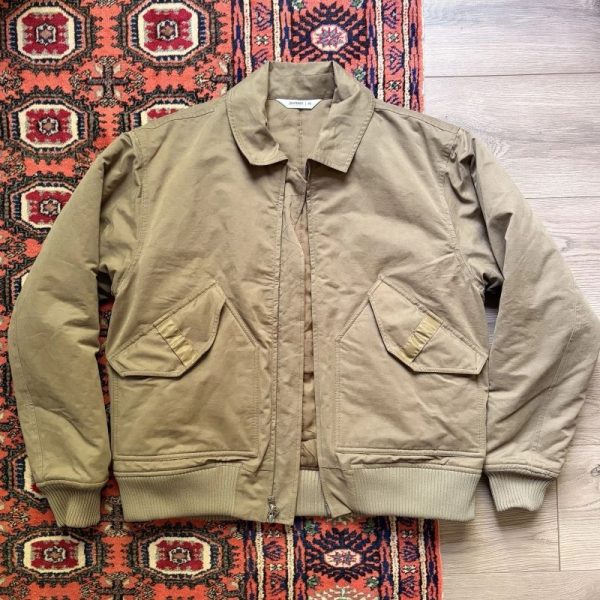
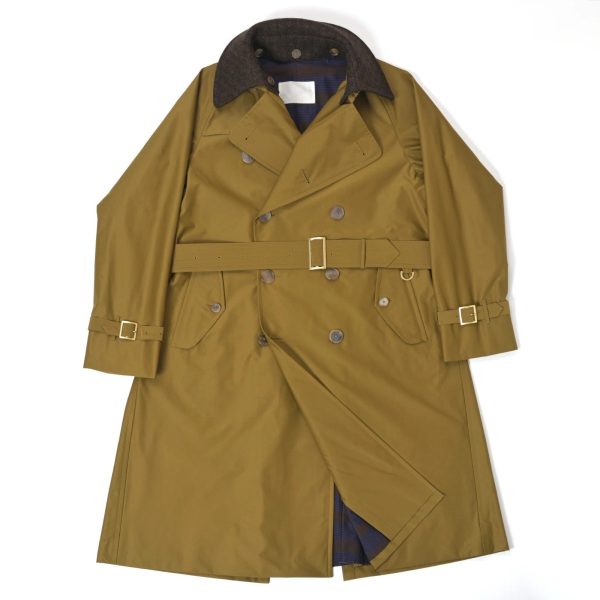
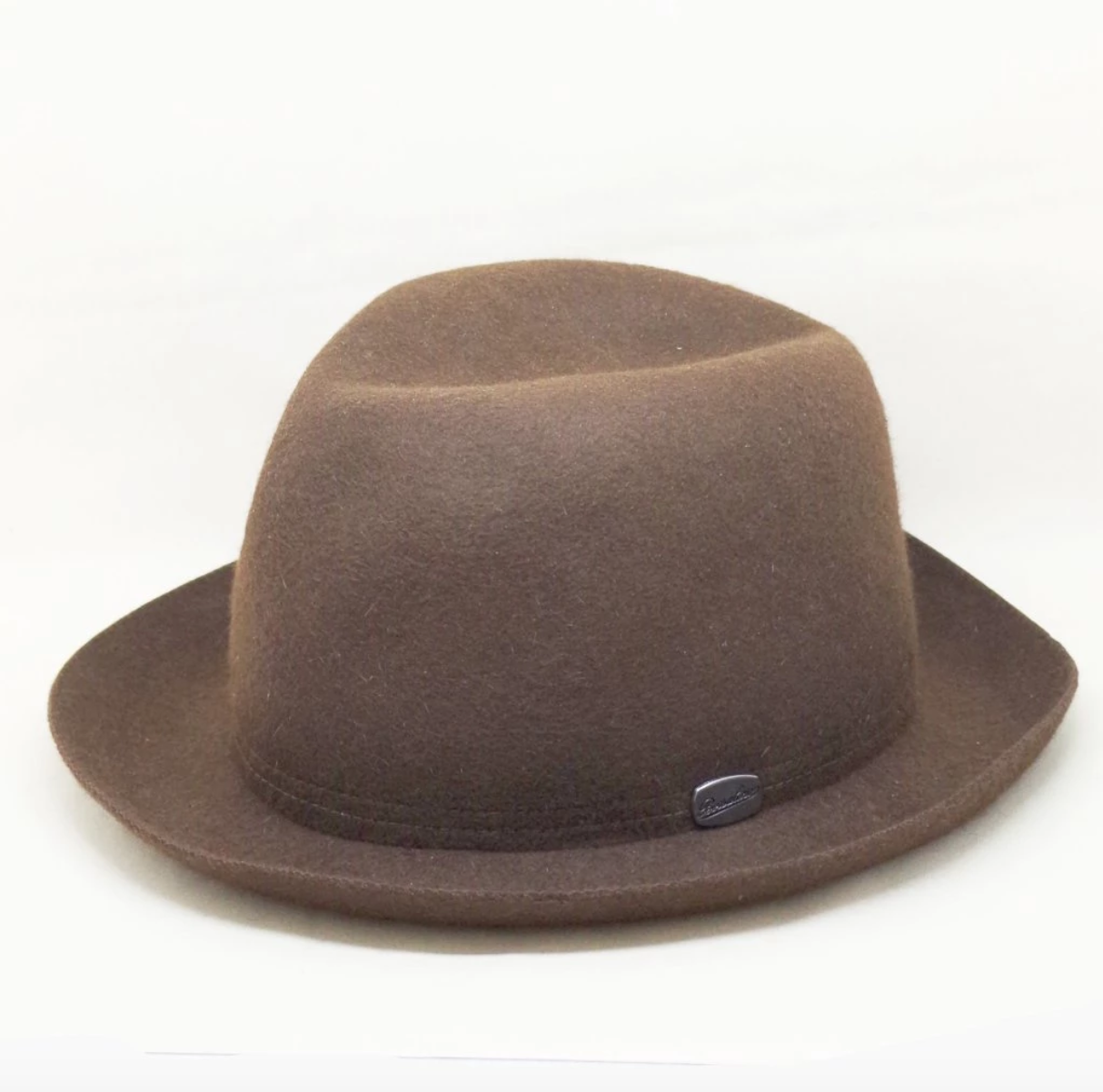
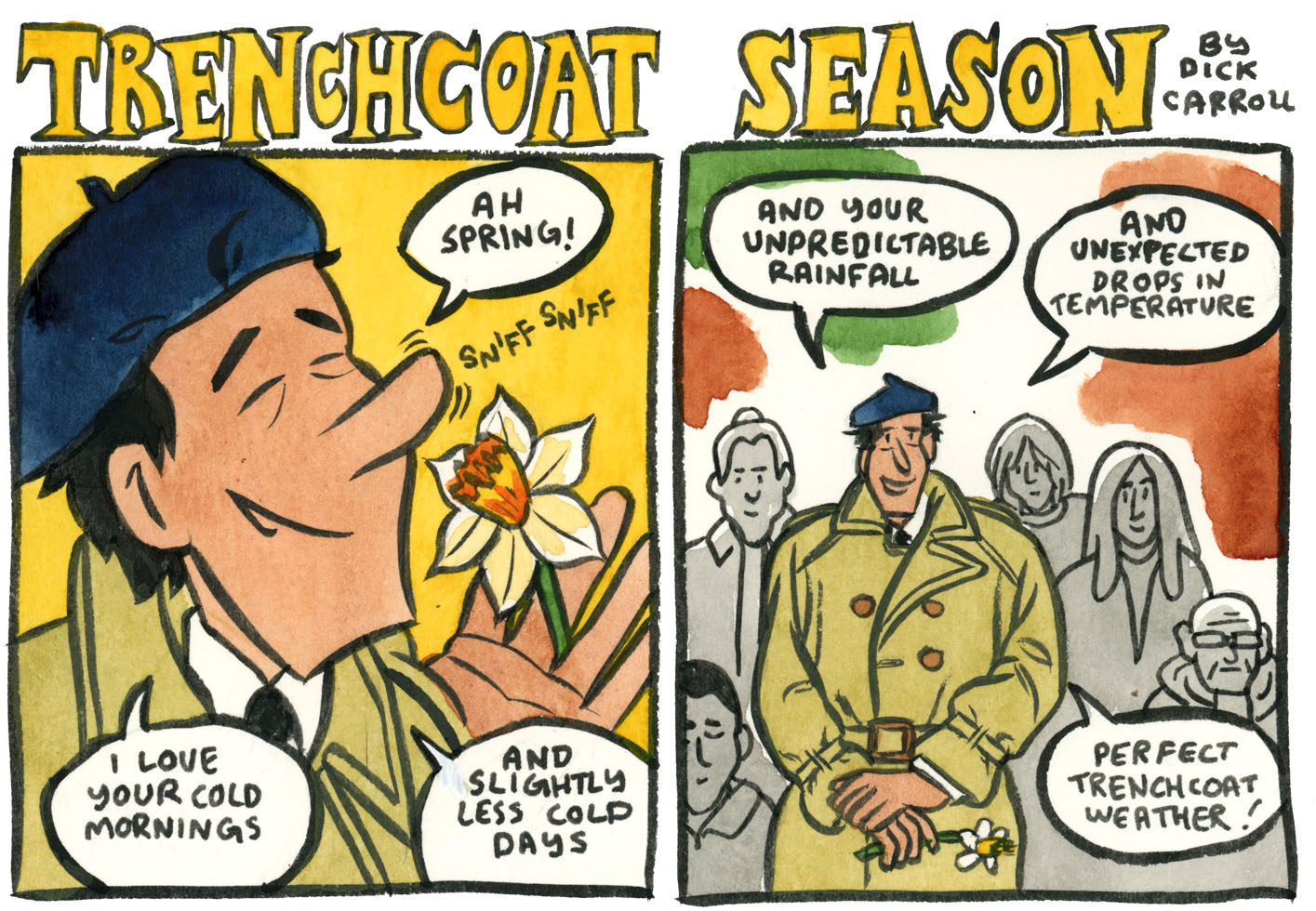
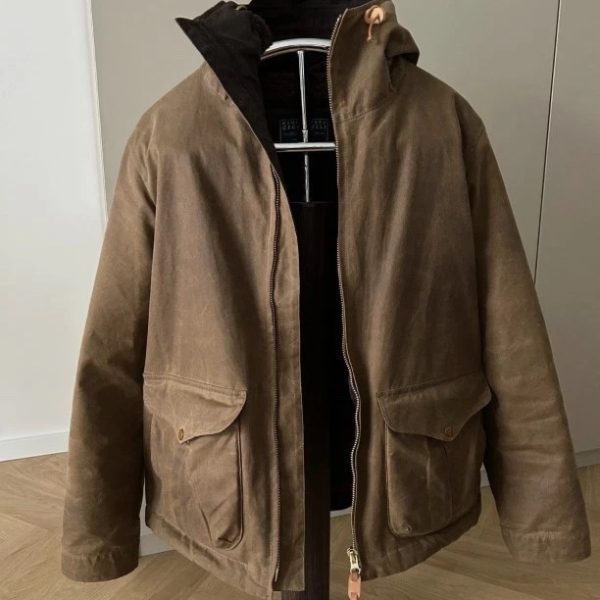
Our good friend the RJ cat has some auctions up this week. I also have some things for sale, including the trench you see above. If you don’t find anything you like between those listings and the ones below, try searching eBay with our customized links for excellent suits, good suits, and high-end footwear.
Suits, sport coats, and blazers

Vintage tweed, S
Hilditch and Key navy double breasted, 38
Daks dinner suit, 41
Chester Barrie striped navy suit, 42
Battistoni blue jacket, 42
Fallan and Harvey dinner suit, 42
Flusser double breasted suit, 42L
RLPL grey suits (42L, 44)

Outerwear


Barbour To Ki To jacket, S
Brooks Brothers leather bomber, S
Gant Rugger denim jacket, S
Chester Barrie trench 42
Sulka raincoat, XL


Shirts and pants


Fray ecru shirt, 15.5
Swaine Adeney striped shirt, 17
RLPL grey flannel trousers (34, 38)
Sid Mashburn pants, 36 and 37


Shoes


Allen Edmonds Strawfut, 7D
Real Peals, 8
Abercrombie and Fitch slippers, 8E
McAfee black shoes, 10.5
Polo brown oxfords, 11.5
Crockett and Jones suede loafers, 12
Peal black oxfords, 14


Bags, briefcases, and wallets


Pickett wallet
Tanner Krolle briefcase
JW Hulme briefcase 
Barrow and Hepburn briefcase


Ties


Arnys tie (striped, fans, ducks)
KFS ties
Drake’s ancient madder tie


Misc.
Ralph Lauren alligator belt, 34
Dunhill shoe brush and horn
Purdey money clip
Sulka PJs, L
Shell cordovan belt, 36
Thurston braces (1, 2)
Knox Panama hat, 7 3/8
Phillies baseball cap, 7 3/8
A&F smoker’s tool (although, as RJ noted, the seller’s name gives pause)
Hats, braces, and ties
A&F dice game
Old Saks Fifth Avenue ads
Swaine Adeney Brigg cane
The Little Red Book
If you want access to an extra roundup every week, exclusive to members, join Put This On’s Inside Track for just five bucks a month.

eBay Round Up

Our good friend the RJ cat has some auctions up this week. I also have some things for sale, including the trench you see above. If you don’t find anything you like between those listings and the ones below, try searching eBay with our customized links for excellent suitsgood suits, and high-end footwear.

Suits, sport coats, and blazers
Outerwear
Shirts and pants
Shoes
Bags, briefcases, and wallets
Ties
Misc.

If you want access to an extra roundup every week, exclusive to members, join Put This On’s Inside Track for just five bucks a month.

Put This On’s Inside Track for the week of April 1st - April 8th

Here are our hand-selected favorites from eBay for this week. If you’re a member of the Inside Track, click through, and log in with your Member.ly username and password. If you’re not a member, you can join now for just $5 a month. Your membership supports Put This On. 

See the rest →

The Custom Shirt Series, Part I: Intro
I’ve been meaning to write a series on custom shirts for - oh, I don’t know - a year now? Well, I’ve finally gotten around to it. In the coming weeks, I have a seven-part series about where you can turn to have something custom-made, and how to approach the process the best you can. 
To be sure, few men need custom shirts. Most will find that ready-to-wear will serve them just fine, so long as they have reasonable expectations for fit and quality. If they’re a bit more demanding, however, they may need to go custom. The problem with ready-to-wear shirts is that they’re designed to fit everyone, but no one in particular. Take, for example, the shoulders. Shoulders can curve forward or backward, and usually one will curve more than the other. They can also slope in asymmetric ways. These nuances have to be accounted for on a truly well fitting shirt. If your shoulders curve forward or slope down, your shirt’s yoke has to accommodate. If it doesn’t, you’ll get wrinkles and folds near the collarbone or rib cage. 
In addition to the fit, there’s also the matter of whether your shirt flatters you. Having something custom made can mean choosing the exact collar style that complements your face every time. A man with a long, chiseled face is best served with a spread collar, while a man with a rounder face should choose longer, narrower collar points. It’s possible, of course, to find these things off-the-rack, but you often have to compromise on other dimensions if you demand a very specific collar style. 
Another advantage to going custom is the wider selection of options that becomes available to you. Obviously, you can dictate things such as cuff styles and monograms, but the real upside is in the cloth selection. In almost any department store, you may find some oxford cloths or even a linen, but the majority of dress shirts will be broadcloths. Most of these will be single-ply 80s, and the rest will probably be two-ply 100s. These will be limited further by colors and designs. 
At a good custom shirt maker, you’ll find almost every type of fabric you can imagine, in a variety of thread counts, plys, designs, and colors. These can be advantageous not only if you’re looking for a certain style of fabric, but also if you need something to fulfill a certain function. Shirts with slightly more open weaves, for example, are great for summer, but are rarely stocked by department stores. 
The best part about all this is that custom shirts are often not that much more expensive than their ready-to-wear counterparts. The entry-level price for a decent custom shirt is somewhere around $80-100, which isn’t too far off from the $60-70 that most department stores charge. These days, I rarely buy a ready-to-wear shirt unless it’s on sale for less than $40. 
In this coming series, I hope to acquaint you with the basics of how a shirt should fit, some design details you should consider, and how you can assess quality. I’ll also review a wide range of custom shirt makers that I’ve had experiences with, and publish an interview with Ascot Chang, one of my custom tailors of choice. There should be something for everyone. Even if you’re not interested in bespoke shirts, I think you’ll find certain segments to be very relevant for ready-to-wear purchases. 
The first installment goes up Wednesday, and I hope you enjoy it. 
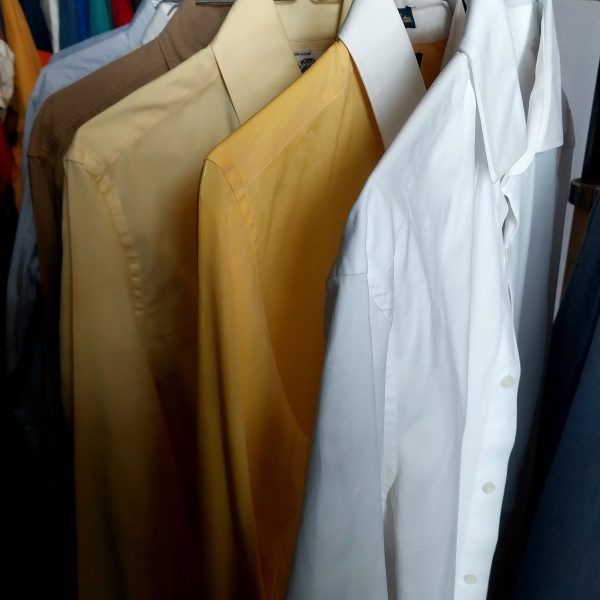
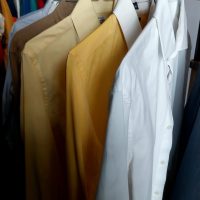
(Photo by Ethan Desu. Custom shirts in the photo by Patrick Johnson)

The Custom Shirt Series, Part I: Intro

I’ve been meaning to write a series on custom shirts for - oh, I don’t know - a year now? Well, I’ve finally gotten around to it. In the coming weeks, I have a seven-part series about where you can turn to have something custom-made, and how to approach the process the best you can. 

To be sure, few men need custom shirts. Most will find that ready-to-wear will serve them just fine, so long as they have reasonable expectations for fit and quality. If they’re a bit more demanding, however, they may need to go custom. The problem with ready-to-wear shirts is that they’re designed to fit everyone, but no one in particular. Take, for example, the shoulders. Shoulders can curve forward or backward, and usually one will curve more than the other. They can also slope in asymmetric ways. These nuances have to be accounted for on a truly well fitting shirt. If your shoulders curve forward or slope down, your shirt’s yoke has to accommodate. If it doesn’t, you’ll get wrinkles and folds near the collarbone or rib cage. 

In addition to the fit, there’s also the matter of whether your shirt flatters you. Having something custom made can mean choosing the exact collar style that complements your face every time. A man with a long, chiseled face is best served with a spread collar, while a man with a rounder face should choose longer, narrower collar points. It’s possible, of course, to find these things off-the-rack, but you often have to compromise on other dimensions if you demand a very specific collar style. 

Another advantage to going custom is the wider selection of options that becomes available to you. Obviously, you can dictate things such as cuff styles and monograms, but the real upside is in the cloth selection. In almost any department store, you may find some oxford cloths or even a linen, but the majority of dress shirts will be broadcloths. Most of these will be single-ply 80s, and the rest will probably be two-ply 100s. These will be limited further by colors and designs. 

At a good custom shirt maker, you’ll find almost every type of fabric you can imagine, in a variety of thread counts, plys, designs, and colors. These can be advantageous not only if you’re looking for a certain style of fabric, but also if you need something to fulfill a certain function. Shirts with slightly more open weaves, for example, are great for summer, but are rarely stocked by department stores. 

The best part about all this is that custom shirts are often not that much more expensive than their ready-to-wear counterparts. The entry-level price for a decent custom shirt is somewhere around $80-100, which isn’t too far off from the $60-70 that most department stores charge. These days, I rarely buy a ready-to-wear shirt unless it’s on sale for less than $40. 

In this coming series, I hope to acquaint you with the basics of how a shirt should fit, some design details you should consider, and how you can assess quality. I’ll also review a wide range of custom shirt makers that I’ve had experiences with, and publish an interview with Ascot Chang, one of my custom tailors of choice. There should be something for everyone. Even if you’re not interested in bespoke shirts, I think you’ll find certain segments to be very relevant for ready-to-wear purchases. 

The first installment goes up Wednesday, and I hope you enjoy it. 

(Photo by Ethan Desu. Custom shirts in the photo by Patrick Johnson)

The Swenkas are a small group of Zulu working-class men in South Africa who gather on weekends for something that’s part fashion show, part choreography, and part competition. As with many subcultures, they also have their own moral codes, which are expressed through the way they dress.

In 2004, a documentary film called The Swenkas was made about the group. You can watch the first few minutes of it here. Above is a shorter documentary by Al Jazeera.