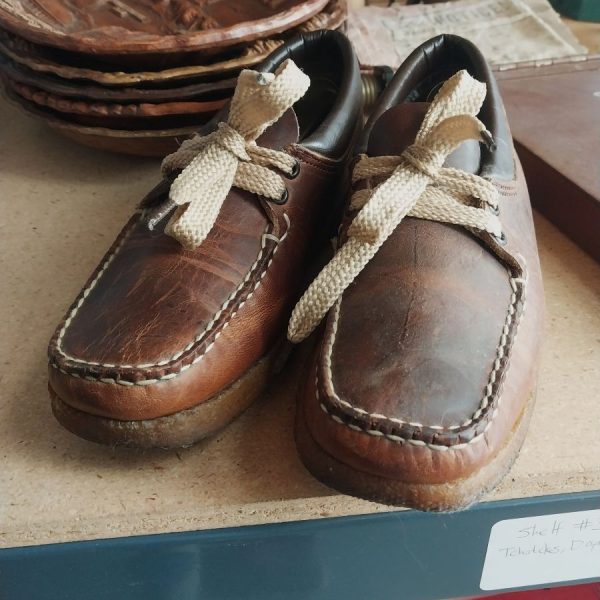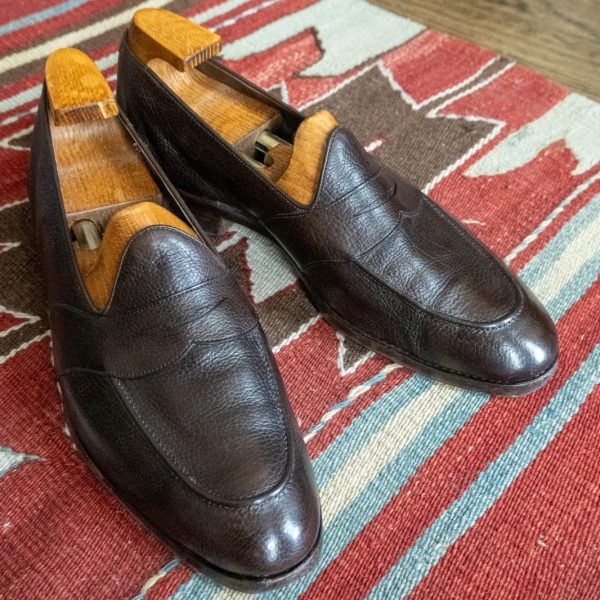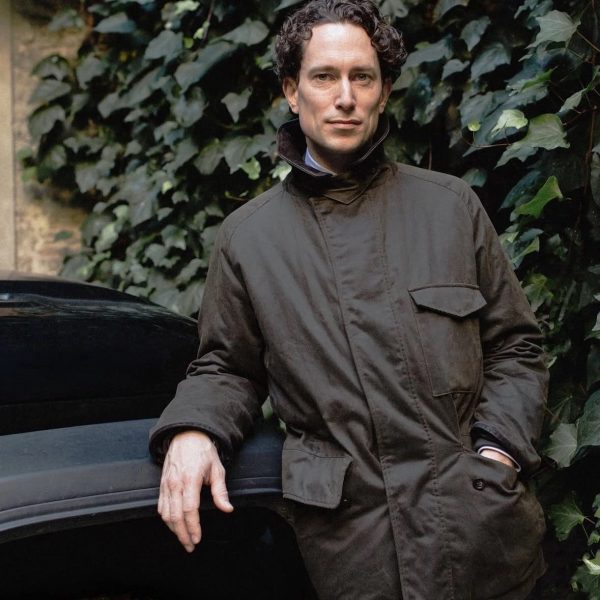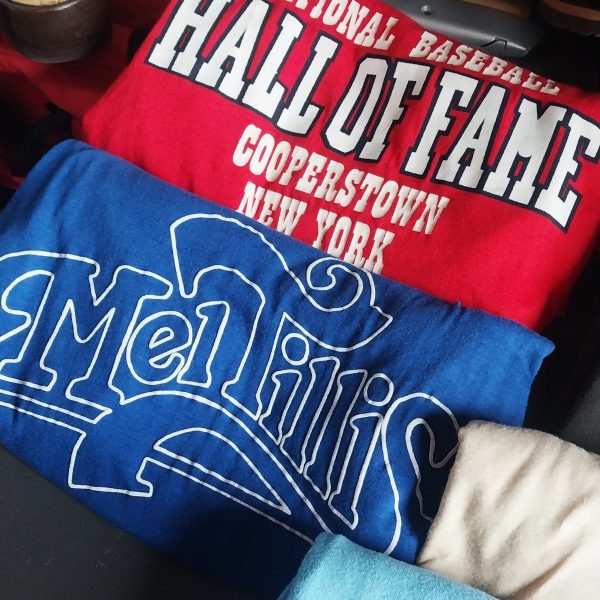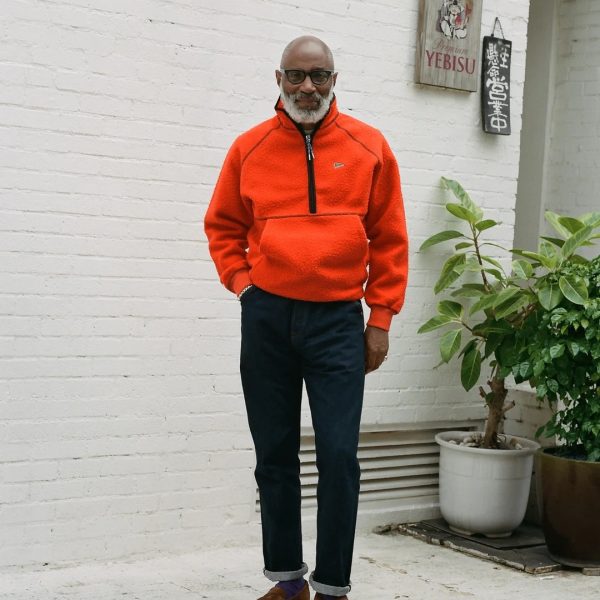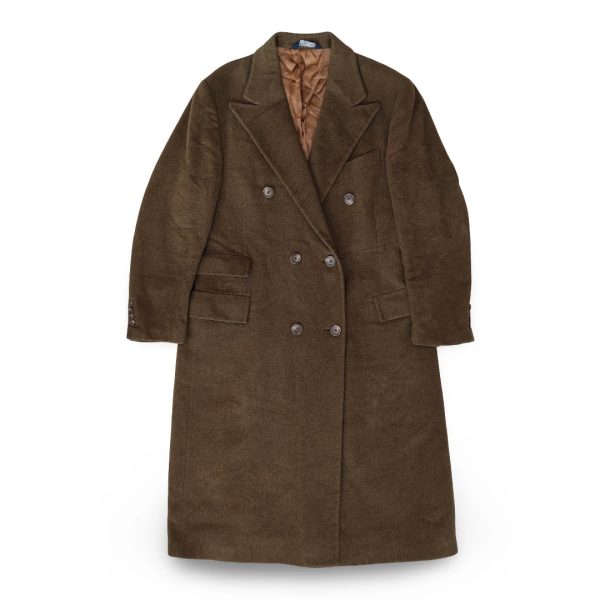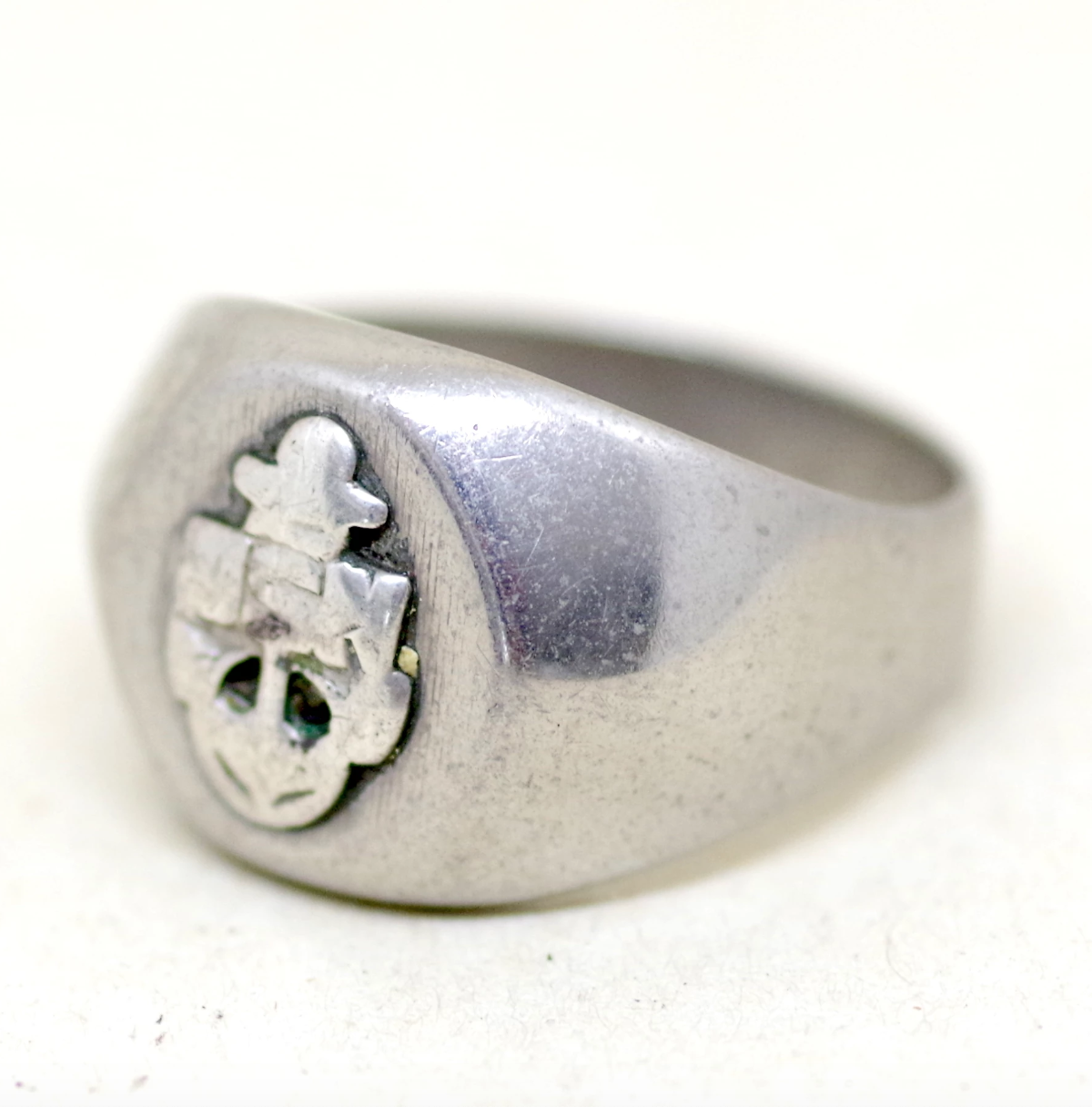
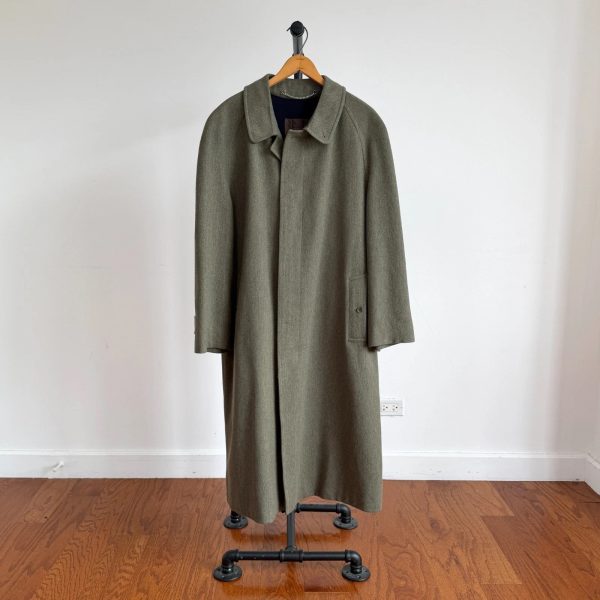
Mordechai Rubinstein of Mister Mort recently visited the beach house of Doug Bihlmaier, who works in vintage for Ralph Lauren (essentially he is vintage Ralph Lauren; he’s also notably photogenic). When I asked Mordechai what brought him there, he told me “Doug’s [Land Rover] Defender.” Although it was not a business trip, Mordechai took some snapshots and has over 20 up on his blog, so you can visualize what it would be like to live in a beachfront RRL store, surrounded by an archive of attractively shabby textiles and artifacts of Americana. Doug has more interesting fabrics patching up one sleeve than most of us have in our entire closets. I’m sure there’s more there than even shown on Mister Mort; according to Mordechai, “The most interesting things I saw were captured solely by my eyes and heart.”

It’s On Sale: Men’s Accessories at Berg & Berg

Berg & Berg just opened a 10-day online “outlet” sale. Previous collections and samples have been marked down by 40-60%. I think this cotton gingham tie would look pretty nice with a cotton or linen sport coat, and this orange scarf would pair well with a green, waxed cotton Barbour jacket. Both cost about $37. 

eBay Roundup
We have another terrific eBay roundup to end your week with. If nothing you see here suits you, try using our customized search links. We’ve made them for high-end suits, good suits, high-quality shirts and fine footwear. 

Suits, sport coats, and blazers

Yellow Belvest sport coat, 38
Seersucker sport coat, 38
Grey pinstripe suit, 40
Brown suit, 42
Glen plaid tweed suit, 42
Grey glen plaid sport coat, 42
Brown glen plaid sport coat, 42L
Brown tweed sport coat, 44
Alan Flusser grey suit, 44
Holland & Holland grey suit, 44
Grey windowpane sport coat, 48

Outerwear

Engineered Garments parka, S
Barbour tan jacket, M
Crescent Down Works vest, M
Abercrombie & Fitch cotton jacket, 44


Sweaters and knits

Mister Freedom sweatshirt, M
Brown argyle sweater, M
Tennis sweater, L


Shirts and pants

Striped Finamore shirt, 15.5
Black Fleece plaid shirt, L
Two Finamore shirts, 18.5
Grey flannel trousers, 34
Houndstooth pants, 38
Black Fleece grey trousers, 40


Shoes

Bunch of Ralph Lauren shoes, various sizes (one of which is pictured above)
McNairy x Keds shoes, various sizes
Houndstooth slippers, 7.5
Pebble grain derbys, 8.5
Brown suede chukkas, 8.5
Suede derbys, 9
Paul Stuart brown wingtips, 9.5
Formal pumps, 10.5
Brown Paraboot shoes, 11
House slippers, 11
Saddle shoes, 13

Ties

Green paisley tie
Striped bow tie
Solid green tie

Bags, briefcases, and wallets

Canvas fishing bag

Misc.

Bike seat
Picnic basket
Sulka pocket square
Stowa watch
Black Swaine Adeney Brigg umbrella
Great book on menswear
Bucket hat, 7 1/8
Dressing gown, ~M/L
Shagreen caddy
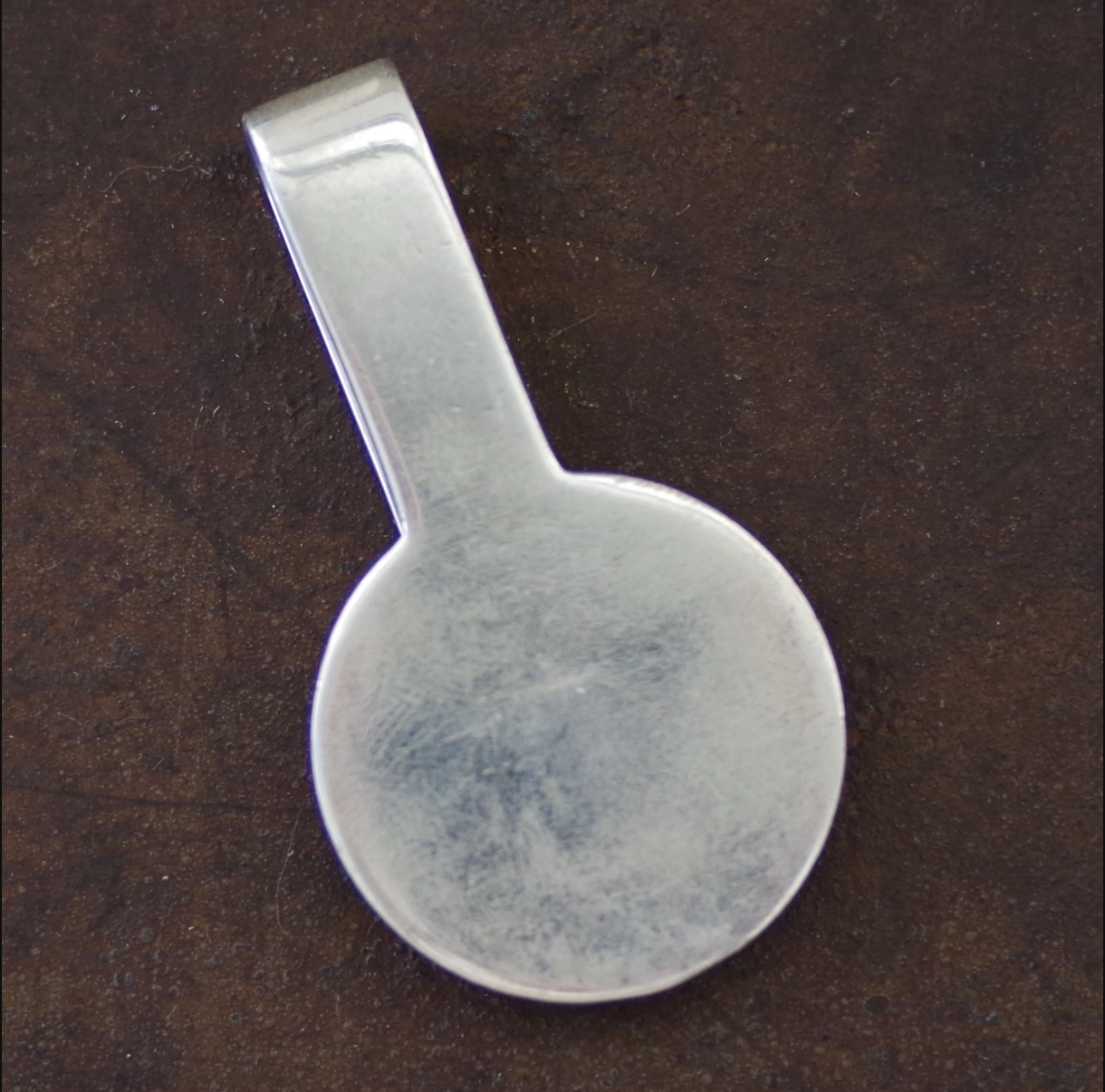
Bottle stopper
Trunks (1, 2)
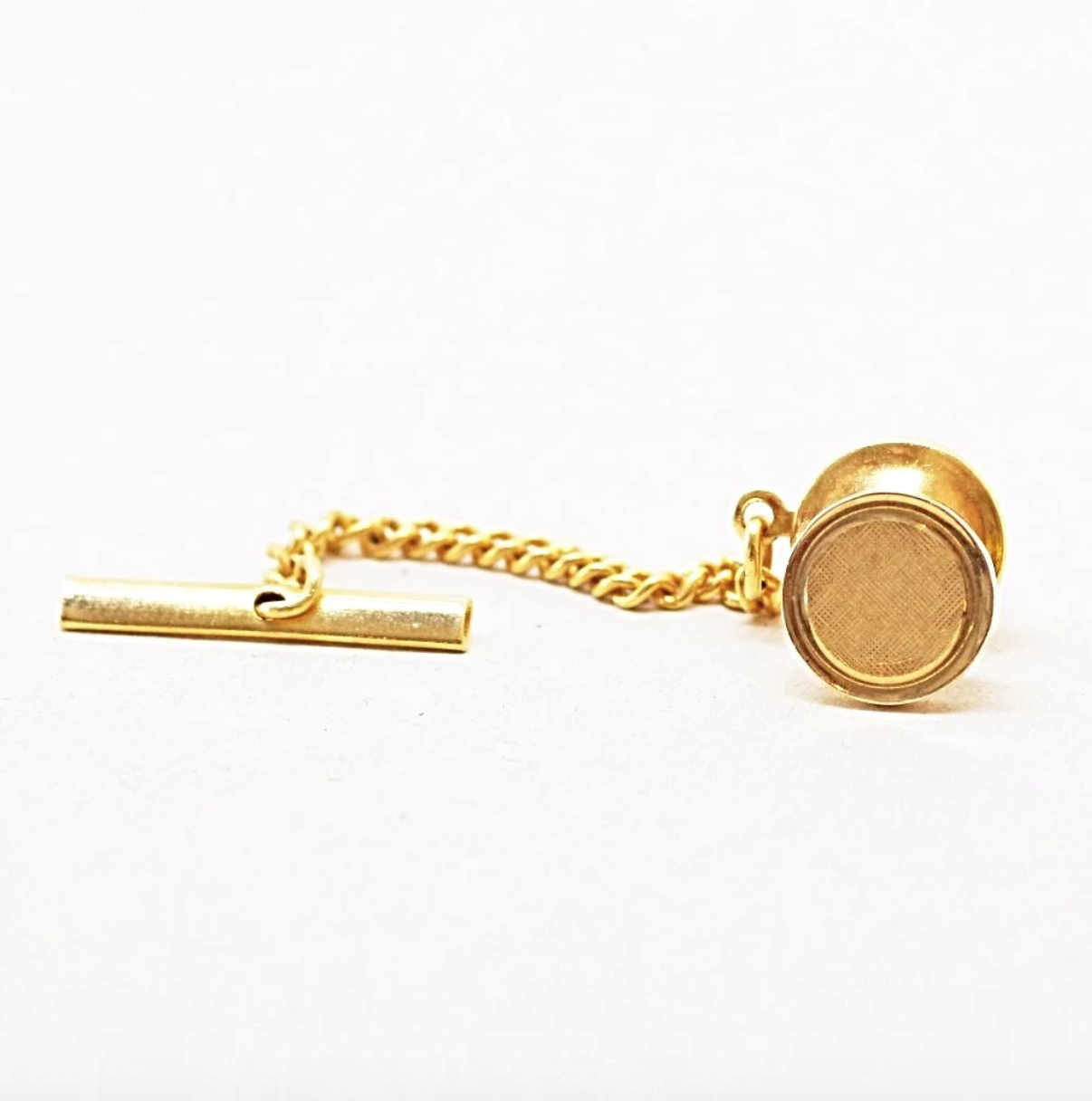
Cufflinks (1, 2, 3, 4)
Houndstooth tweed fabric
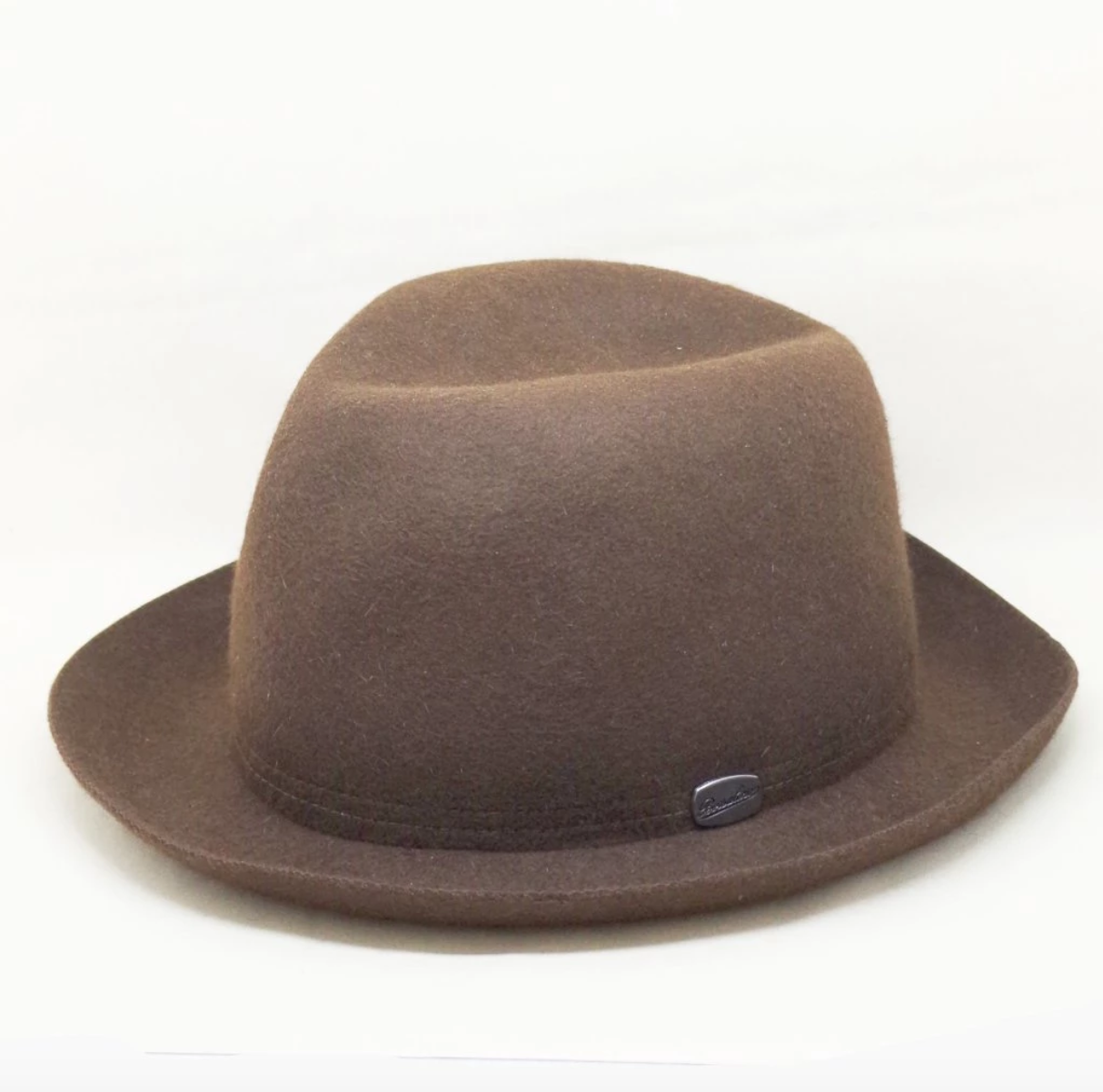
Brown hat, 7 1/8
Baseball caps, 7 1/8 (1, 2, 3)
Bunch of pocket squares

If you want access to an extra roundup every week, exclusive to members, join Put This On’s Inside Track for just five bucks a month.

eBay Roundup

We have another terrific eBay roundup to end your week with. If nothing you see here suits you, try using our customized search links. We’ve made them for high-end suitsgood suitshigh-quality shirts and fine footwear

Sweaters and knits
Shoes
Ties
Bags, briefcases, and wallets
Misc.

If you want access to an extra roundup every week, exclusive to members, join Put This On’s Inside Track for just five bucks a month.

Borrelli Shirts on Vente-Privee
Vente-Privee currently has a big selection of Borrelli shirts for as little as $65. If you’ve never worn a Borrelli shirt, you’re in for a treat. They usually retail for three to four hundred dollars. (Note that Vente-Privee’s discounts are great, but they usually take a few weeks to ship.)
If you don’t have a Vente-Privee account, use our link. You, too, can be as creepily intense as the male model above.

Borrelli Shirts on Vente-Privee

Vente-Privee currently has a big selection of Borrelli shirts for as little as $65. If you’ve never worn a Borrelli shirt, you’re in for a treat. They usually retail for three to four hundred dollars. (Note that Vente-Privee’s discounts are great, but they usually take a few weeks to ship.)

If you don’t have a Vente-Privee account, use our link. You, too, can be as creepily intense as the male model above.

Reader Penguincoast alerts us to something cool: on June 26th, TCM will welcome Joseph Abboud as a guest programmer. He’s chosen four films from the 1940s that he things exemplify great men’s style. His picks are They Died With Their Boots On, Rebecca, Notorious and Casablance. Pretty good choices. You can find more information here on TCM’s semi-awful flash website.

Reader Penguincoast alerts us to something cool: on June 26th, TCM will welcome Joseph Abboud as a guest programmer. He’s chosen four films from the 1940s that he things exemplify great men’s style. His picks are They Died With Their Boots On, Rebecca, Notorious and Casablance. Pretty good choices. You can find more information here on TCM’s semi-awful flash website.

It’s on Sale: Barney’s

Barney’s has added more items to its sale and dropped prices on stuff already on sale, discounting some things to 60% off. Although items like this Perfecto by Schott leather jacket or these Viberg boots are still far from inexpensive, they’re exceedingly well-made and handsome pieces in normal colors that don’t often last at deep discount. Also worth a look: Ovadia & Sons shirts, Zimmerli underwear, Drake’s accessories, Crockett and Jones shoes, and a surprisingly large selection of Engineered Garments.

-Pete

Banana Republic When It Was Banana Republic

An anonymous reader in Yucca Valley, California sent me a cool gift in the mail today - a group of Banana Republic catalogs from 1987 and 1988.

The company was founded by a pair of journalists in 1978, and purchased five years later by the Gap. Initially, they sold vintage international military surplus, then started reproducing their most popular items. In 1987 and 1988, the founders were still traveling the world, looking for unique and classic clothes to reproduce. The company didn’t become the vaguely Eurotrashy upscale cousin to the Gap until the 1990s.

Above I’ve photographed a few of the coolest items from the catalog - from Ghurka shorts (a passion of mine, I must admit) to reproduction flight jackets. There’s even a cameo from Bloom County artist Berkeley Breathed. If the catalogs pique your interest, the blog Abandoned Republic is dedicated to the early days of Banana, and features tons of photos of clothes and scans of catalogs. Just be careful: once you get yourself down the rabbit hole, it can be tough to get back out. You’ll be saving eBay searches soon enough.

What I Learned From My Father
Recently Max Wastler of All Plaid Out asked me to write a brief piece about what I’d learned from my father. The result has almost nothing to do with clothes, but I thought I’d share it here. Above: my father and I in 1981.
My father was homeless when I was conceived. That’s something I found out recently.
I knew he’d been without a home and had even lived on the street a little, but I didn’t know that particular circumstance of my origin story. It’s true, though: In 1980, when my parents first met, he was a homeless alcoholic and drug user, suffering from severe post-traumatic stress disorder. You can see how maybe my parents’ marriage, which happened after the events of my conception, didn’t go well. In fact, it went about as poorly as a marriage without physical violence could possibly go. They divorced before I remember.
But my father isn’t the villain of this story. Far from it. He is the hero. This is a father’s day appreciation, after all.
Here’s the thing: my father grew up in an abusive home. He tried to escape by enlisting in the navy at the beginning of the war in Southeast Asia, and his two years in the service further scarred him. In many ways, by the time he was 22 or so, when most people are just hitting their stride, he was broken. He drank, used drugs, and generally didn’t have control of his life for the next twenty years.
When I say he didn’t control his life, I don’t mean to say completely. He was using and drinking and making a lot of mistakes, but he participated in some amazing things as well. When he got back from the war, he helped found an organization called Veterans for Peace. Along with a group called Vietnam Veterans Against the War, they helped provide a voice for veterans in the peace movement. People who knew what war really was were speaking up against war for the first time. He was beaten and arrested many times. It was a brave thing to do.
But by 1980, when I was conceived, he was at a low point. His first marriage had long since broken up. He’d struggled to hold a job. His PTSD and alcoholism were running his life. And he was entering his late thirties. He could see the path down which he was headed: at the end of this abuse would have been an early death.
From what I’ve heard, my mother told him he didn’t have to be involved in my life. She just wanted a baby, by whatever means necessary. She was prepared to raise me herself if that’s what it took. She’s told me since then that she had visions of me in the clouds — literally in the clouds. She’s not generally the type to have visions, but she was serious about this baby project. He could have just left.
So that’s where my dad was thirty-some years ago, when I came into the world. Moving from homelessness to a bad marriage. Alcoholic. Intermittenly employed and generally unemployable.
But like I said: this is a tribute to my dad.
Because the quality that I admire most in my father is his commitment to being better.
My dad got clean around the time he divorced from my mother, when I was a toddler. I still remember going to AA meetings with him. They had joint custody, but he couldn’t afford a babysitter. He liked to go to vets’ meetings, which in our neighborhood, the Mission in San Francisco, usually meant that half or so of the attendees didn’t have a place to live. While I colored in the corner, they’d talk about the low points of their lives, both at war and with drink. Even then, I think, I understood that my dad was learning to be better.
His PTSD was always part of my life. I’m not sure when I figured out that other kids’ dads didn’t jump out of their chairs when the ground rumbled from a grocery truck passing outside. Sometimes I would stand next to my dad as he was lost in the newspaper, and I’d yell at the top of my lungs in an unsuccesful effort to break into his private world. When something went wrong between us, he was like a prosecutor, his PTSD-paranoia in full flight, tearing me apart. It could be very, very scary.
But he was working so hard to be better. I remember once when I was thirteen or so, we were in a screaming match in the kitchen. When he was zeroed in on his target, he was unstoppable, undistractable, undivertable. With one hand, he pushed me back into the wall, six or eight inches. Honestly, it was quite a fight, but not much of a push.
A few hours later, he came into my room and apologized. A sincere, full-throated apology. He knew I hadn’t been hurt or anything, but he also knew that he was wrong, and wanted to make sure I knew that, too. It was something that in the moment, when we were screaming, would have been unthinkable. He was trying hard to be better.
When I was ten or twelve, he founded an organization called Jhai. The world, in Lao, means hearts and minds working together. He had met and befirended a Laotian woman who was a refugee from the part of Laos his aircraft carrier had bombed during the war. He started by bringing medical supplies to the village where her family lived, and over years helped the people he had so horribly wronged build community-owned schools and get access to communications infrastructre.
He called his process reconcialiation-based development. He was reconciling with these people who’d fled the bombs he loaded, but I think he was also reconciling within himself. It wasn’t a matter of doing penance. It was about being better today than he was yesterday.
My father told me that after his first visit to Laos, he slept through the night for the first time since he was a teenager. He didn’t sleep through the night every night thereafter, but he got better. These days, he tells me that walking is what helps him most. He does what he needs to do.
I wouldn’t wish PTSD upon anyone, nor addiction. And I wouldn’t wish a parent who suffered from them on any child. I can say, though, that I don’t wish for any father but the one I have.
Even when things were as horrible as they could be, when he was fighting my mother in court and fighting with me at home and struggling with his awful diseases visibly every day, I never doubted that my father loved me. I never doubted that he wanted me. I never doubted that he supported me becoming the man I wanted to be. And I never doubted that for my sake, he wanted to be better each day than he had been the day before.
I try to live my life by that example. Thank you, dad.

What I Learned From My Father

Recently Max Wastler of All Plaid Out asked me to write a brief piece about what I’d learned from my father. The result has almost nothing to do with clothes, but I thought I’d share it here. Above: my father and I in 1981.

My father was homeless when I was conceived. That’s something I found out recently.

I knew he’d been without a home and had even lived on the street a little, but I didn’t know that particular circumstance of my origin story. It’s true, though: In 1980, when my parents first met, he was a homeless alcoholic and drug user, suffering from severe post-traumatic stress disorder. You can see how maybe my parents’ marriage, which happened after the events of my conception, didn’t go well. In fact, it went about as poorly as a marriage without physical violence could possibly go. They divorced before I remember.

But my father isn’t the villain of this story. Far from it. He is the hero. This is a father’s day appreciation, after all.

Here’s the thing: my father grew up in an abusive home. He tried to escape by enlisting in the navy at the beginning of the war in Southeast Asia, and his two years in the service further scarred him. In many ways, by the time he was 22 or so, when most people are just hitting their stride, he was broken. He drank, used drugs, and generally didn’t have control of his life for the next twenty years.

When I say he didn’t control his life, I don’t mean to say completely. He was using and drinking and making a lot of mistakes, but he participated in some amazing things as well. When he got back from the war, he helped found an organization called Veterans for Peace. Along with a group called Vietnam Veterans Against the War, they helped provide a voice for veterans in the peace movement. People who knew what war really was were speaking up against war for the first time. He was beaten and arrested many times. It was a brave thing to do.

But by 1980, when I was conceived, he was at a low point. His first marriage had long since broken up. He’d struggled to hold a job. His PTSD and alcoholism were running his life. And he was entering his late thirties. He could see the path down which he was headed: at the end of this abuse would have been an early death.

From what I’ve heard, my mother told him he didn’t have to be involved in my life. She just wanted a baby, by whatever means necessary. She was prepared to raise me herself if that’s what it took. She’s told me since then that she had visions of me in the clouds — literally in the clouds. She’s not generally the type to have visions, but she was serious about this baby project. He could have just left.

So that’s where my dad was thirty-some years ago, when I came into the world. Moving from homelessness to a bad marriage. Alcoholic. Intermittenly employed and generally unemployable.

But like I said: this is a tribute to my dad.

Because the quality that I admire most in my father is his commitment to being better.

My dad got clean around the time he divorced from my mother, when I was a toddler. I still remember going to AA meetings with him. They had joint custody, but he couldn’t afford a babysitter. He liked to go to vets’ meetings, which in our neighborhood, the Mission in San Francisco, usually meant that half or so of the attendees didn’t have a place to live. While I colored in the corner, they’d talk about the low points of their lives, both at war and with drink. Even then, I think, I understood that my dad was learning to be better.

His PTSD was always part of my life. I’m not sure when I figured out that other kids’ dads didn’t jump out of their chairs when the ground rumbled from a grocery truck passing outside. Sometimes I would stand next to my dad as he was lost in the newspaper, and I’d yell at the top of my lungs in an unsuccesful effort to break into his private world. When something went wrong between us, he was like a prosecutor, his PTSD-paranoia in full flight, tearing me apart. It could be very, very scary.

But he was working so hard to be better. I remember once when I was thirteen or so, we were in a screaming match in the kitchen. When he was zeroed in on his target, he was unstoppable, undistractable, undivertable. With one hand, he pushed me back into the wall, six or eight inches. Honestly, it was quite a fight, but not much of a push.

A few hours later, he came into my room and apologized. A sincere, full-throated apology. He knew I hadn’t been hurt or anything, but he also knew that he was wrong, and wanted to make sure I knew that, too. It was something that in the moment, when we were screaming, would have been unthinkable. He was trying hard to be better.

When I was ten or twelve, he founded an organization called Jhai. The world, in Lao, means hearts and minds working together. He had met and befirended a Laotian woman who was a refugee from the part of Laos his aircraft carrier had bombed during the war. He started by bringing medical supplies to the village where her family lived, and over years helped the people he had so horribly wronged build community-owned schools and get access to communications infrastructre.

He called his process reconcialiation-based development. He was reconciling with these people who’d fled the bombs he loaded, but I think he was also reconciling within himself. It wasn’t a matter of doing penance. It was about being better today than he was yesterday.

My father told me that after his first visit to Laos, he slept through the night for the first time since he was a teenager. He didn’t sleep through the night every night thereafter, but he got better. These days, he tells me that walking is what helps him most. He does what he needs to do.

I wouldn’t wish PTSD upon anyone, nor addiction. And I wouldn’t wish a parent who suffered from them on any child. I can say, though, that I don’t wish for any father but the one I have.

Even when things were as horrible as they could be, when he was fighting my mother in court and fighting with me at home and struggling with his awful diseases visibly every day, I never doubted that my father loved me. I never doubted that he wanted me. I never doubted that he supported me becoming the man I wanted to be. And I never doubted that for my sake, he wanted to be better each day than he had been the day before.

I try to live my life by that example. Thank you, dad.

The Unnecessary but Useful Sleeve Board
Ironing is a pretty simple and straightforward task that only requires an ironing board and iron. However, I’ve found it’s useful to have three other items on hand: a spray bottle, a plastic bag, and a sleeve board. The spray bottle is useful to help soften up the fabric and get the fibers to relax. Your iron should also have this function, but from my experience, a spray bottle always works better. After you’ve lightly sprayed down a few shirts with water, roll them up, and stick them in a plastic bag. Then, as you iron each one-by-one, the others will soak a little, instead of dry up.
The third item – the sleeve board – is useful for ironing sleeves or getting to hard-to-reach places (it’s also great for pressing seams if you sew). It’s similar to an ironing board, but it’s smaller and narrower. This allows you to slip your sleeve through and rotate it after each side has been ironed. The benefit it doing is this way is that you don’t have to constantly adjust your sleeves in order to make sure two layers of fabric are constantly flat. It also means you don’t have to worry about ironing in sharp creases at the edge of your shirt.
You can buy sleeve boards at any number of places. Amazon has a bunch and Target sells a model. Someone even posted an online tutorial on how to make your own. I personally got mine from WAWAK, a company that mostly sells to people in the tailoring trade. Theirs is made from a very sturdy plywood, and both sides have a padded slipover cover. Should you ever damage these covers, WAWAK sells replacements.
The upside to their model is that one side is perfectly built for sleeves while the other side is good for trousers. Of course, if you use this for trousers or jacket sleeves, you’ll want to use a pressing cloth, which WAWAK also sells. The downside, however, is that it’s not foldable or collapsible when you store it away. Something to consider if you’re tight on space. 

The Unnecessary but Useful Sleeve Board

Ironing is a pretty simple and straightforward task that only requires an ironing board and iron. However, I’ve found it’s useful to have three other items on hand: a spray bottle, a plastic bag, and a sleeve board. The spray bottle is useful to help soften up the fabric and get the fibers to relax. Your iron should also have this function, but from my experience, a spray bottle always works better. After you’ve lightly sprayed down a few shirts with water, roll them up, and stick them in a plastic bag. Then, as you iron each one-by-one, the others will soak a little, instead of dry up.

The third item – the sleeve board – is useful for ironing sleeves or getting to hard-to-reach places (it’s also great for pressing seams if you sew). It’s similar to an ironing board, but it’s smaller and narrower. This allows you to slip your sleeve through and rotate it after each side has been ironed. The benefit it doing is this way is that you don’t have to constantly adjust your sleeves in order to make sure two layers of fabric are constantly flat. It also means you don’t have to worry about ironing in sharp creases at the edge of your shirt.

You can buy sleeve boards at any number of places. Amazon has a bunch and Target sells a model. Someone even posted an online tutorial on how to make your own. I personally got mine from WAWAK, a company that mostly sells to people in the tailoring trade. Theirs is made from a very sturdy plywood, and both sides have a padded slipover cover. Should you ever damage these covers, WAWAK sells replacements.

The upside to their model is that one side is perfectly built for sleeves while the other side is good for trousers. Of course, if you use this for trousers or jacket sleeves, you’ll want to use a pressing cloth, which WAWAK also sells. The downside, however, is that it’s not foldable or collapsible when you store it away. Something to consider if you’re tight on space. 

Allen Edmonds Tent Sale

Allen Edmonds’ Tent Sale starts today. 15-50% off all factory second shoes and select accessories. That puts the black Park Avenue oxfords and the brown Strand wingtips you see above at $199 each. You can find more information about the sale here and here.