The OCBD Shirt Series, Part VI: Our Recommendations
After reviewing so many companies, we thought it’d be useful to say which we recommend the most. Obviously much depends on your taste, build, and budget. The great thing about having such a varied market, however, is that there’s almost something for everyone. 
If you want something traditional, I recommend either Mercer & Sons or O’Connell’s. Mercer & Sons has a great oxford cloth that’s a bit more variegated in color and nubby in texture than the standard stuff you’d find at Brooks Brothers or J. Press. They also have a fully sized, unlined collar that gives the kind of wrinkly, carefree roll that enthusiasts find so charming. The only problem is that Mercer & Sons’ shirts fit very, very full, so you if you use them, you may have to turn to their made-to-order service. That’s where you can size the body down two and taper it further by two or four inches. To find out if this might work for you, email Mercer and ask for their shirt measurements.
The other exceptional option is O’Connell’s, who has one of the best button down collars I’ve seen. Ethan there tells me that they’re also working on a new model based on mid-century Brooks Brothers designs. That should be released sometime by the end of this year, and we’ll be certain to announce it when it does.
For something slim fitting, I really like Kamakura. They make two fits – a regular cut and a slim fit. I suspect the slim fit is just the regular cut, but with darts in the back. Admittedly, darts look a bit strange to me on an OCBD, but the body of the shirt still fits fairly well, so long as you have a slim stomach. Either way, both the regular and slim fits have great looking collars. See it worn here at Ivy Style.
You may also want to consider Brooks Brothers’ slim and extra-slim fits once they go on sale. I like Kamakura’s shirts better, but on the downside, they never go on sale. Brooks Brothers’ oxfords, on the other hand, regularly get discounted to about $50 a pop.
Conversely, if money is no object, you can check out Harry Stedman, who makes a pretty nice design from a hodgepodge of classic American details. Just note that they fit pretty slim, so if you’re a regular 36, you may want to opt for a 38 or simply a size small.  
If you want something dressy, try Ledbury. Theirs isn’t a conventional OCBD like the others we’ve covered here. The fabric is a smoother Thomas Mason cloth that’s somewhat reminiscent of Royal Oxford, and the shirt doesn’t have details such as box pleats or chest pockets. All in all, it’s just a dressier looking shirt, which can be good depending on what you’re going for. 
For something affordable, I like Land’s End’s tailored fit oxfords. Their fabric feels better than what Uniqlo and Lands’ End Canvas offers, and the fit isn’t as trendy. Though, depending on your style, Uniqlo and Lands’ End Canvas’ slimmer fits and shorter collars might work better for you. Either way, be sure to wait for sales. Lands’ End oxfords can be had for about $30 or $35, while Uniqlo and Lands’ End Canvas will often be sold for about $20.
Finally, if you want to get something custom made, I can recommend Cottonwork and Ascot Chang from personal experience. Cottonwork, as I’ve noted, does online made to measure, while Ascot Chang does full bespoke. The second tends to have an advantage in terms of executing an ideal fit, but the first will be considerably more affordable. Both do good work, however. You may also want to look into other custom shirtmakers, such as CEGO, Geneva, Anto, Dege & Skinner, and many others. Check StyleForum for recommendations, and perhaps acquaint yourself with the process of buying custom shirts through these posts I wrote last year. 

The OCBD Shirt Series, Part VI: Our Recommendations

After reviewing so many companies, we thought it’d be useful to say which we recommend the most. Obviously much depends on your taste, build, and budget. The great thing about having such a varied market, however, is that there’s almost something for everyone. 

If you want something traditional, I recommend either Mercer & Sons or O’Connell’s. Mercer & Sons has a great oxford cloth that’s a bit more variegated in color and nubby in texture than the standard stuff you’d find at Brooks Brothers or J. Press. They also have a fully sized, unlined collar that gives the kind of wrinkly, carefree roll that enthusiasts find so charming. The only problem is that Mercer & Sons’ shirts fit very, very full, so you if you use them, you may have to turn to their made-to-order service. That’s where you can size the body down two and taper it further by two or four inches. To find out if this might work for you, email Mercer and ask for their shirt measurements.

The other exceptional option is O’Connell’s, who has one of the best button down collars I’ve seen. Ethan there tells me that they’re also working on a new model based on mid-century Brooks Brothers designs. That should be released sometime by the end of this year, and we’ll be certain to announce it when it does.

For something slim fitting, I really like Kamakura. They make two fits – a regular cut and a slim fit. I suspect the slim fit is just the regular cut, but with darts in the back. Admittedly, darts look a bit strange to me on an OCBD, but the body of the shirt still fits fairly well, so long as you have a slim stomach. Either way, both the regular and slim fits have great looking collars. See it worn here at Ivy Style.

You may also want to consider Brooks Brothers’ slim and extra-slim fits once they go on sale. I like Kamakura’s shirts better, but on the downside, they never go on sale. Brooks Brothers’ oxfords, on the other hand, regularly get discounted to about $50 a pop.

Conversely, if money is no object, you can check out Harry Stedman, who makes a pretty nice design from a hodgepodge of classic American details. Just note that they fit pretty slim, so if you’re a regular 36, you may want to opt for a 38 or simply a size small.  

If you want something dressy, try Ledbury. Theirs isn’t a conventional OCBD like the others we’ve covered here. The fabric is a smoother Thomas Mason cloth that’s somewhat reminiscent of Royal Oxford, and the shirt doesn’t have details such as box pleats or chest pockets. All in all, it’s just a dressier looking shirt, which can be good depending on what you’re going for. 

For something affordable, I like Land’s End’s tailored fit oxfords. Their fabric feels better than what Uniqlo and Lands’ End Canvas offers, and the fit isn’t as trendy. Though, depending on your style, Uniqlo and Lands’ End Canvas’ slimmer fits and shorter collars might work better for you. Either way, be sure to wait for sales. Lands’ End oxfords can be had for about $30 or $35, while Uniqlo and Lands’ End Canvas will often be sold for about $20.

Finally, if you want to get something custom made, I can recommend Cottonwork and Ascot Chang from personal experience. Cottonwork, as I’ve noted, does online made to measure, while Ascot Chang does full bespoke. The second tends to have an advantage in terms of executing an ideal fit, but the first will be considerably more affordable. Both do good work, however. You may also want to look into other custom shirtmakers, such as CEGO, Geneva, Anto, Dege & Skinner, and many others. Check StyleForum for recommendations, and perhaps acquaint yourself with the process of buying custom shirts through these posts I wrote last year

The OCBD Shirt Series, Part V: The Reviews

The OCBD Shirt Series, Part VI: Reviews and Conclusion

Our series on oxford cloth button downs started with a short history of America’s most beloved shirt design, and then covered two sets of reviews for contemporary makers. Today, we finish our series with a final set of reviews, which naturally will include the company that invented them: Brooks Brothers.

Brooks Brothers

image

image

Size: Traditional Fit: 15 x 32; Slim Fit: 15.5 x 32

Retail price: $79.50

Features: Curved chest pocket; box pleat, seven-button front; slightly off centered cuff button; no gauntlet button at the sleeve; lightly lined unfused collar

Measurements: Traditional Fit: Chest 23.5”; Waist 22”; Shoulders 17.75”; Length 32”; Collar tip 8.5cm. Slim Fit: Chest 22”; Waist 20.75; Shoulders 18”; Length 31.25”; Collar tip 8.5cm

Impressions: 125 years or so after they invented them, Brooks Brothers still makes some of the better OCBDs around. The fabric they use is nice, hefty, and nubby, and fairly comparable to what you’d find at some of the other traditional clothiers (such as O’Connell’s and J. Press). The collar tips are also long enough to yield a roll, and the body comes in three different cuts: traditional, slim, and extra-slim.

Unfortunately, the Brooks Brothers store near me ran out of extra-slim fit oxfords, and they didn’t have any slim fits in the same size as traditional. So, I picked up a traditional in size 15 and a slim in size 15.5. This doesn’t make comparisons very easy, but even with the half size up, you can see the slim fit is considerably smaller than traditional.

It’s been a long time since I’ve tried on Brooks Brothers’ extra slim fit, but from memory, I thought it was too tight on my thin frame. The problem with clothing this slim is that they can make heavy men look heavier than they are, and thin men look thinner than they are. If you’re considering the extra slim fit for the first time, at least give the regular slim fit cut a shot. It may be more flattering. And if you have more traditional taste, consider the traditional cut, which fits something like this.


Brooks Brothers’ Black Fleece

image

image

Size: BB1

Retail price: $195

Features: Curved chest pocket; box pleat, seven-button front; split yoke; fabric loop at the top of the yoke; side gussets at the hem; lightly lined unfused collar

Measurements: Chest 20.5”; Waist 19”; Shoulders 18”; Length 30”; Collar tip 8.5cm.

Impressions: A $195 off-the-rack shirt is hard to swallow, especially when you consider that good bespoke shirts can be had for around the same price. Still, Brooks Brothers’ Black Fleece collection (which designed by Thom Browne) has a number of really nice oxford cloth button downs. The collar is a bit nicer than Brooks Brothers’ mainline shirts, and the body is slim, but still fairly classic fitting. These might be a good buy if you can find them on discount.


Cottonwork and Ascot Chang

image

image

Size: Custom

Retail Price: ~$75 and up for Cottonwork; ~$180-200 and up for Ascot Chang

Features: Variable, as these will be custom shirts

Impressions: You can get custom shirts from any number of places, and every one should be able to make you a custom oxford cloth button down. The two I have experience with are Cottonwork (who’s one of our advertisers) and Ascot Chang (who’s my main shirtmaker).

Cottonwork is an online made-to-measure operation while Ascot Chang is full bespoke. As is the nature of these things, there are different advantages to each. If you can find a highly skilled, local tailor that can make you a bespoke shirt, you have the advantage of being able to see and feel fabrics before placing an order. Then, after you receive your shirt, you can have the tailor access the fit in person and decide whether or not any changes need to be made. However, good bespoke shirts are expensive (rarely less than $175/ shirt in the United States) and not everyone will have access to a good tailor in their area. If bespoke isn’t an option, consider online made-to-measure. They’re cheaper, and if you’re willing to do a few orders and play around with adjustments, you can dial in on something pretty good. Of the six or seven online made-to-measure shirt makers I’ve tried, Cottonwork was easily the best – in construction, fabric quality, and fit.

Cottonwork and Ascot Chang can make you a custom collar, but they do have their defaults. Oversimplified, Cottonwork differs in that it has longer collar points – 9cm as opposed to Ascot Chang’s 7.5cm. If you go with Ascot Chang, I’d recommend asking for something a bit more traditionally sized. Or, if you have a collar you like, you can send it to either company and have it copied.

Q & Answer: How Do I Eliminate the Blousing on a Shirt?
Gary writes: I just got a new job and am having to wear dress shirts for the first time. I went out this weekend and tried a bunch on, but all of them seem to blouse and billow over the top of my pants. Is there any way to fix this, or do I just have to keep searching for the perfect shirt?
Ready-to-wear clothing rarely fits perfectly off the rack. Remember, garments are made with an imaginary person in mind, usually someone that’s an “average” of the demographic the company is trying to target. You’re unlikely to be that exact average, so some alterations will likely be necessary.
The less you alter a garment, however, the better. So the first step is to find a shirt that fits as well as possible. After you find one and purchase it, take it to the tailors to have the sides slimmed down. This will take out most of the billowing, but be sure to not go too slim. You want to be able to sit down and have a full meal, after all.
If you’d like, you can also have darts put in. These will help reduce the fullness in the lower back. They’re good for most men, but if you stand with a bit of a hunch, note that they’ll accentuate your less than ideal posture (as they’ll create a bit of an S curve from your side profile). You can get them put into one shirt and see how you like the effect. They can be taken out afterwards if you don’t like them, but on many cotton shirts, this will leave some faint lines where the darts used to be. The job of taking in the sides and putting in darts should probably run you something like $15.
If you find that you still have some blousing even after alterations, you can try the military tuck. That’s when you tuck your shirt in straight, but then pinch the sides and pull them back to reduce fullness. You can see a simple guide on how to do it here.
A good alterations tailor and military tuck will solve most of the billowing, but if you’re striving for perfection, you’ll likely need to go custom. I’ve written a seven-part series on custom shirts, which you can read here.
This is one area where I find bespoke makers to be a bit better than most made-to-measure services. With a good bespoke tailor, you’re getting a custom pattern drafted from scratch. With made-to-measure, the company is usually altering an existing pattern through some computer program. The first, from my experience, allows you to more easily account things that might not be easily captured by simple measurements. For example, my tailor (Ascot Chang) lowered the waist point on my first pattern, so that narrowest part of the shirt aligned with the narrowest point of my torso. This allowed the shirt to better transition as it moved down to my hips, thus distributing the fullness perfectly when my shirt is tucked (like this). That kind of adjustment is often not possible through made-to-measure, and isn’t something an alterations tailor can do for you. 
Bespoke shirts are expensive, however. If you don’t mind the cost, I think they’re worth it. For most men though, a $15 alterations job and military tuck will deliver most of what they need. 
(Photo via GQ)

Q & Answer: How Do I Eliminate the Blousing on a Shirt?

Gary writes: I just got a new job and am having to wear dress shirts for the first time. I went out this weekend and tried a bunch on, but all of them seem to blouse and billow over the top of my pants. Is there any way to fix this, or do I just have to keep searching for the perfect shirt?

Ready-to-wear clothing rarely fits perfectly off the rack. Remember, garments are made with an imaginary person in mind, usually someone that’s an “average” of the demographic the company is trying to target. You’re unlikely to be that exact average, so some alterations will likely be necessary.

The less you alter a garment, however, the better. So the first step is to find a shirt that fits as well as possible. After you find one and purchase it, take it to the tailors to have the sides slimmed down. This will take out most of the billowing, but be sure to not go too slim. You want to be able to sit down and have a full meal, after all.

If you’d like, you can also have darts put in. These will help reduce the fullness in the lower back. They’re good for most men, but if you stand with a bit of a hunch, note that they’ll accentuate your less than ideal posture (as they’ll create a bit of an S curve from your side profile). You can get them put into one shirt and see how you like the effect. They can be taken out afterwards if you don’t like them, but on many cotton shirts, this will leave some faint lines where the darts used to be. The job of taking in the sides and putting in darts should probably run you something like $15.

If you find that you still have some blousing even after alterations, you can try the military tuck. That’s when you tuck your shirt in straight, but then pinch the sides and pull them back to reduce fullness. You can see a simple guide on how to do it here.

A good alterations tailor and military tuck will solve most of the billowing, but if you’re striving for perfection, you’ll likely need to go custom. I’ve written a seven-part series on custom shirts, which you can read here.

This is one area where I find bespoke makers to be a bit better than most made-to-measure services. With a good bespoke tailor, you’re getting a custom pattern drafted from scratch. With made-to-measure, the company is usually altering an existing pattern through some computer program. The first, from my experience, allows you to more easily account things that might not be easily captured by simple measurements. For example, my tailor (Ascot Chang) lowered the waist point on my first pattern, so that narrowest part of the shirt aligned with the narrowest point of my torso. This allowed the shirt to better transition as it moved down to my hips, thus distributing the fullness perfectly when my shirt is tucked (like this). That kind of adjustment is often not possible through made-to-measure, and isn’t something an alterations tailor can do for you. 

Bespoke shirts are expensive, however. If you don’t mind the cost, I think they’re worth it. For most men though, a $15 alterations job and military tuck will deliver most of what they need. 

(Photo via GQ)

The Beauty of a Soft Collar

I assume my friend The RJcat might find them to be a bit affected, but I really like soft collars. Ones worn without collar stays and allowed to give some natural expression. I think they look a bit more carefree and comfortable, and those to me are the bedrocks of good style.

A soft collar requires two things. First, there needs to be enough cloth. Many collars these days are skimpy and can’t carry a good necktie. If you wear them with one, the collar’s points will lift up off the shirt and make you look like you’re being choked. Even without a tie, a short, stubby collar can look awkward, almost like it’s apologizing for its own existence. A more traditional design will have longer points, which in turn will give you more material to express some character.

The second requirement is a soft interlining. A man’s shirt collar is traditionally made with three pieces of material – the two cotton fabrics that make up either side of the collar and an interlining sandwiched in between. This interlining is typically steam pressed into place so that it’s essentially glued to the cloth. If the interlining is stiff, the collar will look rigid; if it’s soft, it will roll, curl, or otherwise do whatever it will naturally do.

Note that some shirts are made with unfused collars, which means the interlining won’t be glued to the shirt fabric. If you rub the collar between your fingers, you can feel the fabric slide across the interlining sitting in between. These types of collars will express their own character (one that Mr. Tony Chang of Ascot Chang, my preferred shirtmaker, described in my interview with him). However, this matter is technically a separate issue from whether the interlining itself is soft.

A stiff collar has its own merits, of course. It will look a bit sharper and more “at attention.” In a truly professional setting, I suppose these are the only way to go. For myself, however, I mostly wear soft collars with fusible interlinings most days of the week, and every once in a while, something unfused. On a well-made shirt, such collars will express themselves like the ones above. Only if I need to look more professional will I straighten them out with collar stays, and that’s the part that The RJcat would probably disapprove

(Photos taken from Ethan Desu, Voxsartoria, and The Sartorialist)

“I see all too many small men (or very tall) wearing Italian clothes that are cut too close to the body, with trousers that are too tight, too short in the rise, and too short. Shoulders that should be cut broadly to give natural easy shape are made too narrow, and consequently the coats are narrow, thin, and shapeless. These styling errors display the shortness (or thinness) of the man rather than cloaking it gracefully. If you wish to wear tight clothes, then make sure you possess an intermediate physique. The perfect 5’10” with a modest build would be fine.”

Wise words from Michael Alden. They remind me of two similar pieces of advice. In my interview with him, Tony Chang (the head of Ascot Chang), noted that men with overly heavy or thin builds should wear shirts slightly fuller than normal, so that they may be presented in the most flattering way possible. Niidawg wrote something similar when he said that he finds himself looking slimmer in well-fitting clothes than overly tight ones. 

The slim look may be fashionable, but it’s not meant for every build. Always keep a critical eye on what flatters you the most. 

The Custom Shirts Series, Part VII: Talking with Ascot Chang

One of my favorite shirtmakers is Ascot Chang, a family-run business with almost sixty years of history. Founded in Hong Kong by the eponymous owner and tailor, Mr. Ascot Chang, the company has grown from a small shirtmaking shop in Tsim Sha Tsui to a global custom tailoring business. Throughout that growth, they’ve always kept the same high standards. Each of my shirts from them fits in the exact same way - clean through the chest, torso, and arms, with no pulling or blousing anywhere. The fit is both flattering and functional. And although I’m only able to afford their lower end cotton fabrics, they’re always much better than almost anything I can find off the rack. 

I had a chance to speak with Tony and Justin Chang, the son and grandson of the founder, sometime last year (I’ve been sitting on this interview for a while). We talked about the history of their company, a bit about shirt construction, and some of the aspects of how a shirt should fit. It was a special opportunity for me, given how much I admire their work, so I thought I’d end our series on custom shirts with this interview. Click through the cut to read it. 

Read More

The Custom Shirts Series, Part VI: How to Tell if a Shirt Is Well-Made

Whether you have something custom-made or buy ready-to-wear, it’s useful to know how to examine the quality of a shirt. How can you tell if a shirt is well-made?

There are the obvious dimensions. Fit is paramount, of course. Even if something was made with impeccable construction, if it doesn’t fit well, the fabric and sewing will mean little. Know what to look for when examining the fit.

There’s also the fabric. Generally speaking, two plys (or more) are be better than one. Fabrics woven on older, slower looms also tend to be more durable than those woven on faster, modern machines. Outside of that, much of the fabrics’ quality can be judged on how soft or luxurious it feels. Part III of this series covered some of those basic points. 

In addition to the fit and fabric, you should also consider these three things:

Stitches per inch: Low-end shirts tend to be made with fewer stitches-per-inch than high-end shirts. That’s because the speed of a sewing machine is measured in stitches-per-minute. The fewer stitches a machine has to sew per inch, the faster it can go. Since poorly made shirts are banged out as fast as possible, they have lower stitch counts. These rougher looking stitches detract from the shirt’s durability and elegance. 

It’s important to know how to examine this properly, however. On very high-end shirts, the number of stitches per inch can vary depending on where you’re looking. The collar and cuffs, for example, are meant to be replaced and refurbished over time, so they need to be attached with a lower stitch count in order to aid the disassembly process. The topstitching you see on them can also be made with a higher stitch count since the fused interlining can overpower any tendency for the thread to pucker. 

One good place to look, then, are the side seams. If these are neatly and finely sewn, you’re likely to be holding something of decent quality. The picture you see above is a French single needle seam made with 22 stitches per inch, which is pretty good. 

Pattern matching: If your shirt has checks or stripes, the pattern should match up well along the yoke, armhole, and placket. Pockets should also be aligned on the shirt according to their pattern. If you happen to be working with a lower-end shirtmaker, opt for solid colors, or at least forgo things such as split yokes and pockets. If you don’t, you might end up with something that looks like a patchwork quilt. 

Single needle seams: The side seams on a shirt can be made with single or double needle stitching. Single needle is neater and cleaner because it leaves only one row of stitches visible from the outside. It also won’t pucker over time due to the thread and fabric reacting differently to washing. As you can probably guess, however, single needle stitching takes more time, and since time is money, cheaply made shirts will have double needle stitching (many of which will pucker right out of the box). 

That more or less concludes the “how to” portion of this series. We’ve talked about fit, fabric, and where to get something made (both offline and online). Today, we’ve covered how to examine the quality of your shirt. That should more or less take you from start to finish if you’d like to get something custom made. Given that most dress shirts retail between $60 and $200, and rarely even fit well, getting something custom can be a good idea. Just make sure you have realistic expectations. Renowned operations such as Charvet and Turnbull & Asser will give you a better made, better fitting shirt, but they’re also more expensive. More affordable operations might not fit as well, but if you work with them over the course of two or three shirts, they can sometimes dial in on your pattern. If you can have a few made by a renowned house, you could also have the shirt copied by a lower-end operation. The construction won’t be as nice, but at least you’ll get the most important part right - the fit.

Later this week, we’ll close out the series with a very special interview with my favorite shirtmaker, Ascot Chang

The Custom Shirt Series, Part IV: Where to Get a Custom Shirt

There are hundreds of places to get a custom shirt made. This week we’ll review some of them, starting with some of the traditional (and not so traditional) models for custom shirtmaking.

The Traditional Tailor

The most traditional way is going through a specialized custom shirtmaker. These include places such as Turnbull & Asser, Anna Matuozzo, and CEGO Custom Shirtmakers. What’s available to you depends on where you live, and if you search around StyleForum, you may find a number of recommendations. 

There are a number of advantages to seeing a specialized tailor in person. For one, you’re more likely to get a bespoke and not made-to-measure service. This means that a specific paper pattern, from which your cloth will be cut, will be made for you. In made-to-measure models, a computer adjusts a pre-designed pattern to fit your measurements. Depending on your body type, bespoke may result in a better fit. Seeing a specialist also means the tailor can account for things not captured by simple measurements – things such as whether your shoulders curve or slope, what your natural stance is like, and whether you have protruding shoulder blades. Other shirtmakers mentioned in this series may be able to do these things for you, but your chances go up when you see a renowned specialist in the field (though, again, not everyone in this category can, so it’s best to inquire first).

I myself use Ascot Chang, and couldn’t recommend them more highly. Of all the custom shirtmakers I’ve gone to, none have made anything as cleanly, precisely, and consistently well fitting. In addition to the product, you’re also paying for their expertise and service. They can advise you on what cloths and collars suit you best, and once they make your order, they keep a stock of your shirting on hand so that they can make replacement collars and cuffs when you need them. If well taken care of, a custom Ascot Chang shirt can last for quite a long time.

The downside to these types of tailors is the price. Most shirts in this class start around $200, and there’s often a minimum first order of three to six shirts, depending on the tailor you use. At the same time, it’s important to note that these tend to be the best of the best. When compared to the price of high-end designer shirts – none of which will fit well – these represent an infinitely better value.

The Traveling Tailor Model

If you can’t go to a specialist, a specialist can come to you. A number of tailoring outfits travel around Europe and the United States in order to meet with clients. Such outfits include Napoli Su Misura, Dege & Skinner, and MyTailor. The upsides here are generally the same as the ones mentioned above (quality, fit, and service). The downside is that they can sometimes take longer to get your pattern right. With a traditional tailor, once you get your first shirt, you can take it home, wear and launder it a few times, and then bring it back so the tailor can see where adjustments need to be made. If your body changes over the course of time, your pattern can easily be adjusted as well. With a traveling tailor, you have to wait until they return, which sometimes isn’t for another four to six months. Still, if you’re not able to see a renowned specialist in your area, a traveling tailor is a good alternative. 

The Hybrid Model

Lastly, we have J. Hilburn, which represents a sort of hybrid model. J. Hilburn has a number of regional representatives that meet with clients around the United States. These reps take clients’ measurements, walk them through the custom shirt ordering process, and deliver shirts to their home or office. I have a couple of shirts by Hilburn, and admit to being skeptical about the model at first. These aren’t people who have lifelong experiences in tailoring, after all. However, the woman who met me knew her stuff quite well and noted that everyone who works for the company gets trained in Texas.  

The upside to J. Hilburn is that they have representatives in almost every city and they’re much more affordable. The starting price for a custom shirt here is about $90, which is about half of what a good tailor in the other categories will charge. The downside is that this is made-to-measure, so the fit won’t be as precise. My Hilburn shirts are just a touch tight in the chest and lower back, which makes the shirts a bit slimmer than I’d like. A friend of mine, The Silentist, also went to them, but found the shirt to be fuller than he’d like. Still, mine are perfectly serviceable, and although Hilburn offers to remake or alter any shirt that clients are unhappy with, I haven’t made a fuss about mine. Like with all made-to-measure clothing, I don’t expect the fit to be as good as bespoke; it’s simply meant to be decent enough for the price. To be sure, my Hilburn shirts certainly fit better than my off-the-rack garments, just not as well as Ascot Chang’s. 

If you care to go with Hilburn, you can use my referral link to knock $50 off your first order (full disclosure: I get a small referral bonus). You can also learn more about them in an earlier post I wrote here

The advantage of each of these models – the traditional, traveling, and J. Hilburn’s hybrid - is that you can see someone in person. This means being able to show someone how the first shirt fits on you, so that they can better make adjustments. It’s a mistake to think that you can figure this out on your own, or that you can turn to places such as StyleForum for “fit critiques.” How well a shirt fits is more nuanced and complicated than people give it credit for, and if you want something truly perfect, it’s best to see a specialist in person (particularly one who will make you a bespoke shirt). You can also rely on them for advice regarding collar and cuff styles, try on different collars (if they have samples you can see), and handle the fabric swatches in person. 

On Wednesday, I’ll review some of the online custom shirtmakers, and talk about which I’ve had the best experiences with. 

(Photos by Michael Williams and Simon Crompton)

Financial Times on Hong Kong

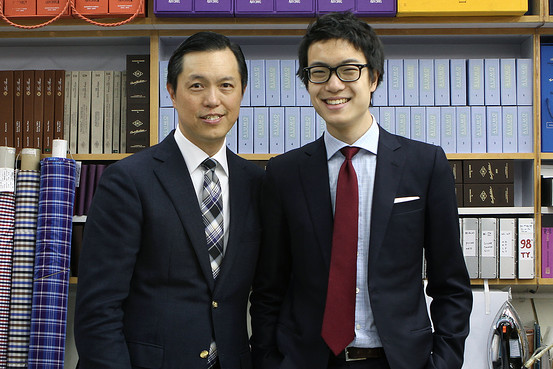
The Financial Times has an excellent article on some of Hong Kong’s menswear entrepreneurs. Men such Mark Cho, Justin Chang, Gerald Shen, Edwin Neo, and Arnold Wong are all featured. These are some of the most inspiring people in the business right now, in my opinion. 

Come back Monday for an interview I have with Mark Cho about the new transition in ownership at Drake’s of London

Ascot Chang, the best bespoke shirt maker I’ve ever used, just got featured in the Wall Street Journal. 
I have an interview with Tony and Justin Chang that will be published soon. It will be featured as part of a special series on custom shirts, so keep an eye out!
Ascot Chang, the best bespoke shirt maker I’ve ever used, just got featured in the Wall Street Journal. 

I have an interview with Tony and Justin Chang that will be published soon. It will be featured as part of a special series on custom shirts, so keep an eye out!