How to Maintain your Iron

After my post yesterday, one of our readers, David, emailed with a helpful note saying any good iron should have a self-cleaning setting. You should use the feature about once a month. Another reader, JT, noted that some irons, like the Rowenta I pictured, should not be used with distilled water. I Googled the manual and apparently the company recommends bottled spring water. Probably always best to check your own users’ manual. 

Jesse also sent me this link, which covers almost anything and everything you’d want to know about ironing, including how to clean your machines. It’s from a book that he’s recommended before, and after reading a few pages, I’m convinced that I need to get my own copy. Seriously, take a look at the link he sent - the section alone on ironing is probably enough to make you a world’s expert on the subject. DealOz shows a bunch of sites that will sell you a copy for about $10. 

Don’t Use Tap Water
I have two irons - one that I only fill with distilled or filtered water, and another that I fill with tap water. 
I used to be even more meticulous about my clothes than I am now (a fact that will surprise friends). In college, I would only use distilled or filtered water with my iron. I kept the practice until my late-20s, but for some reason began to stray when I bought a new iron. So for the last three years or so, I’ve been filling up my second iron with tap water. 
This past weekend, I was ironing my shirts and noticed some brown spots on them. It took me a bit to figure out where the spots came from, so I ironed a clean dishcloth I have. Sure enough, the brown spots were coming from my iron. Apparently it spits slightly browned water now. I suspect there is some old mineral deposits in the spray valve or something. 
I switched over to my old iron, the one I used to only fill with distilled water, and it worked fine. 
I can’t say with absolutely certainty that my ironing malfunction was caused by tap water. However, I definitely won’t be chancing it again and will only use distilled or filtered water from now on. 

Don’t Use Tap Water

I have two irons - one that I only fill with distilled or filtered water, and another that I fill with tap water. 

I used to be even more meticulous about my clothes than I am now (a fact that will surprise friends). In college, I would only use distilled or filtered water with my iron. I kept the practice until my late-20s, but for some reason began to stray when I bought a new iron. So for the last three years or so, I’ve been filling up my second iron with tap water. 

This past weekend, I was ironing my shirts and noticed some brown spots on them. It took me a bit to figure out where the spots came from, so I ironed a clean dishcloth I have. Sure enough, the brown spots were coming from my iron. Apparently it spits slightly browned water now. I suspect there is some old mineral deposits in the spray valve or something. 

I switched over to my old iron, the one I used to only fill with distilled water, and it worked fine. 

I can’t say with absolutely certainty that my ironing malfunction was caused by tap water. However, I definitely won’t be chancing it again and will only use distilled or filtered water from now on. 

Ironing for People Who Like It
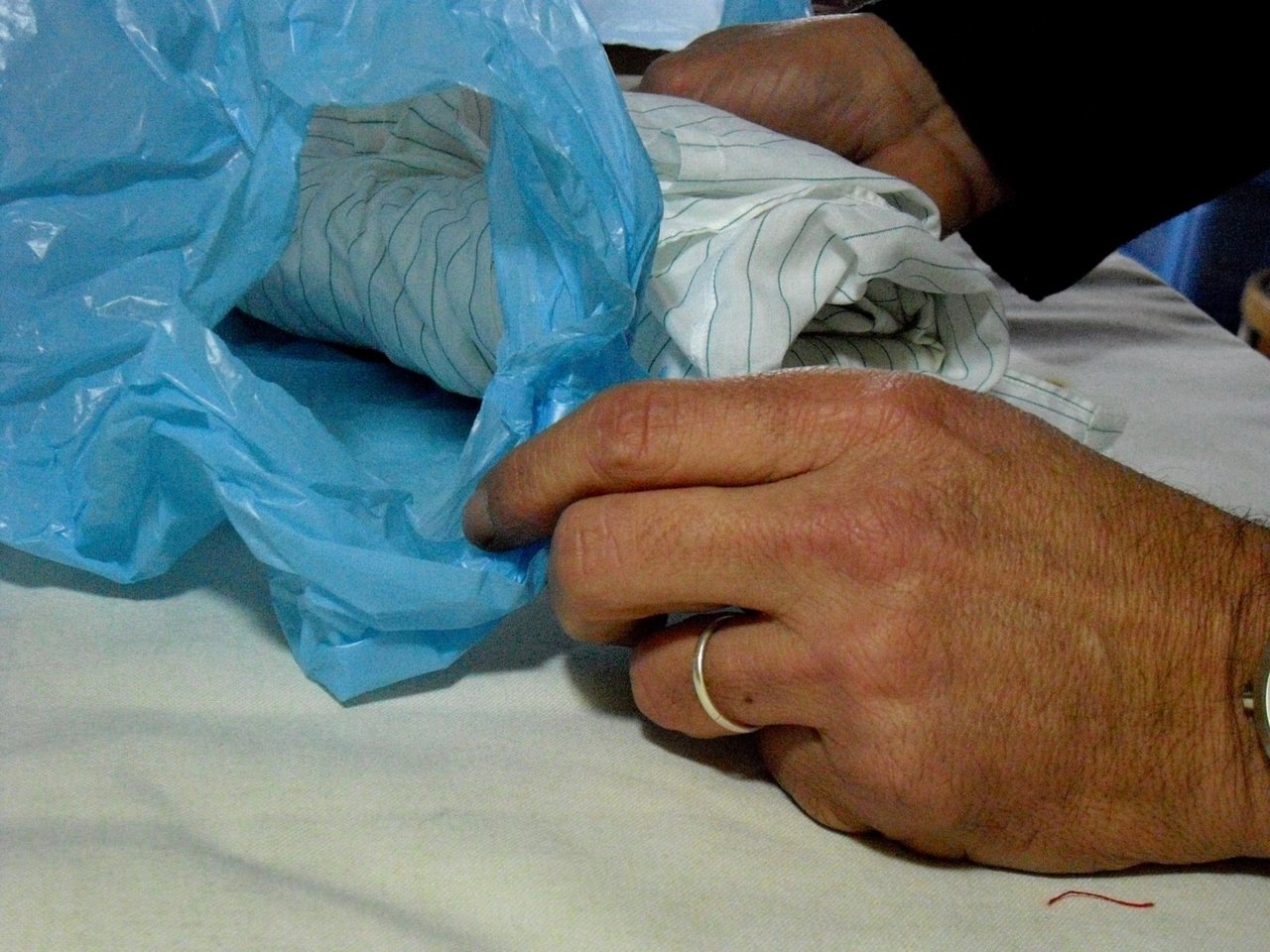
For the past month, I’ve been using Pierre’s method of ironing, which he demonstrates step by step here. The really unique parts of the technique involve spraying down the shirt with water, and then sealing it up in a bag for a bit, as well as using a stiff card for when you fold the shirts. The entire process means I take more than an hour to iron just a few pieces, but the result seems to me like a softer, tidier shirt. 
Am I going to use this technique for the rest of my life? Unlikely. Am I enjoying the OCD attention to detail, slow process, and novelty for the time being? Absolutely. 

Ironing for People Who Like It

For the past month, I’ve been using Pierre’s method of ironing, which he demonstrates step by step here. The really unique parts of the technique involve spraying down the shirt with water, and then sealing it up in a bag for a bit, as well as using a stiff card for when you fold the shirts. The entire process means I take more than an hour to iron just a few pieces, but the result seems to me like a softer, tidier shirt. 

Am I going to use this technique for the rest of my life? Unlikely. Am I enjoying the OCD attention to detail, slow process, and novelty for the time being? Absolutely. 

I jokingly remarked on Twitter earlier today that the key to ironing was putting the thing you want flat under the iron. I genuinely believe that many people, especially many men, are unduly afraid of ironing. Frankly, it’s pretty easy if you have decent equipment and you don’t expect perfection of yourself.

Above I’ve posted a nice, simple how-to from the folks at the English shirt company TM Lewin. It gets all the basics along with a little trick that I’ll have to try: buttoning the collar to do the shirt’s body.

My main advice is to get a good iron - I like my Rowenta, which was about a hundred bucks on eBay. I think it’s tough to understand how much different the good iron ironing experience is from the cheap iron ironing experience without trying it, but suffice it to say I’m very happy with my investment. When my mother-in-law visited, she literally exclaimed at how easily her ironing went. A really nice iron helps make the spray bottle a bit redundant, though go for it if you don’t mind keeping it on hand.

I do my ironing after my wife does the laundry (along with her ironing). I ask her to take the shirts out of the drier when they’re still very slightly damp, and then I iron while I watch TV. An episode of Archer later, I’m usually done with a pile of eight or ten. Frankly, I don’t try to get everything perfect. I don’t mind a little rumpling from time to time - it builds character.

When I was researching the Q&A for episode four of Put This On, I reached for one of my favorite reference books, “Home Comforts: The Art and Science of Keeping House,” by Cheryl Mendelson. Ms. Mendelson is a true domestic goddess.
The book offers practical advice and explanations of everything from laundry to vacuuming to sewing to entertaining. It’s exceptionally well-written and absolutely fascinating. The advice is consistently excellent, as well. It’s my shortcut to figuring out how to do things the Right Way.
Of particular note to readers of the blog are the careful explanations of the valuable properties of various fabrics, the simple explanations of clothing repair techniques, and the rundowns on ironing and stain removal. Whether you live alone, or share home care duties with a partner, it’s essential information.
The book costs less than twenty bucks, and it’s worth every penny.

When I was researching the Q&A for episode four of Put This On, I reached for one of my favorite reference books, “Home Comforts: The Art and Science of Keeping House,” by Cheryl Mendelson. Ms. Mendelson is a true domestic goddess.

The book offers practical advice and explanations of everything from laundry to vacuuming to sewing to entertaining. It’s exceptionally well-written and absolutely fascinating. The advice is consistently excellent, as well. It’s my shortcut to figuring out how to do things the Right Way.

Of particular note to readers of the blog are the careful explanations of the valuable properties of various fabrics, the simple explanations of clothing repair techniques, and the rundowns on ironing and stain removal. Whether you live alone, or share home care duties with a partner, it’s essential information.

The book costs less than twenty bucks, and it’s worth every penny.

brooksben asked: Sometimes when I am ironing the grid pattern of the metal on the ironing board shows through. Shaking out the fabric usually gets rid of it, but not in really dark fabrics like back dress shirts. What am I doing wrong?

My guess is that you need a new ironing board pad.  Or you’re pressing too hard.  Or both.

Q and Answer: Wrinkle-Free Shirts?Dan in Baghdad writes: What is your thought on wrinkle free shirts?  Personally I’m  not a big fan:  First, they’re never quite wrinkle free.  They  look okay, but still need a little work after washing to make them look  crisp.  And many are not really meant to be ironed either—for example  one such shirt I purchased from Land’s End, which is 55% cotton and 45%  polyester, looks slightly burned/melted after I ironed it.
Wrinkle-free shirts always look worse than natural cotton shirts.  Do not buy them.
There are two kinds of non-iron shirt.  One is as you describe above: a blend of polyester and cotton.  The only time polyester (or almost any petroleum-based fiber) should be in your wardrobe is if you’re buying high-tech “wicking” gym clothes.  Polyester has the super power of making things look cheap and ugly.The second form of non-iron shirt is all cotton, but impregnated with a chemical bath that makes it resist wrinkling.  This chemical treatment makes the shirt breathe poorly, look weirdly shiny, and feel slick and unpleasant.  It also washes out of the shirt after a few dozen go-rounds with the laundry.  This style of non-iron is marginally better than the the other one, but there’s really no reason not to just jettison the weird chemicals all together.  Maybe if you travel a lot in places where there are no irons in hotels(?), and need one shirt for emergency looking nice duty.  Maybe.The reality is that for casual wear, most all-cotton oxford shirts look fine without ironing as long as they’re hung dry or at least removed promptly from the drier.  The heavy, textural weave of cotton oxford is resistant to wrinkling on its own - the worst you can expect is rumpling, which I for one find kind of charming.  It’ll basically end up looking like the one above.  I wouldn’t wear a rumpled oxford with a suit, but if I was planning to wear a suit, I’d just iron a proper dress shirt.If you iron once a week, it will not take you more than the length of one re-run of Seinfeld.  I know, because I do my ironing while watching Seinfeld.  Usually on Sunday afternoons.  Pull your shirts out of the drier while they’re still a bit damp and go to town.  It should be easy going.

Q and Answer: Wrinkle-Free Shirts?

Dan in Baghdad writes: What is your thought on wrinkle free shirts?  Personally I’m not a big fan:  First, they’re never quite wrinkle free.  They look okay, but still need a little work after washing to make them look crisp.  And many are not really meant to be ironed either—for example one such shirt I purchased from Land’s End, which is 55% cotton and 45% polyester, looks slightly burned/melted after I ironed it.


Wrinkle-free shirts always look worse than natural cotton shirts.  Do not buy them.


There are two kinds of non-iron shirt.  One is as you describe above: a blend of polyester and cotton.  The only time polyester (or almost any petroleum-based fiber) should be in your wardrobe is if you’re buying high-tech “wicking” gym clothes.  Polyester has the super power of making things look cheap and ugly.
The second form of non-iron shirt is all cotton, but impregnated with a chemical bath that makes it resist wrinkling.  This chemical treatment makes the shirt breathe poorly, look weirdly shiny, and feel slick and unpleasant.  It also washes out of the shirt after a few dozen go-rounds with the laundry.  This style of non-iron is marginally better than the the other one, but there’s really no reason not to just jettison the weird chemicals all together.  Maybe if you travel a lot in places where there are no irons in hotels(?), and need one shirt for emergency looking nice duty.  Maybe.

The reality is that for casual wear, most all-cotton oxford shirts look fine without ironing as long as they’re hung dry or at least removed promptly from the drier.  The heavy, textural weave of cotton oxford is resistant to wrinkling on its own - the worst you can expect is rumpling, which I for one find kind of charming.  It’ll basically end up looking like the one above.  I wouldn’t wear a rumpled oxford with a suit, but if I was planning to wear a suit, I’d just iron a proper dress shirt.

If you iron once a week, it will not take you more than the length of one re-run of Seinfeld.  I know, because I do my ironing while watching Seinfeld.  Usually on Sunday afternoons.  Pull your shirts out of the drier while they’re still a bit damp and go to town.  It should be easy going.

lonelysandwich:

“Ironing techniques by professional craftsmen (shirt)” - プロの職人によるアイロンがけテクニック(ワイシャツ)

This short instructional film showcases unmatchably masterful ironing technique that we’d all do well to learn from, but it’s also one of the most absorbing, delicious demo videos I’ve ever seen.

via Joel Zimmer, from a series of similarly beautiful instructional videos at Garra.jp (WARNING: ALL-FLASH and Japanese)

Antique irons.  Can you imagine?  No wonder women didn’t have jobs.

There’re more at Fine Estate Sales

On the MaxFunForum, rossination asks:
Jesse, let’s talk about laundry. Do you have your shirts cleaned and pressed at the dry cleaner’s, or do you do wash (and iron) yourself? Starch or no starch? As a poor student, I don’t have the money to send my shirts out. Plus, I kind of like ironing. But I’ve been finding lately that I’m pretty unhappy with the slouchiness of my collars (even with metal stays). I’m thinking about going against my dad’s admonitions and getting some spray starch. What do you think?
I’m a public radio host, Rossination, not an oil magnate.  I wash and iron my shirts myself.
First: I’m glad to hear that you’re already in the “kind of like ironing” camp.  Ironing isn’t a lot of work, and it’s a great thing to do on Sundays while you’re watching football, or, in my case, Mondays when you’re watching The Roadshow.  (As an aside, I highly recommend spending a hundred bucks or so on a good iron.  The weight, steam and smoothness are very much worth it.)
Most cleaners use the harshest methods when washing and pressing your clothes, and should be avoided whenever possible.  There are exceptions, but they’re tough to find and expensive.  Especially if you have access to laundry in your home, there’s no reason not to launder your clothes yourself.  You care for them in a way a cleaner never will.
Starch is harsh on clothes and completely unnecessary.  Remember: your collar isn’t supposed to be like cardboard.  It’s made of fabric and is supposed to behave as such.  A collar stay is plenty to keep your collar sharp — beyond that, let them roll!

On the MaxFunForum, rossination asks:

Jesse, let’s talk about laundry. Do you have your shirts cleaned and pressed at the dry cleaner’s, or do you do wash (and iron) yourself? Starch or no starch?

As a poor student, I don’t have the money to send my shirts out. Plus, I kind of like ironing. But I’ve been finding lately that I’m pretty unhappy with the slouchiness of my collars (even with metal stays). I’m thinking about going against my dad’s admonitions and getting some spray starch. What do you think?

I’m a public radio host, Rossination, not an oil magnate.  I wash and iron my shirts myself.

First: I’m glad to hear that you’re already in the “kind of like ironing” camp.  Ironing isn’t a lot of work, and it’s a great thing to do on Sundays while you’re watching football, or, in my case, Mondays when you’re watching The Roadshow.  (As an aside, I highly recommend spending a hundred bucks or so on a good iron.  The weight, steam and smoothness are very much worth it.)

Most cleaners use the harshest methods when washing and pressing your clothes, and should be avoided whenever possible.  There are exceptions, but they’re tough to find and expensive.  Especially if you have access to laundry in your home, there’s no reason not to launder your clothes yourself.  You care for them in a way a cleaner never will.

Starch is harsh on clothes and completely unnecessary.  Remember: your collar isn’t supposed to be like cardboard.  It’s made of fabric and is supposed to behave as such.  A collar stay is plenty to keep your collar sharp — beyond that, let them roll!