Seasonal Transitions
Spring officially starts next week, which means now is a good time to start thinking about whether or not you’d like to store away your winter wardrobe. This can help protect your off-season clothes from moths and make much needed room for spring and summer items. Things such as heavy boots, tweeds, and sweaters can take up a lot of space, and a crowded closet can potentially damage tailored jackets, as well as just generally be a nuisance to deal with.
Before packing things away, however, make sure you give everything a good cleaning. Food bits and human odor can attract insects, so a dry clean or wash will be necessary. You’ll also want to check the pockets on everything to make sure you’re not storing away anything important.
For storage, I like to use cloth garment bags, as they’re more breathable than plastic. You can buy some decent ones for about $15 through Amazon and Bed, Bath & Beyond, though if you have the money, our advertiser The Hanger Project also sells a rather nice model for $65. For sweaters and shoes, I mostly use plastic bins, but lately have been considering getting under-the-bed canvas storage units. Whichever one you choose for yourself, take care to put heavier sweaters at the bottom, and don’t pack things in too tightly. That way, your thinner, lightweight knits won’t come out wrinkled by the time fall rolls around. You may also want to consider throwing in some cedar or lavender sachets with your knitwear, as they’ll help deter dreaded moths and silverfish from finding your clothes and snacking on them.
Finally, consider donating anything you haven’t worn either to a local Goodwill or a charity that will pick up your clothes for free. This site can help you schedule a pick-up for the second. For things that might be too expensive to give away, maybe make a note about what you’d like to sell. eBay is a great place to recoup some of the money you’ve spent, but you’ll want to wait until September before you list. From my experience, seasonal items tend to sell a bit better during their appropriate seasons. Those few extra dollars can make you feel a bit better about having to sell something you were reluctant to part with. 

Seasonal Transitions

Spring officially starts next week, which means now is a good time to start thinking about whether or not you’d like to store away your winter wardrobe. This can help protect your off-season clothes from moths and make much needed room for spring and summer items. Things such as heavy boots, tweeds, and sweaters can take up a lot of space, and a crowded closet can potentially damage tailored jackets, as well as just generally be a nuisance to deal with.

Before packing things away, however, make sure you give everything a good cleaning. Food bits and human odor can attract insects, so a dry clean or wash will be necessary. You’ll also want to check the pockets on everything to make sure you’re not storing away anything important.

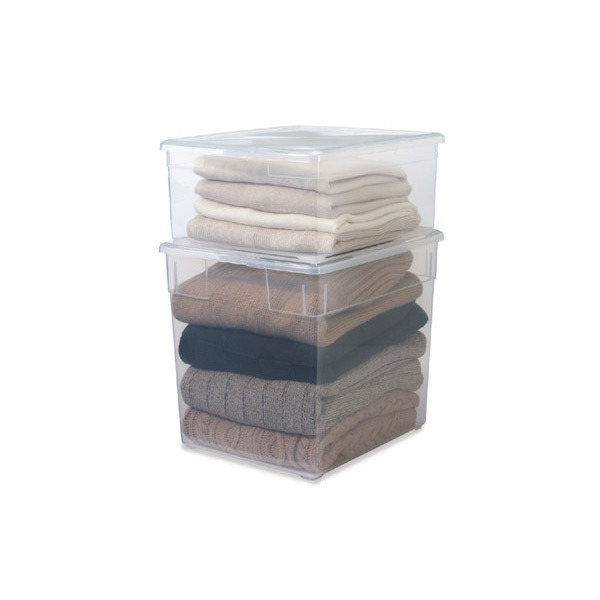
For storage, I like to use cloth garment bags, as they’re more breathable than plastic. You can buy some decent ones for about $15 through Amazon and Bed, Bath & Beyond, though if you have the money, our advertiser The Hanger Project also sells a rather nice model for $65. For sweaters and shoes, I mostly use plastic bins, but lately have been considering getting under-the-bed canvas storage units. Whichever one you choose for yourself, take care to put heavier sweaters at the bottom, and don’t pack things in too tightly. That way, your thinner, lightweight knits won’t come out wrinkled by the time fall rolls around. You may also want to consider throwing in some cedar or lavender sachets with your knitwear, as they’ll help deter dreaded moths and silverfish from finding your clothes and snacking on them.

Finally, consider donating anything you haven’t worn either to a local Goodwill or a charity that will pick up your clothes for free. This site can help you schedule a pick-up for the second. For things that might be too expensive to give away, maybe make a note about what you’d like to sell. eBay is a great place to recoup some of the money you’ve spent, but you’ll want to wait until September before you list. From my experience, seasonal items tend to sell a bit better during their appropriate seasons. Those few extra dollars can make you feel a bit better about having to sell something you were reluctant to part with. 

Autumn has caught us in our summer wear. - Philip Larkin, British poet
Fall officially begins on Friday. Before you know it, the landscape will silently explode with burgundy, golden yellow, and burnt orange. Baseball season will give way to football. Crispy leaves will fall and drift to the ground, then be raked into piles for children to jump into. Temperatures will drop, the air will turn sharper, and we’ll use these as excuses to enjoy our favorite woolen sweaters. 
Before this arrives, it may be time to start planning for your seasonal storage of clothes. Storing your summer clothes away will help make room for your fall/ winter wardrobe, and help protect your clothes when they’re not in use for six months. To do this, however, you’ll want to make sure of a few things. 
Wash or dry clean your clothes before you store them. This ensures that insects aren’t packed away with your clothes and that any food bits, which can attract insects, will be gone as well. I even give my clean clothes a good shake before they’re actually stored. 
Check the pockets to make sure they’re empty. I also zip up the zippers and button the buttons, just to make sure things are in good order. 
Get muslin or canvas garment bags for your trousers, jackets, and suits. I’ve found that these work better than plastic since they allow your clothes to breathe while keeping the bugs at bay. It’s also recommended that you use hangers with molded shoulders for your jackets and suits. Many people believe that this helps your garments keep their shape, though I’ve read credible sources cast doubt on this claim. Still, I’m not testing the matter with my clothes, so I play it safe. 
For sweaters and shirts, store them in plastic bins with lids. Drill a few holes into the lid so that air can circulate. Failing to do so can create moisture, which in turn can cause mildew. Pack them away with the heaviest items on the bottom, and be sure not to over stuff things, otherwise you’ll ruin the fibers. I also wrap my favorite pieces in acid free tissue paper, but this isn’t terribly necessary.
Put cedar balls or lavender in along with your clothes to deter bugs. 
Choose a storage space that is cool and dry. If you don’t, your clothes may develop mold, and if they do, they will have a smell that will be very, very difficult to get out. I’ve had clothes permanently ruined from being stored in damp areas, so be careful. Once you’ve chosen a place, vacuum and clean it out before your store your clothes there. 
If you have silverfish in your home, and you’ve put holes in the lids of your storage bins, put those bins off the floor. This will lower the likelihood of having silverfish snack on your garments. 
Of course, fall arrives in different areas at different times. I hear it’s already raining in New York, while in the Bay Area (where I’m from), September and October are just when things start to get warm. Pack your things away when it makes the most sense for you. 

Autumn has caught us in our summer wear. - Philip Larkin, British poet

Fall officially begins on Friday. Before you know it, the landscape will silently explode with burgundy, golden yellow, and burnt orange. Baseball season will give way to football. Crispy leaves will fall and drift to the ground, then be raked into piles for children to jump into. Temperatures will drop, the air will turn sharper, and we’ll use these as excuses to enjoy our favorite woolen sweaters. 

Before this arrives, it may be time to start planning for your seasonal storage of clothes. Storing your summer clothes away will help make room for your fall/ winter wardrobe, and help protect your clothes when they’re not in use for six months. To do this, however, you’ll want to make sure of a few things. 

  • Wash or dry clean your clothes before you store them. This ensures that insects aren’t packed away with your clothes and that any food bits, which can attract insects, will be gone as well. I even give my clean clothes a good shake before they’re actually stored. 
  • Check the pockets to make sure they’re empty. I also zip up the zippers and button the buttons, just to make sure things are in good order. 
  • Get muslin or canvas garment bags for your trousers, jackets, and suits. I’ve found that these work better than plastic since they allow your clothes to breathe while keeping the bugs at bay. It’s also recommended that you use hangers with molded shoulders for your jackets and suits. Many people believe that this helps your garments keep their shape, though I’ve read credible sources cast doubt on this claim. Still, I’m not testing the matter with my clothes, so I play it safe. 
  • For sweaters and shirts, store them in plastic bins with lids. Drill a few holes into the lid so that air can circulate. Failing to do so can create moisture, which in turn can cause mildew. Pack them away with the heaviest items on the bottom, and be sure not to over stuff things, otherwise you’ll ruin the fibers. I also wrap my favorite pieces in acid free tissue paper, but this isn’t terribly necessary.
  • Put cedar balls or lavender in along with your clothes to deter bugs. 
  • Choose a storage space that is cool and dry. If you don’t, your clothes may develop mold, and if they do, they will have a smell that will be very, very difficult to get out. I’ve had clothes permanently ruined from being stored in damp areas, so be careful. Once you’ve chosen a place, vacuum and clean it out before your store your clothes there. 
  • If you have silverfish in your home, and you’ve put holes in the lids of your storage bins, put those bins off the floor. This will lower the likelihood of having silverfish snack on your garments. 

Of course, fall arrives in different areas at different times. I hear it’s already raining in New York, while in the Bay Area (where I’m from), September and October are just when things start to get warm. Pack your things away when it makes the most sense for you.