Park & Bond asked me to write some more tips on seasonal storage, so I put something together. Check it out if you’re thinking about packing your summer clothes away.
Autumn has caught us in our summer wear. - Philip Larkin, British poet
Fall officially begins on Friday. Before you know it, the landscape will silently explode with burgundy, golden yellow, and burnt orange. Baseball season will give way to football. Crispy leaves will fall and drift to the ground, then be raked into piles for children to jump into. Temperatures will drop, the air will turn sharper, and we’ll use these as excuses to enjoy our favorite woolen sweaters.
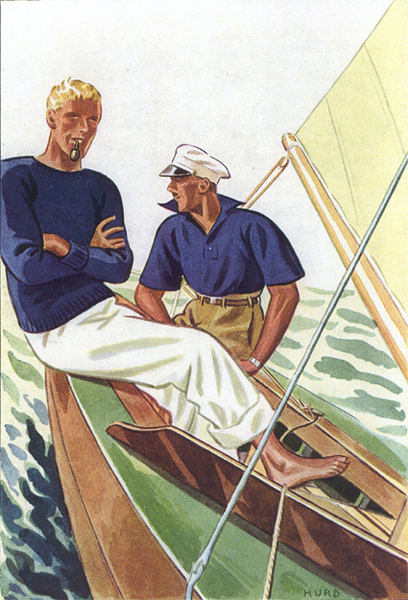
Before this arrives, it may be time to start planning for your seasonal storage of clothes. Storing your summer clothes away will help make room for your fall/ winter wardrobe, and help protect your clothes when they’re not in use for six months. To do this, however, you’ll want to make sure of a few things.
- Wash or dry clean your clothes before you store them. This ensures that insects aren’t packed away with your clothes and that any food bits, which can attract insects, will be gone as well. I even give my clean clothes a good shake before they’re actually stored.
- Check the pockets to make sure they’re empty. I also zip up the zippers and button the buttons, just to make sure things are in good order.
- Get muslin or canvas garment bags for your trousers, jackets, and suits. I’ve found that these work better than plastic since they allow your clothes to breathe while keeping the bugs at bay. It’s also recommended that you use hangers with molded shoulders for your jackets and suits. Many people believe that this helps your garments keep their shape, though I’ve read credible sources cast doubt on this claim. Still, I’m not testing the matter with my clothes, so I play it safe.
- For sweaters and shirts, store them in plastic bins with lids. Drill a few holes into the lid so that air can circulate. Failing to do so can create moisture, which in turn can cause mildew. Pack them away with the heaviest items on the bottom, and be sure not to over stuff things, otherwise you’ll ruin the fibers. I also wrap my favorite pieces in acid free tissue paper, but this isn’t terribly necessary.
- Put cedar balls or lavender in along with your clothes to deter bugs.
- Choose a storage space that is cool and dry. If you don’t, your clothes may develop mold, and if they do, they will have a smell that will be very, very difficult to get out. I’ve had clothes permanently ruined from being stored in damp areas, so be careful. Once you’ve chosen a place, vacuum and clean it out before your store your clothes there.
- If you have silverfish in your home, and you’ve put holes in the lids of your storage bins, put those bins off the floor. This will lower the likelihood of having silverfish snack on your garments.
Of course, fall arrives in different areas at different times. I hear it’s already raining in New York, while in the Bay Area (where I’m from), September and October are just when things start to get warm. Pack your things away when it makes the most sense for you.
Ascot Chang x The Armoury
A preliminary sample of the ACxTA collaboration Linen Safari Jacket. Done in a Solbiati Linen, the first run will be in a true navy, rather than this indigo, and with matte horn buttons rather than the corozo on this one.
Sizes will run from S - XL, this being the XL I am wearing. For reference, I am 180cm and 95kgs, a 38inch waist.
We are taking pre-orders now, so email me at info@thearmoury.com if we can help.
I love this coat, and the shirt-jacket in general. When it’s jeans-warm in LA, one of my most basic uniforms is jeans, white linen shirt, desert boots and an old Kenyan safari jacket I thrifted a few years ago. When the weather gets cooler, the outfit doesn’t change much - the desert boots get swapped for a more standard crepe-sole chukka, the linen for oxford cloth and the safari jacket for an old LL Bean chamois shirt. In both cases, that top layer finishes the look without adding much formality. Perfect for a casual Saturday.
James Bond, in what Will Boehlke calls: “The most basic of lightweight combinations: blue tropical weight suit, white shirt, black shoes and a solid satin or knit necktie.”
Q and Answer: How Can I Keep My Feet Comfortable Without Socks?
Andrew asks: I’ve been going sockless this summer, mostly with loafers, boat shoes, and plimsolls, and every time I come home, I take off my shoes and see blisters on my feet. I don’t want to wear no show socks. Do you have any solutions?
Some people recommend toughening it out and just developing callouses, but I think that’s bad advice. Who wants thick, ugly callouses on their feet? My suggestion is to go with terry cloth insoles, which I wrote about in my “Guide to Going Sockless” article back in the beginning of this summer. I use Aldo for mine, but there are other makers. You can order them off their website, but since Aldo has a store in almost every major city, you’re probably already close by one and can save on shipping. They cost about $7.
You can get by on just having one pair, but if you don’t wear socks often, maybe it would be good to go with two and rotate through them. The top side is a soft terry cloth, which kind of rubs off a bit when you first get it, but they’re fine after a few wears. The underside is latex, so that it doesn’t slip in your shoe. You’ll want to wash them every so often, but not put them in the dryer, otherwise you’ll ruin the latex.
If you have particularly sweaty feet, sprinkle some Gold Bond powder in there, and you’ll help your feet stay cool and dry while they’re in your shoes.
Since I moved to Los Angeles from San Francisco, I’ve had to adjust to the idea of wearing shorts during the hottest months of the year. I get horrible migraine headaches, weather’s a big trigger, so when it’s over 85 or 90, it’s all shortpants, all the time.
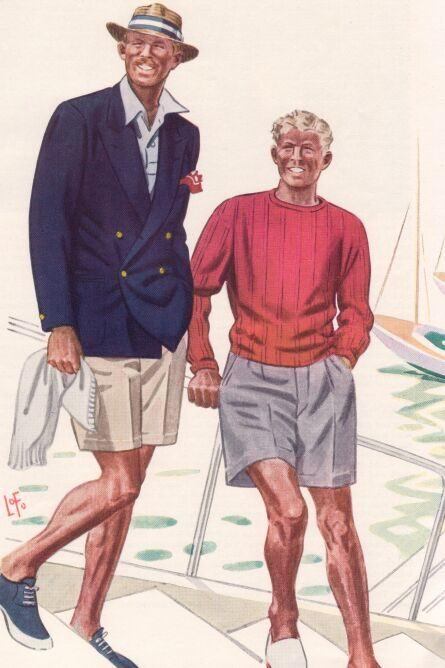
As I’ve come to accept, if not embrace the situation, I’ve tried a lot of shorts. The height-of-summer outfit I keep coming back to is one that’s as at home in the 1930s as it is today. Ghurka shorts, linen shirt and espadrilles.
Ghurka shorts, like khaki pants, have a military heritage. They’re distinguished by their self-belting waist, which was purportedly designed to allow soldiers to tighten their trou as they lost weight in the field. They were originally worn by the British military, but they became a surplus staple, not unlike WWII’s chinos.
When the supply of WWII surplus dried up in the 60s and 70s, they faded away, only to return in the 1980s. Above, an advertisement for the old pre-Gap Banana Republic that celebrates their field heritage.
Nowadays they’re tough to find and rarely seen, but they still cut a flattering, relaxed, elegant figure when they are spotted. My pair is by Bill’s Khakis, though they no longer offer the style (and I had to remove a cargo pocket with a seam ripper). I just snagged a second pair, by J. Peterman, off of eBay. Bonus points go to What Price Glory, the UK military recreationists, for their reasonably price (less than forty bucks) and their authentic forward pleats.
They’re best worn with a shirt tucked in and casual footwear. No need for the kneesocks that British forces wore with their desert boots. If things get hot, roll the hem up a bit. It adds panache.
(Tip of the hat to (and further reading from) Maximinimus, To The Manner Born, The Selvage Yard & Mister Crew)
A Complete Guide to Getting Chinos This Summer
Chinos have a bit of a circutous history. They began as part of the British Army’s standard uniform starting around the 1840s. By the end of the 19th century, American troops stationed in the Philippines began wearing them. They remained associated with the military for another hundred years, until 1942, when the US Navy approved that they could be worn off-duty. Since then, they’ve been incredibly popular with the public. I think the civilian trend largely took off when James Dean began wearing them. That was during a time when much of the public looked towards Hollywood for sartorial direction, and ever since then, the popularity of chinos has been buoyed by big marketing campaigns from companies such as The Gap.
The great thing about chinos is that, like jeans, they look better with age. In fact, one of the best looks, in my opinion, is a pair of really worn down chinos with a sports coat, oxford cloth button down shirt, and pair of brown loafers. The more worn down and beat up the chinos, the more stylish this look becomes. When the pants are too new, the look can be a bit stiff. As such, I recommend that you wear your chinos with a bit of a rumple and avoid creasing the front of the legs. Creases on chinos add fifteen years to your age and can make you look like the type that irons your underwear. Wear them as casually as you can and invite the fraying that comes. If you want, you can also roll up the the legs a bit, which Gilt Manual recently gave some really good tips for.
So if you’re on the market for chinos, where can you turn? Here are some options. Note that in the interest of sizing information, I’ve included what I wear for most of these. I’m a size 32 in most pants, but sometimes have to size down depending on the cut. It’s probably also worth mentioning that I have an Asian booty that’s flatter than a flapjack, so take that into account when gauging whether my reviews will be helpful for you.
- Uniqlo Vintage chino ($50): Uniqlo’s Vintage fit chino is a nice slim cut model with mid-century details - watch pocket, decent hardware, and a slight herringbonish finish. Unfortunately, they also have a low rise, which makes them not as good for tucking in shirts. Still, for $50, they’re not bad, and if you’re in New York City, you can pick one up at any of their stores. Uniqlo should also have a website up at some point, but details on the drop date are fuzzy. I wear a 32 in these.
- Brooks Brothers Milano Fit chinos ($95): Brooks has a popular slim fit chino. They’re a bit tapered, which make them good for slim men, but not much so for heavier guys (tapered pants can emphasize your waistline). The material is a smooth plain-weave, which gives them an “office” feel. I prefer slightly rougher twill models, personally, but it’s a matter of taste. Unfortunately, Brooks only has a terrible peach colored version left, but they’ll restock their other colors soon, so just keep an eye out. If you catch them at the beginning of their sales, you can nab one for as little as $60, but otherwise they’re about $100. I find these fit pretty true-to-size. I wear a 32 in these, but can also size down to 30 for a slightly slimmer fit.
- Rugby university chinos ($70): Rugby’s University model fits very well if you size down. Whereas I’m normally a 32 in most pants, I wear a 31 in Rugby’s. They’re slim and have a rise that just hits the waist. They have a slightly worn finish, which means the colors are a bit faded and the edges are very, very slightly distressed. Nothing really noticeable, but it’s there.
- Bill’s Khakis M3 chinos ($67): Bill’s Khakis has three models, but only the M3 is anything that’s remotely close to wearable. Even then, you’ll have to get these slightly tapered. That job shouldn’t run you more than $20, however. So why buy something that doesn’t immediately fit well off the rack? Because these are some of the best chinos you can have after some alterations, and when Sierra Trading Post has them for $65, they’re a steal. They’re superbly constructed and made from a traditional soft twill fabric that’s free of any pre-distressing. They also feature deep pockets (a detail many brands are cutting back on) and have a rise that actually sits on my waist (not “just hits it”). The slightly higher rise will allow you to tuck in your shirt without making your torso look unnaturally big. I recommend sizing down a bit, but not too much. I wear a 31 in Bill’s Khakis.
- Ralph Lauren Preston chinos ($75): These are a lot like Bill’s Khakis - great construction, but not terribly slim (these are “grown up” chinos in a very real sense). However, like Bill’s, they hold a lot of potential. They have a slightly higher rise than Bill’s, which I like, but the pockets aren’t as deep. You’ll need to size down quite a bit to get these to fit right. I go down as far as 30 personally.
- J Crew chinos ($60-70): I’m not crazy about most of J Crew’s stuff, but I think they’re worth talking about since almost everyone has a J Crew store near them. J Crew has a few different models, but I’ll only speak of the Urban Slim Fit and Bowery. The Urban Slim Fit doesn’t work at all on me, but I could see them fitting well on someone with a lot of junk in the trunk. The Bowery is much better - pretty decent slim fit, even though the construction is clearly more mass market. The price isn’t bad, however, especially given how often J Crew holds sales. You could probably snag these for $40 if you waited for the right opportunity. If you do, I recommend sizing down. I wear a 30 in the Bowery.
- RRL Officer Chino ($185): RRL, a Ralph Lauren brand, has has a pair of selvedge twill chinos that wears like selvedge dehim jeans. They’re meant to be worn as such, too - wear them hard and don’t wash them often. Soon you’ll see fades like you would with selvedge jeans (though obviously more subtle because of the fabric). They also have nice details, such as double canvas waistband (which makes them sturdier) and a button fly (which won’t give you a weenie tent like zipper flys do). The fit is a lot slimmer, however, than other models you’ll read about here. Part of this is just the style, but part of it is also to get the fading you want. The cut is definitely not for everyone, but if you’re used to wearing slim selvedge denim jeans, then you might want to consider these. Size down and expect a little stretching (I wear a 31). You can buy them in most Ralph Lauren stores, but if you’re not close to one, you can phone an order in. RRL is also going to get a website up sometime next month, I hear.
- Left Field ($198): The nice folks at Left Field sent me a free pair of these to try on. They’re a slightly more workwear version of traditional chinos. The belt loops are big enough to accommodate belts meant for jeans; the stitching is slightly more rugged; and the pants have a slight “work pant” feel. Like with most workwear/ heritage brands, the quality here is heavily in the details. There is a chain-stitched waistband, Corozo button fly, and Japanese chambray pocket bags. The fabric for the pants themselves are a ringspun cotton Japanese twill. I could see these working well for someone who has a Americana/ heritage sensibility. I recommend going true-to-size on these, but note that they fit slightly big in the seat, so you should probably have something more than my non-existent Asian booty if you want to wear these well.
- Unis ($228): I know what you’re already thinking. $228 for chinos!? Part of the reason why these are so expensive is because they’re made in the USA (as Eunice Lee explained to someone in the comments section of Well-Spent). As a political economist, I’ll admit, I don’t care for these kind of “Made in the USA” appeals. For me, I just care about fit, styling, and quality, and all these counts, Unis’ Gio chinos are pretty nice. They’re slim without being overly so, have the perfect rise, and feature nice details such as a button fly and Corozo buttons. They have an unwashed version if you need something dressy, as well as a garment dyed rumpled version if you want something casual. I wear a 32 in these, but could also easily do a 30. If money is less of an object for you, I would definitely recommend these.
- Others: There are other highly celebrated chinos. Howard Yount and Albam come to mind, but I don’t have any experience with either of them. Incotex and Mabitex are also a favorite for many people, including me, but the fit, styling, and finish on them vary so much that it’s not possible to write a generalizable review. You can find them in the Buying and Selling section of Styleforum, eBay, Yoox, and Gilt. A word of warning on those, however - buying them can sometimes be a gamble since they vary so much. Caveat emptor.
Lastly, for those who might be wondering: what’s the difference between chinos and khakis? For pedants, chino is the Spanish word for Chinese. The original material for these pants was a Chinese twill cotton, so they were colloquially called chinos. Khaki is the Hinidi word for “dust.” The original chinos, worn by the British Army, were dyed in a mulberry juice that gave it a yellowish drab shade, now known as “khaki.” Thus, the correct term for these pants is chinos, and khaki the sandy tan color they most often come in. But that’s pedantry; for the most part, the two words are interchangeable.
(photos by pocketsquareguy, The Sartorialist, and J Crew)
For $50, You Can Buy …
This J Crew Irish linen shirt. Some people hate how linen holds wrinkles, but I personally love it. Linen has a life to it and looks best when its a bit crumpled - the texture gives the fabric a kind of “lived in” elegance. As long as your linen shirt fits well, these crumples will give you an insouciant look without making you look messy.
And J Crew’s version fits fairly well. It’s slimmer than most models out there, and comes in extra-small for overly skinny guys like me. The only quip I have is that all of J Crew’s shirts have small collars. I prefer my collar points to be about 8.25cm long and the back of my collar to be about 5cm high. J Crews are much shorter, by about 1 to 1.5cm. As such, it lacks the panache that, say, a Guy Rover linen shirt will have. The Guy Rover is what I’d really like to recommend to you, but this series isn’t called “For $70 You Can Buy,” so if you really only have $50 to spend, I recommend J Crew’s. Plus, if you spend over $150 on J Crew’s final sale items right now, and use MUSTSHOP as your coupon code, you’ll get 30% off plus free shipping. That brings this puppy down to $35. Not too shabby if you’re on a tight budget.
Note that when you first get your linen shirt, it will feel rough to the touch. However, linen softens quite a bit over time, and before long, you’ll have one of your most comfortable shirts ever. Just remember to never bleach your linens, as the harsh chemical will destroy the fibers.