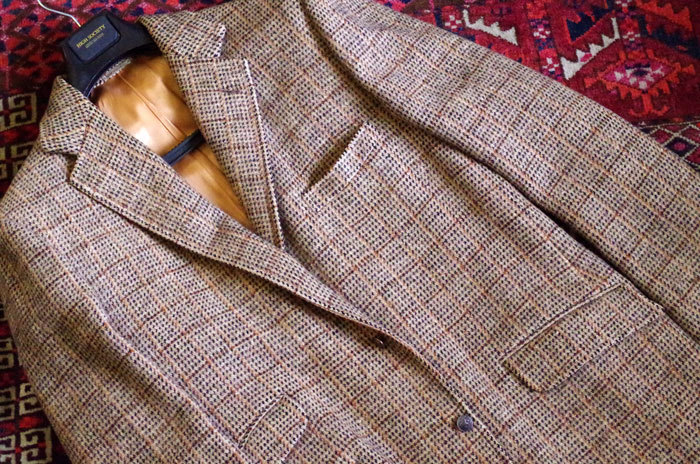
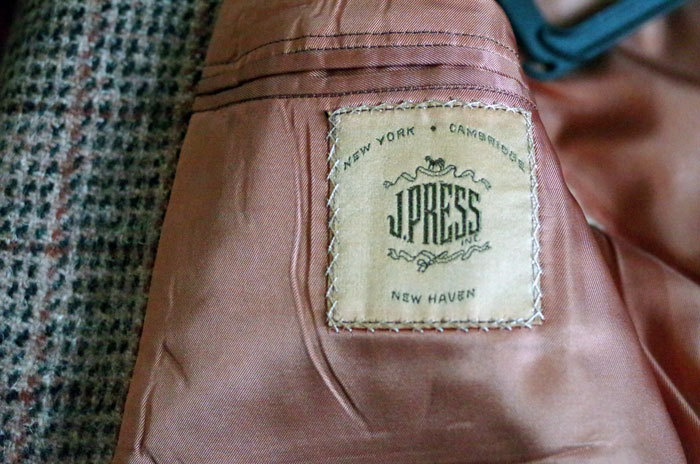
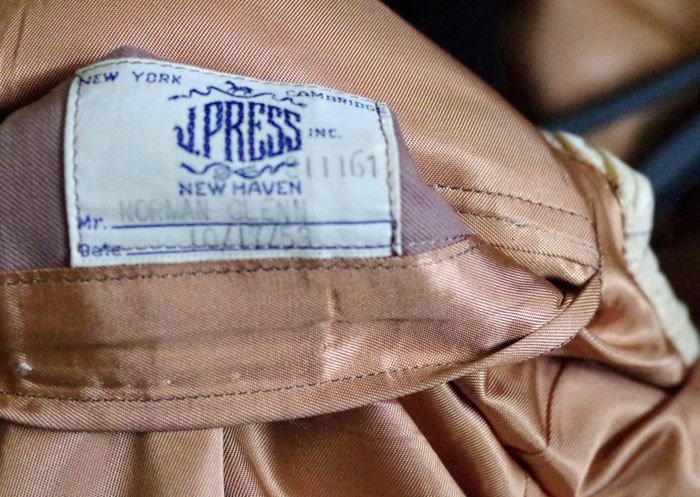
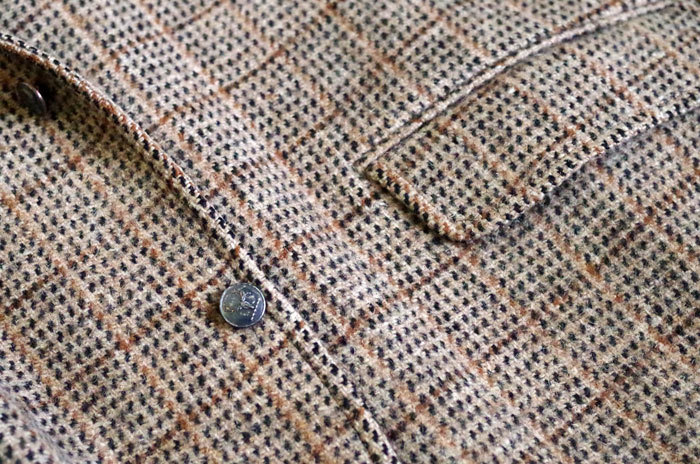
One of my favorite blogs, Heavy Tweed Jacket, has a habit of long hiatuses wherein he takes down his content completely. Luckily, he’s back, posting pictures of Secretary of State Dean Atcheson in three-piece tweed suits. Which is tremendous.
Q and Answer: Can I Wear a Tie and a Button-Down Collar?
Matthew asks: I’ll often wear a knit tie with a button-down collar. I figure, a casual tie for a casual shirt. But I can’t find much of a consensus on wearing other ties with one. What are your thoughts on the particulars of ties with button-down shirts?
Here’s the short answer: yes, you can wear a tie with a button-down collar.
The longer answer, as it always does, has a bit more complication.
The button-down collar is a particularly American style. The oxford-cloth button-down is so beloved that in menswear circles it’s become known simply as the OCBD. The collar, originally invented for sport, has become the definitive shirt style for both casual and more formal dress in the United States. Just because it’s a genuine icon, though, doesn’t make it appropriate for every situation.
There is, of course, a heirarchy of formality in shirts. Speaking generally, double cuffs are more formal than single cuffs. Collars grow more formal as their spread widens. Fabrics with harder finishes are more formal than those with softer finishes. Button-down oxfords are the most informal of all. Still, we live in an era where half of the covers of GQ magazine feature men wearing skinny ties with plaid sport shirts, so there’s still plenty of room for the tie-and-button-down combination.
If you live outside the United States, wearing a tie with a button-down collar may be affectedly American, or even inappropriate. I certainly wouldn’t do it if I worked at a London financial services company, for example. Of course, I wouldn’t likely wear a button-down collar much if I lived outside the United States, so it simply wouldn’t come up.
Inside the United States, I think your instincts are absolutely correct. I tend to wear a button-down casually. They pair well with sportcoats, especially casual, texture-y ones, and they look great with knit ties and bows. In fact, I generally prefer button-down collars with both of those tie styles.
The more American your aesthetic, the further you can push this - if you buy all your clothes at J. Press and wear nothing but sack suits, like George H.W. Bush, you can wear a button-down in almost any situation. If you’re of the Anglophilic persuasion, or tend to wear Italian styles, they’re not particularly suitable, even with a blazer or loud checked coat.
If you want to wear a button-down collar with a suit, you’re entering dangerous territory. Above is a famous photograph of Cary Grant in a button-down and suit. It’s a picture that often comes up when people argue about the subject of whether the two are an acceptable pairing. Cary Grant looks great, so as a general rule, I’d say that if you’re Cary Grant, you can wear a button-down with a suit. I’ll also make an exception for the kind of dyed-in-the-wool trads who have sworn a blood oath against suit darts and dress every day like they were going to a meeting at the Dean’s Office at Harvard in 1964. And heck, while I’m at it, I’ll make an exception for the most casual of suits - corduroy.
For all us normals, though, it’s almost never a good move. The best case scenario is that you’ll make it to the level of the inoffensive dress of an insurance conference attendee from Dubuque. The worst case scenario is that you’ll fall short, and end up at the offensive dress of an insurance conference attendee from Dubuque. It’s really not worth the risk.
Q and Answer: The Blue Oxford Cloth Button-Down Shirt
Nik writes: On the menswear blogs I follow, I always see the blue Oxford button-down as the go-to shirt for any occasion, the “only shirt you’ll ever need”. However, I rarely see a button-down worn in a business setting, with a suit and tie, here in Europe. Do I suffer from selective vision or is it an inherently American style (since almost all of the men’s style blogs hail from the States)?
You’re seeing two factors at work, here. The oxford cloth button-down (referred to colloquially by style nerds as the “OCBD”) is indeed an inherently American shirt. It’s also a shirt that isn’t often suitable for business wear.
The OCBD is probably the greatest American contribution to menswear. The shirt features a soft button-down collar and cotton in a durable, richly textured oxford weave. Colored oxfords often combine colored thread with white, creating the soft colors seen above. Oxfords were pioneered by Brooks Brothers at the turn of the 20th century, and they’ve been the classic American casual shirt ever since. Brooks still calls the oxford the “polo” shirt, because the button-down collar was originally seen on polo players. It’s an incredibly versatile shirt, and looks great in a wide variety of contexts.
Its popularity here in the US means that you will often see it paired with a suit. This can be pulled off, especially with a casual suit - say cotton or tweed. It pairs very well with sportcoats and bow ties. It’s mostly worn in a business context, though, by people who just don’t know any better. (There are exceptions: Yankee types steeped in “trad” style might pull it off in a conservative business context.)
In Europe, you might see a button-down collar on a more high-collared Italianate shirt, but the classic OCBD is a relative rarity. More typical is a variation of the traditional English shirt, with a stiffer, spread collar and fabric in a finer weave (a fine oxford is called a “royal oxford”) or a weave with a harder finish, like a poplin.
Put This On Episode 5: Tradition
Jesse talks with Jay Walter, head of Made-to-Measure at J. Press in New York City about their classic American style. Then a talk with designer Thom Browne, who’s merged traditional aesthetics with fashion ideas, and become perhaps the most influential menswear designer of the last ten years.
Former Secretary of State George Schultz and I differ politically, but that doesn’t mean he isn’t fly.
“It’s better to have one good pair of shoes than a half dozen cheap ones, because the cheap ones look cheap even when they’re new, but the good ones look good even when they’re old.”— Bruce Boyer, via Rugged Old Salt