Bill Murray and Madras Trousers 

One of my favorite films of 2012 was “Moonrise Kingdom”, which I found to be fun to watch as all Wes Anderson movies tend to be. Of course, I couldn’t help but notice the northeastern nautical and costal style of the wardrobe and that aesthetic probably added to my enjoyment of the picture. 

After watching the film, I instantly wanted to buy a pair of madras trousers — as obnoxious as they might be — after watching Bill Murray’s character wear them in such a comfortable and carefree way with a white OCBD and the occasional navy cardigan. Or perhaps shirtless when he decided to go chop down a tree

I ended up buying a pair of madras trousers from Howard Yount, which are on sale right now for $65, and they’re definitely comfortable to wear — if you’re comfortable wearing boldly patterned madras. 

Madras probably isn’t appropriate for the office, but they make for great weekend trousers. You don’t notice stains on them as much as you would a solid linen pair of pants because of the patterns, which I think makes them ideal for eating food at street festivals. I’ve been patiently waiting for warm weather to arrive so it’ll be appropriate to wear them again. 

-Kiyoshi

It’s On Sale: Lands’ End dress trousers

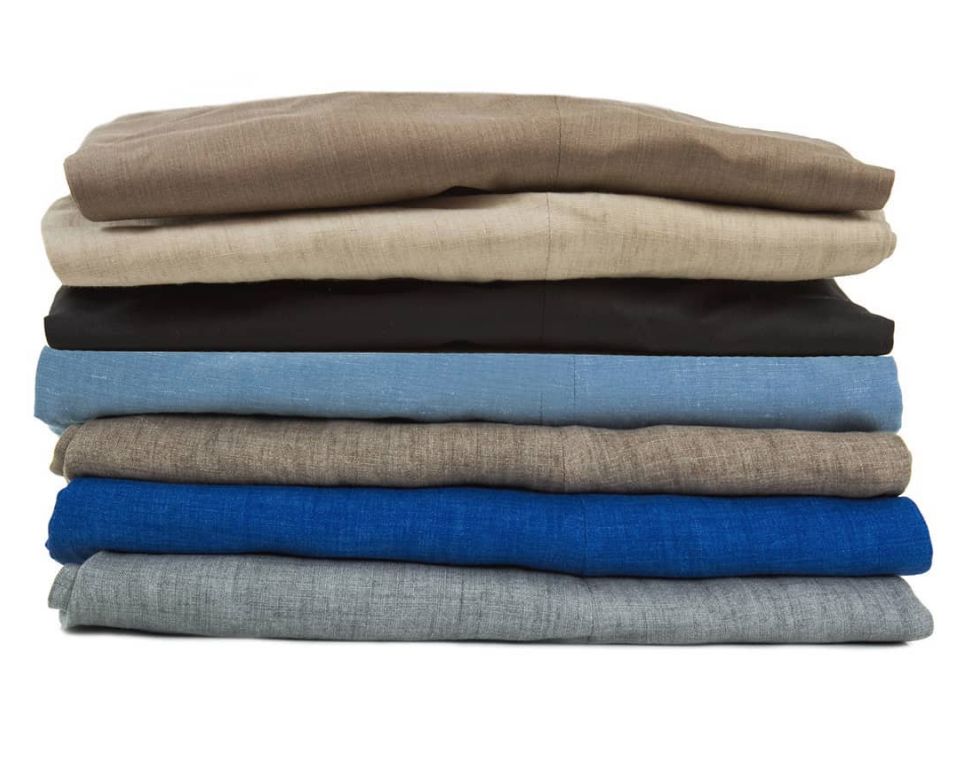
It’s still a chilly spring for many of us, but it’ll soon be sweltering summer and wearing wool trousers will perhaps be slightly unpleasant. Instead, consider picking up a few pairs of odd trousers made in linen or linen-cotton blends to keep your legs cool and still looking dressed up. 

I’m a fan of Lands’ End’s trousers as an inexpensive option for the workhorse dress trouser in their tailored fit. They’re not overly slim and you’ll likely want to take them to a tailor for alterations, but on a budget they’re a good deal, especially on sale. 

Currently, Lands’ End has 25% off all dress shirts, suits, trousers and ties. The trousers above are $59.25, down from $79.

Plus, you can get free shipping with code SPARKLE and PIN 4305 on orders over $50.* 

I have three pairs I bought last year and wore them quite a bit. The fabric was great on the linen-cotton pairs, which seem to hold up against wrinkles a bit better than regular linen — but are still cool enough to wear in the heat. I would offer the suggestion, however, of sizing down perhaps 1”-2” in the waist, as they seemed a bit vanity sized if my memory is correct from last summer. 

-Kiyoshi

*Note: This post has been corrected. Originally, I thought there was an additional 25% off the sale price with the code. The 25% is already applied and the code is for free shipping. Apologies for the confusion. I still think the trousers are a great deal.

Not As Useful as You’d Think

When you’re first starting to build a wardrobe, it’s not difficult to suddenly discover how useful solid gray trousers are. They can be worn every day of the week without anyone commenting, and successfully be paired with almost any kind of jacket. It’s tempting then to get them in almost every shade imaginable, but let me forewarn you: the darker the gray, the less useful the trousers, especially as you approach charcoal.

That’s because charcoal trousers have a limited range of what jackets they can be teamed with. There are two that I can think of: the first are certain shades of light to mid-brown, as seen above. However, the darker the brown, the less contrast there will be between your trousers and sport coat (which is bad). That lack of contrast, incidentally, is why navy sport coats should never be worn with charcoal trousers, and given the usefulness of navy jackets, this fact alone should be cause of some concern.

You can also wear grey jackets that are light enough to lend contrast, but there aren’t too many in this category that look good. The ones that come most easily to mind are herringbone tweeds and speckled Donegals. For whatever reason, grey sport coats tend to not come in the kind of variation we see in brown or navy. And what else can you wear with mid-grey sport coats? Not your mid-grey trousers, which are you workhorses.

The fundamental problem, really, is that dark trousers in general, and charcoal in particular, tend to force you into light colored sport coats. The convention, of course, is the opposite: men wear light to mid-colored trousers with dark jackets. By inverting this, you’re limiting your shopping choices and potentially any advice on how to dress well that you might find useful. Charcoal presents another problem in that in certain fabrics, it can be mistaken for suiting, which might lead people to think that you spilled something on your suit jacket and had to change out of it.

Certainly, if you have fifteen or twenty trousers already in the closet, having one pair in charcoal wouldn’t hurt. I have a pair of charcoal flannels that I like to wear with tan sweaters every once in a while. But having one pair of pants that can only be worn with two types of sport coats, one of which is difficult to pair with other trousers, is unwise for anyone starting out. Better to stick with light- to mid-grays, which can be worn with a much wider range of garments. For those who have limited means, doing the second instead of the first is the difference between building a wardrobe and building a collection of outfits.  

(Photos via The Sartorialist and Ethan Newton)

Side-Creased Trousers and King George V
I’ve been reading bits and pieces of the book “Savile Row: An Illustrated History” for the past few days. It’s full of wonderful little stories about tailors and their clients. 
I was particularly interested in an anecdote about trouser creases. These days, almost every dress trouser available comes creased down the center of the leg. Just about the only pants that aren’t creased in this manner are for casual wear, like denim or work chinos. 
I was surprised to learn that this wasn’t always the case. As it turns out, King George V took an opposite tack back as 1922. Here’s the report from the Chicago Tribune:

SIDE CREASES IN TROUSERS
LONDON, June 9 — Trousers creased down the sides instead of the front are a sartorial innovation to be introduced by King George at the Ascot races. The late King Edward occasionally wore side-creased trousers, and Admiral Beatty is seen with them. 
On Ascot Day the King will wear a gray worsted morning jacket with broad, single-breasted lapels, three-buttoned front and an outside pocket. HIs Majesty’s tie will be white or a combination of his racing colors slipped through an old-fashioned gold ring. He will wear white gloves with black stitching.

You can see King George V’s side-creased trousers above (he’s on the right) as he stands next to his first cousin, Tsar Nicholas II. 
But the love of side-creased trousers didn’t exactly stay in the family. His son, the rebellious Prince of Wales, Edward VIII, wasn’t fond of the look. According to “Savile Row”:

Davies made the royal pants with old-fashioned side creases, so the Prince ordered extra trousers with each suit; then he could switch to front creases when beyond his father’s reach. 

I do wonder if side-creased trousers will ever return. I can’t think of a modern advocate for them. Perhaps an adventurous bespoke customer will have an extra pair made with their next suit. It’d be interesting, to say the least. 
-Kiyoshi

Side-Creased Trousers and King George V

I’ve been reading bits and pieces of the book “Savile Row: An Illustrated History” for the past few days. It’s full of wonderful little stories about tailors and their clients. 

I was particularly interested in an anecdote about trouser creases. These days, almost every dress trouser available comes creased down the center of the leg. Just about the only pants that aren’t creased in this manner are for casual wear, like denim or work chinos. 

I was surprised to learn that this wasn’t always the case. As it turns out, King George V took an opposite tack back as 1922. Here’s the report from the Chicago Tribune:

SIDE CREASES IN TROUSERS

LONDON, June 9 — Trousers creased down the sides instead of the front are a sartorial innovation to be introduced by King George at the Ascot races. The late King Edward occasionally wore side-creased trousers, and Admiral Beatty is seen with them. 

On Ascot Day the King will wear a gray worsted morning jacket with broad, single-breasted lapels, three-buttoned front and an outside pocket. HIs Majesty’s tie will be white or a combination of his racing colors slipped through an old-fashioned gold ring. He will wear white gloves with black stitching.

You can see King George V’s side-creased trousers above (he’s on the right) as he stands next to his first cousin, Tsar Nicholas II. 

But the love of side-creased trousers didn’t exactly stay in the family. His son, the rebellious Prince of Wales, Edward VIII, wasn’t fond of the look. According to “Savile Row”:

Davies made the royal pants with old-fashioned side creases, so the Prince ordered extra trousers with each suit; then he could switch to front creases when beyond his father’s reach. 

I do wonder if side-creased trousers will ever return. I can’t think of a modern advocate for them. Perhaps an adventurous bespoke customer will have an extra pair made with their next suit. It’d be interesting, to say the least. 

-Kiyoshi

It’s On Sale: Billy Reid flannel trousers
Billy Reid has moved their fall-winter inventory into final sale and their flannel trousers are now $123 (about half of their original $245 price). There’s still a full range of sizes for their charcoal pair (above), which have the versatility to go with a range of jackets ranging from tweed sport coats to navy blazers. 
-Kiyoshi

It’s On Sale: Billy Reid flannel trousers

Billy Reid has moved their fall-winter inventory into final sale and their flannel trousers are now $123 (about half of their original $245 price). There’s still a full range of sizes for their charcoal pair (above), which have the versatility to go with a range of jackets ranging from tweed sport coats to navy blazers. 

-Kiyoshi

It’s On Sale: Incotex trousers
Mr Porter’s discount on sale items has gone up once again and Incotex trousers are now 70% off under the Slowear label. That puts these chinos at $87. Wool trousers are around $130-$150. As with all sale and clearance items, quantities and sizes can be a bit limited, so you’ll want to look quickly if you think you’re interested. 
-Kiyoshi

It’s On Sale: Incotex trousers

Mr Porter’s discount on sale items has gone up once again and Incotex trousers are now 70% off under the Slowear label. That puts these chinos at $87. Wool trousers are around $130-$150. As with all sale and clearance items, quantities and sizes can be a bit limited, so you’ll want to look quickly if you think you’re interested. 

-Kiyoshi

Should I Cuff My Trousers?
Cuffs (called turnups by the Brits) are a curious phenomenon. They seem to have emerged from country clothing - an innovation to keep one’s trousers out of the much and mire. They grew popular, though, for entirely different reasons. Cuffs add a bit of visual interest to the end of your trousers, but perhaps most importantly they also add some physical weight, which helps your pants hang attractively. They even help your trousers hold their crease.
To Cuff Or Not To Cuff?
So: should you cuff your pants? It’s really a matter of personal choice. The traditional answer is that cuffs go with pleated trousers, and plain hems with flat fronts. To some extent, that’s true. I think a pleated pant really cries out for cuffs. The American traditionalists, though, have long cuffed their flat-front pants. I say cuff pleated trousers, and decide whether to cuff flat-fronts based on personal taste.
What Should I Cuff? When Should I Cuff?
There’s also the matter of formality and aesthetics. A cuffless pant is generally more modern and sleeker. A cuffed pant is more traditional and a bit fuddy-duddy. (That gets mixed up a bit when the avant-gardists are also pseudo-traditionalists, like Thom Browne.) Thanks in no small part to Mr. Browne, fashion has swung towards cuffs. I personally prefer cuffs - for the weight and visual reasons listed above - so I’m happy with that turn of events. I’d just caution against cuffs on casual pants. They fit on what Derek has called “dress chinos,” but on run-of-the-mill chinos, they look out of place.
What’s Height Got To Do With It?
Traditionally, alterationists have advised taller men to wear cuffs, and shorter ones to avoid them. I’d say that while shorter men might do well to avoid a large break when they’re chosing their trouser length, they should feel fine wearing cuffs. Traditionally, cuffs are worn with at least a small break, but recent fashion has allowed for cuffs worn without break. Our friend MistahWong, pictured above, is 5’7” and wears breakless two inch cuffs as a matter of course. He always looks great.
How Big Should My Cuffs Be?
If you chose cuffs, what size should they be? The boldest fashion-y types are proclaiming to the world their two inch cuffs. I’m fine with that (I like cuffs, after all), but two inches is really a sign around your ankles that says “I AM TRENDY, SEE?” If you’re cool with that, I won’t stop you from wearing two inchers.
Traditionally, the size of the cuff is determined by the size of the man. This is reasonable, I think. I personally wear 1 3/4” cuffs, and I’m a long-legged 6’3”. I think they look strong but not outrageous. 1 1/2” is also a very reasonable choice. I’m not personally a huge fan of cuffs smaller than that, but it’s your choice - some choose 1 1/4” cuffs. Look and see what looks like it fits your body and your sensibilities. After all, the very short (and very sharply dressed) Matthew Fan wears two inchers, and he looks great, but he’s self-assured enough to carry off a statement.
So, Let’s Summarize!
Cuffs are a personal choice.
I prefer cuffs on pleated trousers - they help the trouser hang better. On flat fronts, it’s your call.
Don’t cuff your most casual pants.
Shorter men should be careful not to wear their pants too long, but shouldn’t worry too much about wearing cuffs.
There was a time when all cuffed pants had a full break; that’s no longer requisite.
2” is huge, 1 3/4” is big, 1 1/2” is moderate, 1 1/4” is small. Wear what looks and feels right.
Photo: Most Exerent

Should I Cuff My Trousers?

Cuffs (called turnups by the Brits) are a curious phenomenon. They seem to have emerged from country clothing - an innovation to keep one’s trousers out of the much and mire. They grew popular, though, for entirely different reasons. Cuffs add a bit of visual interest to the end of your trousers, but perhaps most importantly they also add some physical weight, which helps your pants hang attractively. They even help your trousers hold their crease.

To Cuff Or Not To Cuff?

So: should you cuff your pants? It’s really a matter of personal choice. The traditional answer is that cuffs go with pleated trousers, and plain hems with flat fronts. To some extent, that’s true. I think a pleated pant really cries out for cuffs. The American traditionalists, though, have long cuffed their flat-front pants. I say cuff pleated trousers, and decide whether to cuff flat-fronts based on personal taste.

What Should I Cuff? When Should I Cuff?

There’s also the matter of formality and aesthetics. A cuffless pant is generally more modern and sleeker. A cuffed pant is more traditional and a bit fuddy-duddy. (That gets mixed up a bit when the avant-gardists are also pseudo-traditionalists, like Thom Browne.) Thanks in no small part to Mr. Browne, fashion has swung towards cuffs. I personally prefer cuffs - for the weight and visual reasons listed above - so I’m happy with that turn of events. I’d just caution against cuffs on casual pants. They fit on what Derek has called “dress chinos,” but on run-of-the-mill chinos, they look out of place.

What’s Height Got To Do With It?

Traditionally, alterationists have advised taller men to wear cuffs, and shorter ones to avoid them. I’d say that while shorter men might do well to avoid a large break when they’re chosing their trouser length, they should feel fine wearing cuffs. Traditionally, cuffs are worn with at least a small break, but recent fashion has allowed for cuffs worn without break. Our friend MistahWong, pictured above, is 5’7” and wears breakless two inch cuffs as a matter of course. He always looks great.

How Big Should My Cuffs Be?

If you chose cuffs, what size should they be? The boldest fashion-y types are proclaiming to the world their two inch cuffs. I’m fine with that (I like cuffs, after all), but two inches is really a sign around your ankles that says “I AM TRENDY, SEE?” If you’re cool with that, I won’t stop you from wearing two inchers.

Traditionally, the size of the cuff is determined by the size of the man. This is reasonable, I think. I personally wear 1 3/4” cuffs, and I’m a long-legged 6’3”. I think they look strong but not outrageous. 1 1/2” is also a very reasonable choice. I’m not personally a huge fan of cuffs smaller than that, but it’s your choice - some choose 1 1/4” cuffs. Look and see what looks like it fits your body and your sensibilities. After all, the very short (and very sharply dressed) Matthew Fan wears two inchers, and he looks great, but he’s self-assured enough to carry off a statement.

So, Let’s Summarize!

  • Cuffs are a personal choice.
  • I prefer cuffs on pleated trousers - they help the trouser hang better. On flat fronts, it’s your call.
  • Don’t cuff your most casual pants.
  • Shorter men should be careful not to wear their pants too long, but shouldn’t worry too much about wearing cuffs.
  • There was a time when all cuffed pants had a full break; that’s no longer requisite.
  • 2” is huge, 1 3/4” is big, 1 1/2” is moderate, 1 1/4” is small. Wear what looks and feels right.

Photo: Most Exerent

Q and Answer: How Should I Wear Suspenders?
Joe asks: I really want to start wearing suspenders for work. It is a shirt and tie shop but not necessarily the suit crowd. I have one pair of pants in my closet of 20 that actually has buttons. Do I really have to replace the other 19 pair of pants or can I get the clip on suspenders?
We’re big proponents of suspenders here at Put This On. As a general rule, they’re more comfortable than a belt, reduce the amount that you have to mess with your pants, and pretty much keep your shirt tucked. They’re not for everyone, but I certainly wear them as frequently as reasonably possible. Suspenders are particularly comfortable if you carry a bit of weight in the middle, since your gut (be it small or large) doesn’t push down your trousers. (One note: generally in the UK, what Americans call suspenders are called braces. Typically “braces” is a bit of a fancier way of saying it, but generally, they’re interchangeable.)
There is a catch, though: suspenders are generally underwear, not outerwear. Nobody wants to be a Larry King. Suspenders are best hidden under a coat, or at the very least a sweater. Some say no one but you and your beloved should see your suspenders. I’m not that dogmatic - I take off my coat when I sit down to work - but I think they should be worn in a situation where you can reasonably expect that they’ll mostly be covered by your jacket.
Furthermore, suspenders work best with higher-waisted trousers that fit a bit more loosely around the waist than their belted counterparts. Belted pants must grip your hips with sheer friction. Pants with braces hang cleanly from the shoulders. The best pants for suspenders, of course, are fish-tailed pants. They’re designed to take the back central buttons a bit higher than the waistline, which gives a clean line to the back of the trousers. You probably won’t find those, though, unless you’re buying custom clothes.
As a result of this convergence of small reasons, most ready-to-wear clothing simply isn’t prepared to accept braces.
So where does that leave you?
First of all, clip-on suspenders are only appropriate if you’re on a work site. Even then, you can get a pair of Carharrts with metal fasteners for your suspenders that’ll hold those pants steadier than any clip. In an office environment, do not wear clip-on suspenders.
Second, you can convert non-suspender-supporting pants into ones that will work with your choice of holder-upper by having a tailor or alterationist add a few buttons. Again, this is more appropriate for pants with a longer rise and higher waist, but it’ll work on pretty much any pants. It’ll also be cheap - maybe $5 or $10. You can even have them remove the belt loops while they’re at it if you like.
Most likely, your best bet will be to wear a mix of belts and braces for the time being, as you add buttons to your trousers and add trousers designed for braces.
(Photo by Akeg)

Q and Answer: How Should I Wear Suspenders?

Joe asks: I really want to start wearing suspenders for work. It is a shirt and tie shop but not necessarily the suit crowd. I have one pair of pants in my closet of 20 that actually has buttons. Do I really have to replace the other 19 pair of pants or can I get the clip on suspenders?


We’re big proponents of suspenders here at Put This On. As a general rule, they’re more comfortable than a belt, reduce the amount that you have to mess with your pants, and pretty much keep your shirt tucked. They’re not for everyone, but I certainly wear them as frequently as reasonably possible. Suspenders are particularly comfortable if you carry a bit of weight in the middle, since your gut (be it small or large) doesn’t push down your trousers. (One note: generally in the UK, what Americans call suspenders are called braces. Typically “braces” is a bit of a fancier way of saying it, but generally, they’re interchangeable.)

There is a catch, though: suspenders are generally underwear, not outerwear. Nobody wants to be a Larry King. Suspenders are best hidden under a coat, or at the very least a sweater. Some say no one but you and your beloved should see your suspenders. I’m not that dogmatic - I take off my coat when I sit down to work - but I think they should be worn in a situation where you can reasonably expect that they’ll mostly be covered by your jacket.

Furthermore, suspenders work best with higher-waisted trousers that fit a bit more loosely around the waist than their belted counterparts. Belted pants must grip your hips with sheer friction. Pants with braces hang cleanly from the shoulders. The best pants for suspenders, of course, are fish-tailed pants. They’re designed to take the back central buttons a bit higher than the waistline, which gives a clean line to the back of the trousers. You probably won’t find those, though, unless you’re buying custom clothes.

As a result of this convergence of small reasons, most ready-to-wear clothing simply isn’t prepared to accept braces.

So where does that leave you?

First of all, clip-on suspenders are only appropriate if you’re on a work site. Even then, you can get a pair of Carharrts with metal fasteners for your suspenders that’ll hold those pants steadier than any clip. In an office environment, do not wear clip-on suspenders.

Second, you can convert non-suspender-supporting pants into ones that will work with your choice of holder-upper by having a tailor or alterationist add a few buttons. Again, this is more appropriate for pants with a longer rise and higher waist, but it’ll work on pretty much any pants. It’ll also be cheap - maybe $5 or $10. You can even have them remove the belt loops while they’re at it if you like.

Most likely, your best bet will be to wear a mix of belts and braces for the time being, as you add buttons to your trousers and add trousers designed for braces.

(Photo by Akeg)

Q and Answer: What’s that little loop above my trouser fly for?
Andrew asks: A recent post, Spotted: Incotex at Daffy’s, mentioned a “belt prong loop above the fly”. What is this for?
This one’s easy.
Incotex is one of a few makers who add this useful touch to their trousers. When you’re putting on your belt, you pass the buckle’s prong through this very small loop. This keeps the belt centered on your waistband. Since the base of the buckle is covered by the end of the belt, the loop isn’t visible when the belt is worn.

Q and Answer: What’s that little loop above my trouser fly for?

Andrew asks: A recent post, Spotted: Incotex at Daffy’s, mentioned a “belt prong loop above the fly”. What is this for?

This one’s easy.

Incotex is one of a few makers who add this useful touch to their trousers. When you’re putting on your belt, you pass the buckle’s prong through this very small loop. This keeps the belt centered on your waistband. Since the base of the buckle is covered by the end of the belt, the loop isn’t visible when the belt is worn.

Three Thoughts on Trousers
1. You need more than jeans. In an interview published earlier this month, Luciano Barbera said he objected to men wearing jeans for any occasion. That’s a stronger position than I would take, but I do think men (Americans especially) rely far too much on jeans. Don’t be afraid to wear other kinds of trousers.  
For someone just starting to build a nice wardrobe, I recommend starting with a pair of khaki chinos and grey mid-weight wool flannels. After that, get some seasonal trousers. Brown corduroys and charcoal moleskins work well for fall/ winter. Grey tropical wool and tan linens work well for spring/ summer. You can wear any of these with your basic blue or white button up shirts, or their respective seasonal counterparts such as flannel plaids and madras. 
2. Your pants should flatter you. Most men wear pants that are too big and too long. Your trousers shouldn’t be so large that extra cloth is folding around your pelvis when the waist is cinched. You should also take them to a tailor and ask for them to be hemmed with a slight break or no break at all, depending on your taste and how large your trousers’ leg openings are. 
Other men wear their pants too tight. This is often a more fashionable look, but I think it lacks elegance. These trousers often have low rises and overly tapered, skinny legs. I prefer mine slightly higher waisted, a bit fuller in the leg, and go down with just a bit of taper, but not too much. I think this gives more appealing, classical proportions, as demonstrated here by Luciano Barbera. 
3. Know what you can tailor. Make sure your trousers come up to where you like them to and fit your seat well. Most everything else can be altered. The waist can be let out if there is the fabric allowance, or taken in. The legs can also be tapered. You want to do this only to a degree, however. Reducing the waist more than two inches, for example, will cause the side seams to come too far back. These days, I personally just make sure pants fit in the seat, rise, and thighs well, and adjust everything no more than a half an inch (except the hemming, of course). If you need to alter a bit more, it’s probably not a problem. 
Note that if you let out trousers on a fabric such as cotton, you may be able to see the holes from the previous seam. It’s a bit safer to do this with wool. 

Three Thoughts on Trousers

1. You need more than jeans. In an interview published earlier this month, Luciano Barbera said he objected to men wearing jeans for any occasion. That’s a stronger position than I would take, but I do think men (Americans especially) rely far too much on jeans. Don’t be afraid to wear other kinds of trousers.  

For someone just starting to build a nice wardrobe, I recommend starting with a pair of khaki chinos and grey mid-weight wool flannels. After that, get some seasonal trousers. Brown corduroys and charcoal moleskins work well for fall/ winter. Grey tropical wool and tan linens work well for spring/ summer. You can wear any of these with your basic blue or white button up shirts, or their respective seasonal counterparts such as flannel plaids and madras. 

2. Your pants should flatter you. Most men wear pants that are too big and too long. Your trousers shouldn’t be so large that extra cloth is folding around your pelvis when the waist is cinched. You should also take them to a tailor and ask for them to be hemmed with a slight break or no break at all, depending on your taste and how large your trousers’ leg openings are. 

Other men wear their pants too tight. This is often a more fashionable look, but I think it lacks elegance. These trousers often have low rises and overly tapered, skinny legs. I prefer mine slightly higher waisted, a bit fuller in the leg, and go down with just a bit of taper, but not too much. I think this gives more appealing, classical proportions, as demonstrated here by Luciano Barbera. 

3. Know what you can tailor. Make sure your trousers come up to where you like them to and fit your seat well. Most everything else can be altered. The waist can be let out if there is the fabric allowance, or taken in. The legs can also be tapered. You want to do this only to a degree, however. Reducing the waist more than two inches, for example, will cause the side seams to come too far back. These days, I personally just make sure pants fit in the seat, rise, and thighs well, and adjust everything no more than a half an inch (except the hemming, of course). If you need to alter a bit more, it’s probably not a problem. 

Note that if you let out trousers on a fabric such as cotton, you may be able to see the holes from the previous seam. It’s a bit safer to do this with wool.