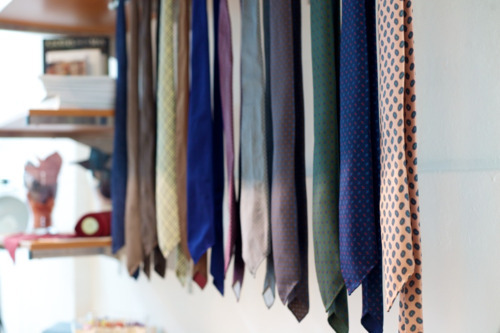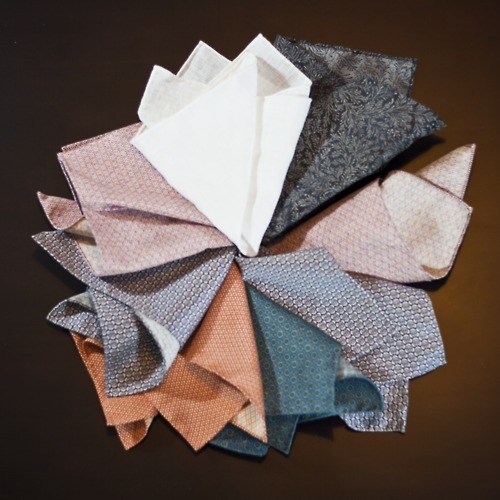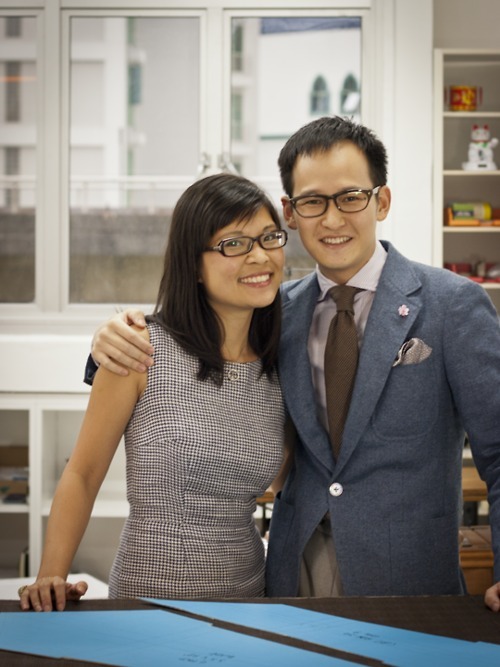
Diana Chan and Gerald Shen have been selling well-made, handrolled pocket squares to discerning customers at StyleForum for the last two years. Last summer, they began making neckties under the name Vanda Fine Clothing. Whereas most new neckwear companies rely on a faux-heritage image or “Made in the USA” label to sell their wares, Vanda is about quality in the way that I think a more thoughtful customer can appreciate.
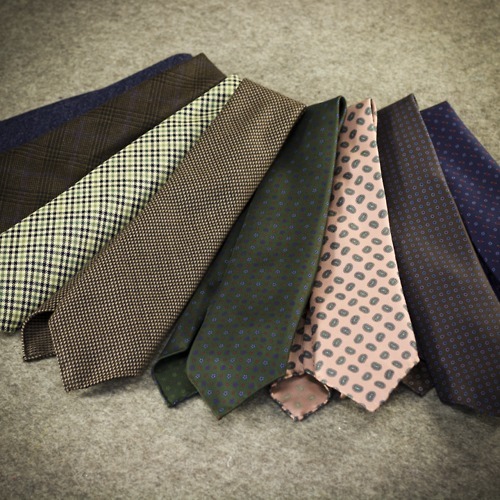
Over the summer, I was lucky enough to get one of Vanda’s first designs. It’s a completely handcrafted, half-lined, six-fold tie made out of Adamley silk, one of the best mills in the world. The edges of the tips are handrolled, which give the tie an artisanal feel, and the half-interlining makes the it feel a bit lighter. Most ties you’ve come across have a full piece of wool or cotton interlining. This gives them a meatier feel and heavier drape. Vanda’s ties, however, feel a bit more airy and scarf-like, and they wear in a more unique way.
Admittedly, such construction won’t be to everyone’s taste. If you’ve never worn an unlined or half-lined tie, you may find it’s a bit too light for your liking. However, if you’re an enthusiast of men’s clothing and style, I strongly recommend you at least try one out. For some people, including me, once you’ve worn one, it’s impossible not to get more. I appreciate such ties in the way I appreciate mechanical watches. They take more time, silk, and handwork to make, and I take pleasure in knowing how they’re crafted. I also find that Vanda’s ties yield a deeper, more handsome dimple, and since the edges aren’t pressed flat, they have nice rolling edges, which give them a fuller three-dimensional shape.
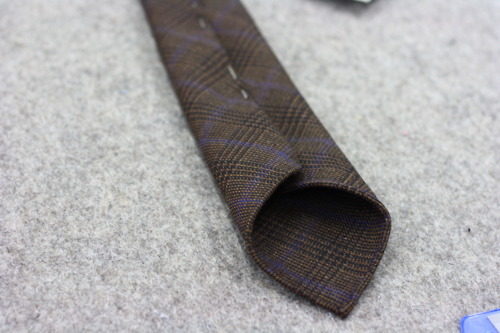
I’ve liked my tie so much that I recently ordered another from Vanda’s webstore (I bought the brown glen plaid made of Huddersfield wool). I also recently had a chance to speak to Gerald about the new company, their ties, and Vanda’s future plans.
Where did the name Vanda Fine Clothing and your logo come from?
We really wanted the brand to represent our identity, and so we’ve worked with the name Vanda, which derives from the national flower of Singapore – Vanda Miss Joaquim. It was designed by a good friend of ours in the style of a Japanese mon, which is a tribute to the humble beginnings of our small business selling pocket square made of vintage Japanese fabrics. The simple lines and clean design are also reflective of how we like our goods to be – elegant and minimal.
Can you tell me some of the basic points of how your ties are constructed? Are they three- or six-fold? Are they half- or fully-lined? Lastly, are the interlinings made from cotton, wool, or some blend?
With our neckties, we aim to achieve a result that is more lively, supple and most importantly, comfortable to wear. Bearing that in mind, we choose the construction method and lining on a case-by-case basis to best suit each individual fabric.
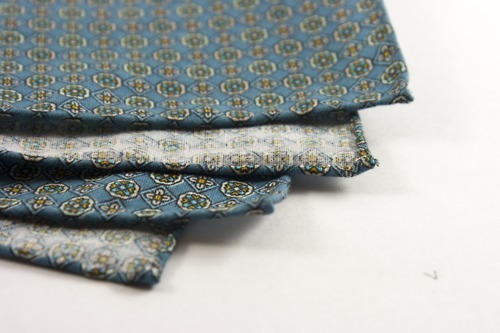
Most of our neckties are made with a true six-fold construction throughout the length of the tie. We enjoy the complication and symmetry of a six fold construction, and we also find that the extra silk used (about three times the amount of a regular three-fold tie) gives our six-fold ties more elegant drape. We place our bar tack higher on the reverse side of the tie so that you can peek at the folds.
As some fabrics are too bulky to make an elegant six-fold tie, we sometimes apply a four-fold construction. These four-fold ties are made with the same amount of care as our six-fold ties, which in our opinion is the true hallmark of a well-made necktie.
In most cases, we use no interlinings at all. When we feel that a lining is required, we partially line our ties with a lightweight, springy pure wool interlining imported from Italy. Our wool interlining is made with a double twisted thread in the warp, which gives it added resilience. It is also made with a natural finishing without chemicals products or brushing, which ensures that there is no unnecessary bulk.
What materials will you be using for the envelope, and what mills will they be from?
We use a range of materials that varies somewhat seasonally – textured wools in F/W, lightweight cottons and linens in the summer, and woven/printed silks all year round. A majority of the silks are woven by specialty necktie silk weavers such as Vanners in Suffolk or Adamley in Macclesfield, and we are also in contact with a few weavers in Como for grenadines and more colourful options. We also use quite a bit of cottons woven in Japan, and wools made in Huddersfield.
Occasionally when we chance upon some quality deadstock fabric, these may also end up as limited pieces of neckties or pocket squares.
We don’t compromise on the quality of our trimmings either – we use Gutermann buttonhole silk thread for the slip-stitch, and two different weights of Japanese silk threads from TIRE and Kinkame for the hand rolled edges and bar tack.
What handwork is involved in making each of your ties and how long does it take to make each one?
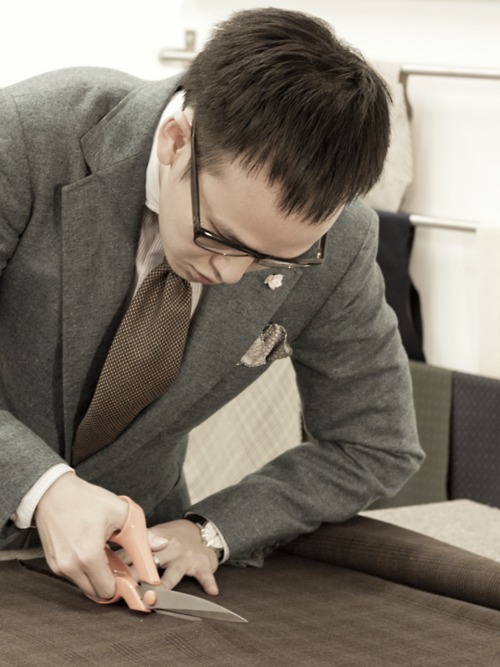
All our products are individually cut by hand, one piece at a time, to ensure precision. We use sharp scissors, and not complicated machinery to cut fabrics.
Our pocket squares are completely cut and sewn by hand. Other than the joining of the blade and the tail with a sewing machine, every part of our neckties are stitched by hand as well. This includes hand sewing the continuous slip stitch that joins the tie, the bar tacks that secures the ends, as well as the hand rolling of edges to finish the fabric ends.
Our pocket squares are finished with hand rolled edges. Our neckties are untipped and the edges are finished with this same technique.
Hand rolling the edges gives our products a refined, three-dimensional appearance that machine sewing simply cannot achieve. While hand rolling in itself is not rocket science, achieving a luxury finish (with a tight roll and neat, narrow stitches) is a skilled operation that takes over an hour to accomplish a pocket square and approximately 3 hours to complete a necktie.
While we strive for perfection, the reality is that a handmade product is never going to be 100% perfect. As such, minor variation in stated widths and lengths should not be considered as defects, but rather the nature of a product made by hand with fine fabrics.
What will the price points be?
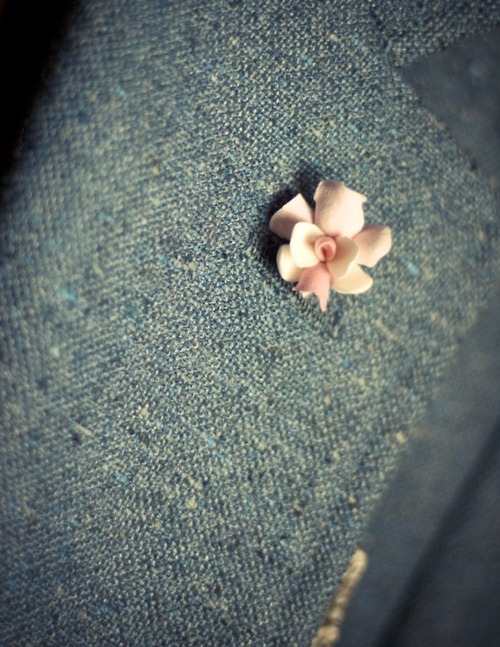
Our neckties range from SGD$125 ($97 US dollars) to SGD$145 ($112.50 US dollars) and our pocket squares are SGD$45 ($35 US dollars). We will also have lapel pins handmade from Japanese clay. These will go for SGD$25 ($19.40 US dollars) a pair.
I didn’t know you also made lapel pins. Can you tell us a bit more about them?
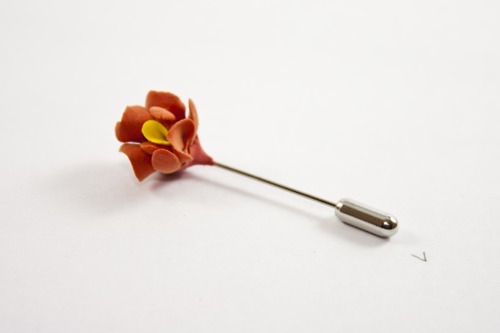
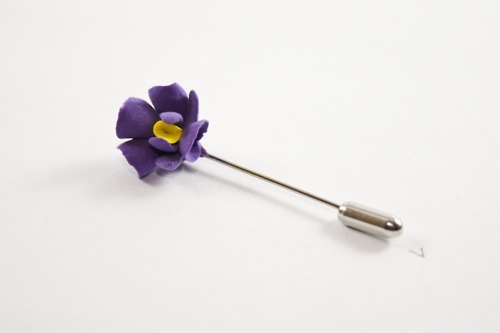
The lifelike orchid flower lapel pins are designed by us in six colours that complement our range of neckties and pocket squares. These are made for us by a very talented lady in Singapore – she makes them individually by hand from Japanese deco clay, which is lightweight and durable.
What other products do you have planned for the short- and long-term future?
We will build on our neckties and pocket square collections for the first half of 2012. In time to come, we will be adding ready-to-wear lines for shirts (which will certainly feature some handwork) and trousers to our lineup.
I remember you mentioning some training you’ve been receiving from a master shirt-maker. Could you tell us a bit about that?
Diana and I have been learning shirtmaking from the Chairman of Singapore Master Tailors Association, Mr. Thomas Wong. While we have a long way to go before being anywhere close to the high standards we have set for ourselves, we are determined to achieve this well through hours of practice, exactly like how we did it with our pocket squares and neckties.
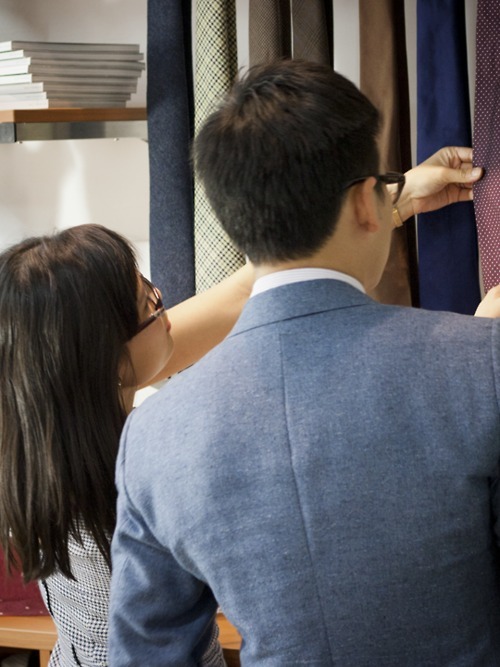
Thanks for your time, Gerald. Is there anything else you’d like to leave our readers with?
We gave up lucrative opportunities in the corporate world in pursuit of my passion for quality menswear and Diana’s love for handsewing and creation of beautiful clothing.
They say that if you find a job you love, you’ll never have to work a day in your life. Since we established the company, we have had time for little else except work and sleep, but we are definitely enjoying every moment of it.
The immense satisfaction we derive from crafting beautiful goods by hand is what keeps us going. We feel most accomplished when our customers are able to appreciate and understand the amount of work we put into each of our products, and most importantly, wear them proudly.
We are not a 100 year-old establishment deeply rooted in tradition, and neither do we pretend to be. We simply do what we love without compromise, and ultimately we hope our customers enjoy our products as much as we enjoy making them.