Q & Answer: How Do I Eliminate the Blousing on a Shirt?
Gary writes: I just got a new job and am having to wear dress shirts for the first time. I went out this weekend and tried a bunch on, but all of them seem to blouse and billow over the top of my pants. Is there any way to fix this, or do I just have to keep searching for the perfect shirt?
Ready-to-wear clothing rarely fits perfectly off the rack. Remember, garments are made with an imaginary person in mind, usually someone that’s an “average” of the demographic the company is trying to target. You’re unlikely to be that exact average, so some alterations will likely be necessary.
The less you alter a garment, however, the better. So the first step is to find a shirt that fits as well as possible. After you find one and purchase it, take it to the tailors to have the sides slimmed down. This will take out most of the billowing, but be sure to not go too slim. You want to be able to sit down and have a full meal, after all.
If you’d like, you can also have darts put in. These will help reduce the fullness in the lower back. They’re good for most men, but if you stand with a bit of a hunch, note that they’ll accentuate your less than ideal posture (as they’ll create a bit of an S curve from your side profile). You can get them put into one shirt and see how you like the effect. They can be taken out afterwards if you don’t like them, but on many cotton shirts, this will leave some faint lines where the darts used to be. The job of taking in the sides and putting in darts should probably run you something like $15.
If you find that you still have some blousing even after alterations, you can try the military tuck. That’s when you tuck your shirt in straight, but then pinch the sides and pull them back to reduce fullness. You can see a simple guide on how to do it here.
A good alterations tailor and military tuck will solve most of the billowing, but if you’re striving for perfection, you’ll likely need to go custom. I’ve written a seven-part series on custom shirts, which you can read here.
This is one area where I find bespoke makers to be a bit better than most made-to-measure services. With a good bespoke tailor, you’re getting a custom pattern drafted from scratch. With made-to-measure, the company is usually altering an existing pattern through some computer program. The first, from my experience, allows you to more easily account things that might not be easily captured by simple measurements. For example, my tailor (Ascot Chang) lowered the waist point on my first pattern, so that narrowest part of the shirt aligned with the narrowest point of my torso. This allowed the shirt to better transition as it moved down to my hips, thus distributing the fullness perfectly when my shirt is tucked (like this). That kind of adjustment is often not possible through made-to-measure, and isn’t something an alterations tailor can do for you. 
Bespoke shirts are expensive, however. If you don’t mind the cost, I think they’re worth it. For most men though, a $15 alterations job and military tuck will deliver most of what they need. 
(Photo via GQ)

Q & Answer: How Do I Eliminate the Blousing on a Shirt?

Gary writes: I just got a new job and am having to wear dress shirts for the first time. I went out this weekend and tried a bunch on, but all of them seem to blouse and billow over the top of my pants. Is there any way to fix this, or do I just have to keep searching for the perfect shirt?

Ready-to-wear clothing rarely fits perfectly off the rack. Remember, garments are made with an imaginary person in mind, usually someone that’s an “average” of the demographic the company is trying to target. You’re unlikely to be that exact average, so some alterations will likely be necessary.

The less you alter a garment, however, the better. So the first step is to find a shirt that fits as well as possible. After you find one and purchase it, take it to the tailors to have the sides slimmed down. This will take out most of the billowing, but be sure to not go too slim. You want to be able to sit down and have a full meal, after all.

If you’d like, you can also have darts put in. These will help reduce the fullness in the lower back. They’re good for most men, but if you stand with a bit of a hunch, note that they’ll accentuate your less than ideal posture (as they’ll create a bit of an S curve from your side profile). You can get them put into one shirt and see how you like the effect. They can be taken out afterwards if you don’t like them, but on many cotton shirts, this will leave some faint lines where the darts used to be. The job of taking in the sides and putting in darts should probably run you something like $15.

If you find that you still have some blousing even after alterations, you can try the military tuck. That’s when you tuck your shirt in straight, but then pinch the sides and pull them back to reduce fullness. You can see a simple guide on how to do it here.

A good alterations tailor and military tuck will solve most of the billowing, but if you’re striving for perfection, you’ll likely need to go custom. I’ve written a seven-part series on custom shirts, which you can read here.

This is one area where I find bespoke makers to be a bit better than most made-to-measure services. With a good bespoke tailor, you’re getting a custom pattern drafted from scratch. With made-to-measure, the company is usually altering an existing pattern through some computer program. The first, from my experience, allows you to more easily account things that might not be easily captured by simple measurements. For example, my tailor (Ascot Chang) lowered the waist point on my first pattern, so that narrowest part of the shirt aligned with the narrowest point of my torso. This allowed the shirt to better transition as it moved down to my hips, thus distributing the fullness perfectly when my shirt is tucked (like this). That kind of adjustment is often not possible through made-to-measure, and isn’t something an alterations tailor can do for you. 

Bespoke shirts are expensive, however. If you don’t mind the cost, I think they’re worth it. For most men though, a $15 alterations job and military tuck will deliver most of what they need. 

(Photo via GQ)

Q and Answer: Can I Repair Frayed Shirt Collars and Cuffs?
David asks: I do a lot of thrifting button-down shirts. Sometimes I’ll get attached to a shirt even if it’s slightly past its use-by date - when there’s fraying around the cuffs or collar. I’ve thought about fabric glue, but I’ve never tried it and I’m not sure if it’s really worth the effort. Should I just suck it up and get a new shirt or are there any decent options to repair mild fraying?
It’s absolutely normal for the collars and cuffs of a shirt to fray before the rest of the shirt is worn out. These parts of the shirt take the most abuse, after all. But can they be repaired?
The answer is yes, but whether it’s worth it to execute the repairs is another matter.
When a man’s clothes were made for him, it was normal practice to repair them before replacing them. The cost of making clothes one at a time is much higher than it is to make them on an assembly line, and tradespeople capable of making repairs were plentiful. It made economic sense to maintain the clothes you had. Today, that math is less clear - if you maintain your shirts this way, it’s more likely to be a personal choice than an economic one.
The fraying at the collars and cuff cannot be repaired, per se. The cost of reweaving it would be extraordinarily prohibitive. That leaves you with a few choices.
First, you can leave it frayed. Particularly heavier weight shirts like oxford button-downs almost seem more at home slightly frayed than brand new. The old-money aesthetic values that guide their wear suggest that you wear them into the ground rather than replace them. These values have been aped by manufacturers who often sandpaper the edges of oxford shirts to fray them intentionally. Your goal here is to achieve a Prince Charles’ shoes level of wabi-sabi.
Second, you can turn the collar and cuffs. This is just what it sounds like. The collar and cuffs are removed and reversed, so that the inside is out and the outside is in. This works best with double cuffs, and can be problematic with shirts that have pockets for collar stays. Even so, a tailor can generally replace one side of the collar with fabric from the shirt’s tail. This may cost twenty or thirty dollars.
The most drastic step is to replace the collar and cuffs. If you’ve seen dress shirts with white collar and cuffs, this practice was the origin. Since matching fabric won’t be readily available (and won’t match anyway, given the number of washes the shirt will have been through), a plain white collar and cuff can be used. Again, this option comes with a significant cost, but if you’re dealing with a very fine dress shirt, it may well be worth it.
If your shirtmaker or tailor doesn’t offer these services, there are mail-order options, like Maldonado’s, who charge $20 to replace a collar and $12-15 to replace cuffs..

Q and Answer: Can I Repair Frayed Shirt Collars and Cuffs?

David asks: I do a lot of thrifting button-down shirts. Sometimes I’ll get attached to a shirt even if it’s slightly past its use-by date - when there’s fraying around the cuffs or collar. I’ve thought about fabric glue, but I’ve never tried it and I’m not sure if it’s really worth the effort. Should I just suck it up and get a new shirt or are there any decent options to repair mild fraying?

It’s absolutely normal for the collars and cuffs of a shirt to fray before the rest of the shirt is worn out. These parts of the shirt take the most abuse, after all. But can they be repaired?

The answer is yes, but whether it’s worth it to execute the repairs is another matter.

When a man’s clothes were made for him, it was normal practice to repair them before replacing them. The cost of making clothes one at a time is much higher than it is to make them on an assembly line, and tradespeople capable of making repairs were plentiful. It made economic sense to maintain the clothes you had. Today, that math is less clear - if you maintain your shirts this way, it’s more likely to be a personal choice than an economic one.

The fraying at the collars and cuff cannot be repaired, per se. The cost of reweaving it would be extraordinarily prohibitive. That leaves you with a few choices.

First, you can leave it frayed. Particularly heavier weight shirts like oxford button-downs almost seem more at home slightly frayed than brand new. The old-money aesthetic values that guide their wear suggest that you wear them into the ground rather than replace them. These values have been aped by manufacturers who often sandpaper the edges of oxford shirts to fray them intentionally. Your goal here is to achieve a Prince Charles’ shoes level of wabi-sabi.

Second, you can turn the collar and cuffs. This is just what it sounds like. The collar and cuffs are removed and reversed, so that the inside is out and the outside is in. This works best with double cuffs, and can be problematic with shirts that have pockets for collar stays. Even so, a tailor can generally replace one side of the collar with fabric from the shirt’s tail. This may cost twenty or thirty dollars.

The most drastic step is to replace the collar and cuffs. If you’ve seen dress shirts with white collar and cuffs, this practice was the origin. Since matching fabric won’t be readily available (and won’t match anyway, given the number of washes the shirt will have been through), a plain white collar and cuff can be used. Again, this option comes with a significant cost, but if you’re dealing with a very fine dress shirt, it may well be worth it.

If your shirtmaker or tailor doesn’t offer these services, there are mail-order options, like Maldonado’s, who charge $20 to replace a collar and $12-15 to replace cuffs..

My New Pajamas
I came home from Beijing last night and brought back with me a new set of pajamas I had made while I was there. Beijing is huge (one of the biggest cities I’ve been to) and there must be hundreds of tailors in the capital. I talked to about seven. One was from Hong Kong and seemed fairly skilled, but he was expensive and very backed up. Others were cheap (one only charged $20 for a custom-made shirt) and could turn things around quickly, but I had much less confidence in their work. I finally settled on a tailor that was located just a couple of miles from where I was staying. He mainly made custom suits and shirts, but said he could turnaround a pair of pajamas for me in two days for about $100. 
The results are a bit mixed. On the downside, the stitching is mediocre. A well made garment should have a high stitches-per-inch count, but of course, this slows down the production, so many tailors opt for something faster and less refined. The pajamas are also made with a basic seam instead of a flat felled seam, which is cleaner looking and more durable. The fabric could also probably be a bit better. On the upside, however, I have pajamas that actually fit and I was able to design them as I liked. I sketched out the collar and pockets, told the tailor where I wanted the white trimming, and picked out the fabric and buttons.
I’ve been waffling over whether I think this was a good purchase, but after finally sleeping in them last night, I’ve decided that I like them. Off-the-rack pajamas don’t fit me, and custom made ones in the States are way out of my budget, so this is a good compromise. It seems to me that a place like Beijing is great for these sorts of things. If you find yourself in need of a custom shirt, for example, and have a limited budget, you could get some made in Beijing if you’re ever in that region of the world. The workmanship won’t be amazing (unless you go to one of the higher-end Hong Kong tailors), but you’ll be able to get a decently fitting garment for a reasonable price. Just try to bring your own fabrics.

My New Pajamas

I came home from Beijing last night and brought back with me a new set of pajamas I had made while I was there. Beijing is huge (one of the biggest cities I’ve been to) and there must be hundreds of tailors in the capital. I talked to about seven. One was from Hong Kong and seemed fairly skilled, but he was expensive and very backed up. Others were cheap (one only charged $20 for a custom-made shirt) and could turn things around quickly, but I had much less confidence in their work. I finally settled on a tailor that was located just a couple of miles from where I was staying. He mainly made custom suits and shirts, but said he could turnaround a pair of pajamas for me in two days for about $100. 

The results are a bit mixed. On the downside, the stitching is mediocre. A well made garment should have a high stitches-per-inch count, but of course, this slows down the production, so many tailors opt for something faster and less refined. The pajamas are also made with a basic seam instead of a flat felled seam, which is cleaner looking and more durable. The fabric could also probably be a bit better. On the upside, however, I have pajamas that actually fit and I was able to design them as I liked. I sketched out the collar and pockets, told the tailor where I wanted the white trimming, and picked out the fabric and buttons.

I’ve been waffling over whether I think this was a good purchase, but after finally sleeping in them last night, I’ve decided that I like them. Off-the-rack pajamas don’t fit me, and custom made ones in the States are way out of my budget, so this is a good compromise. It seems to me that a place like Beijing is great for these sorts of things. If you find yourself in need of a custom shirt, for example, and have a limited budget, you could get some made in Beijing if you’re ever in that region of the world. The workmanship won’t be amazing (unless you go to one of the higher-end Hong Kong tailors), but you’ll be able to get a decently fitting garment for a reasonable price. Just try to bring your own fabrics.

We Got It For Free: Anderson & Sheppard’s A Style is Born

Anderson & Sheppard’s new book, A Style is Born, is being released today. The 296-page volume is special in that it’s part of Anderson & Sheppard’s evolutionary shift, but to understand that, we should start with some history.

The company was founded in 1906, and originally called Anderson & Simmons. It changed to its current name, however, when Mr. Simmons sold his stake to Sidney Horatio Sheppard, a trouser cutter at the firm. Per Anderson, one of the original co-founders, was a Swedish expatriate who learned his trade from an innovative Dutch tailor named Frederick Scholte. Scholte is credited with creating the London cut (also known as the English drape), which is a term that refers to the way a jacket hangs (or “drapes”) from the shoulders. There is more room over the chest and shoulder blades, which results in conspicuous, but graceful, folds of cloth that gently descend from the collarbone. The uppersleeves are built generously, but the armholes are cut high, so that that jacket’s collar never lifts off of the wearer’s neck. The shoulders are also unpadded, which leaves them to slope naturally along the body’s lines. The combination of all these things make the English drape cut extremely comfortable and easy to move around in, but still adheres to many of the basic standards of fit that make a suit well tailored.

This cut was popularized by the Duke of Windsor, who wanted to rebel against his “buttoned up” childhood. The Duke longed for a more comfortable way of dressing - he often found himself removing his coat, ripping off his tie, loosening his collar, and rolling up his sleeves. It was a gesture not just for comfort, but also, in a symbolic sense, freedom. In Scholte, he found the perfect simpatico - a man who would make him a softly constructed jacket that would be as much about comfort as it would be about elegance.

Since the Duke set much of the early- to mid-20th century mens’ fashion trends, his implicit endorsement led to a boom in the cut’s popularity, which reached all the way across the Atlantic. Many Hollywood stars became enamored with the look, and since Per Anderson trained under Scholte, they naturally went to Anderson & Sheppard.

While Per Anderson built the house’s silhouette, his partner, Sidney Horatio Sheppard (better known as SHS), set its tone. In his introduction to the book, David Kamp uses a line from American satirist and Anglophile SJ Peterman. Peterman said of the British: “The expression ‘It’s not done’ pretty well sums up not only the state of mind of the more solvent class, but the attitude of people in shops and businesses.” SHS was apparently an “it’s not done” kind of fellow. He was a schoolmaster’s son, well educated, socially connected, and somewhat of a country squire. He was said to be very autocratic, not one to mix with the tailoring fraternity, and worked hard to build the firm’s reputation, but without making it seemed like the firm sought attention to itself. In fact, this was done to such an extent that the firm seemed almost secretive. While other tailors such as Henry Poole and Kilgour joined associations and guilds, Anderson & Sheppard never joined anything at all. Save for a single advertisement published once in an outdoorsman magazine, the firm also never advertised. SHS eschewed publicity of any sort and thought it was vulgar.

SHS’s reticence and strict sense of propriety filtered down to the staff, and this transmuted into a kind of hardedge severity. Women weren’t allowed into the fitting areas, unless they promised to keep quiet. Cutters were known to storm out of rooms if wives offered a suggestion or critiqued a husband’s suit-in-progress. They also refused to deviate from the house’s famous English-drape style. One cutter, Mr. Hallbury, would respond to such requests by saying, “Are you asking me to make a Rolls-Royce with the front of a Mercedes, sir?” A fierier cutter, Mr. Cameron, would simply show customers the door, saying, “You’re in the wrong shop!”

In 2004, Anda Rowland became Anderson & Sheppard’s vice chairman, and now manages it along with John Hitchcock. She has overseen somewhat of a glasnost there. The famously secretive house, once closed to writers and journalists, is now opening up. There is a website, a blog, and cutters and tailors who don’t mind your paying them a visit in the back rooms. The tailors are much friendlier, and no one is ever thrown out anymore (though they still won’t deviate from their cut). This book, then, is part of that evolution. The handsome photographs give a glimpse into inner workings and everyday details of life at Anderson & Sheppard, from the sturdily woven fabrics to the tailors’ and cutters’ workrooms. There are also sublime archival images of legendary clients of yore, not least of which includes Fred Astaire, Douglas Fairbanks Jr., Gary Cooper, and Laurence Oliver. Nearly all of these men are photographed in their natural settings, and the elegance they portray is quite inspiring.

The volume is available for purchase on Amazon’s UK site, and I think it makes for a great addition to any library. It is part fashion history and part social history, and gives a near tactile immersion in one of the best tailoring shops in the world. I strongly recommend getting a copy.

I know, I know. Derek just reblogged this picture.
I want to add one more defense of the guy on the left, relative to the guy on the right.
In direct contrast to the guy on the right, the guy on the left doesn’t look like he’s gripped by SERIOUS BALL DISTRESS.
The guy on the left is all, “Well, off to another fashion show.”
The guy on the right is all, “OH MY BALLS MY BALLS OOH OOH OW OW BALLS OH OW OOH.”

I know, I know. Derek just reblogged this picture.

I want to add one more defense of the guy on the left, relative to the guy on the right.

In direct contrast to the guy on the right, the guy on the left doesn’t look like he’s gripped by SERIOUS BALL DISTRESS.

The guy on the left is all, “Well, off to another fashion show.”

The guy on the right is all, “OH MY BALLS MY BALLS OOH OOH OW OW BALLS OH OW OOH.”

(Source: ethandesu, via ethandesu)

Nice Try, Bro recently wrote this about the picture above:

One must wonder: is this just an unflattering photo of the gentleman on the left or does he indeed have way too much fabric in the upper back of his jacket?  Or maybe he recently hit the gym and shed some pounds.  Who knows.
But notice how much better the jacket homie on the right is wearing fits.  
Pinching and raising the neck of a jacket is usually done to correct collar flaws.  However, any time I have had my neck pinched and raised, I’ve noticed a better fit across the back as well.  You’d think this Florentine gentleman would have gotten that fixed, whether by pinch and raise or some other technique.
In any event, nice bag, bro.

To which Ethan Desu responded with:

A tailor much more skillful than myself once tried to explain to me the fascination of overtly tight clothing in young men new to tailored clothing. I mentioned to him the trend of those coming to me for suits, favouring jackets far too small, that looked magazine worthy while standing still but lacking any elegance or drape for movement.
The example he used was that of a leather glove - close a fist and it looks molded to the skin, stretched as it is against the back of the hand. But open the fist and the glove will bag at the knuckles and extend past the ends of the fingers. It explained it well for me and I’ve strived for elegant fit ever since, not always successfully considering how well my wife cooks.
While neither gent has particularly great fit with these obviously off the rack cotton jackets, judging by a static image of two different body shapes in motion is a poor case study. While the man on the left has his left shoulder up and back, causing the imbalance and what you are seeing as the excess cloth, the man on the right is wearing a tight jacket to hide these sins. With a forward and sloping shoulder, the jacket pulls tight like the glove on a fist, and gives the impression of fit.
Dropping a collar is a fix for a too long back balance. The issue here is an imbalance from left to right, and a cotton jacket worn off the rack in a size that isn’t skin tight.  Had the photo been taken a second later you might be deriding Mr Short rather than Mr Tall.While taste is subjective without bounds - what I post and what I wear might have the coolest of tumblr scoff - fit has parameters, particularly in classic clothing. While it is tempting to praise the ultra slim, two dimensional fit, achieving clean lines with enough drape for movement and ease to remain elegant is the true marker of beautiful tailoring.

The last paragraph of Ethan’s post is something you should commit to memory. 

Nice Try, Bro recently wrote this about the picture above:

One must wonder: is this just an unflattering photo of the gentleman on the left or does he indeed have way too much fabric in the upper back of his jacket?  Or maybe he recently hit the gym and shed some pounds.  Who knows.

But notice how much better the jacket homie on the right is wearing fits.  

Pinching and raising the neck of a jacket is usually done to correct collar flaws.  However, any time I have had my neck pinched and raised, I’ve noticed a better fit across the back as well.  You’d think this Florentine gentleman would have gotten that fixed, whether by pinch and raise or some other technique.

In any event, nice bag, bro.

To which Ethan Desu responded with:

A tailor much more skillful than myself once tried to explain to me the fascination of overtly tight clothing in young men new to tailored clothing. I mentioned to him the trend of those coming to me for suits, favouring jackets far too small, that looked magazine worthy while standing still but lacking any elegance or drape for movement.

The example he used was that of a leather glove - close a fist and it looks molded to the skin, stretched as it is against the back of the hand. But open the fist and the glove will bag at the knuckles and extend past the ends of the fingers. It explained it well for me and I’ve strived for elegant fit ever since, not always successfully considering how well my wife cooks.

While neither gent has particularly great fit with these obviously off the rack cotton jackets, judging by a static image of two different body shapes in motion is a poor case study. While the man on the left has his left shoulder up and back, causing the imbalance and what you are seeing as the excess cloth, the man on the right is wearing a tight jacket to hide these sins. With a forward and sloping shoulder, the jacket pulls tight like the glove on a fist, and gives the impression of fit.

Dropping a collar is a fix for a too long back balance. The issue here is an imbalance from left to right, and a cotton jacket worn off the rack in a size that isn’t skin tight.  Had the photo been taken a second later you might be deriding Mr Short rather than Mr Tall.

While taste is subjective without bounds - what I post and what I wear might have the coolest of tumblr scoff - fit has parameters, particularly in classic clothing. While it is tempting to praise the ultra slim, two dimensional fit, achieving clean lines with enough drape for movement and ease to remain elegant is the true marker of beautiful tailoring.

The last paragraph of Ethan’s post is something you should commit to memory. 

(Source: ethandesu, via ethandesu)

Q and Answer: How Much Can My Clothes Be Altered?
Mario writes us to ask: When you’re hunting for used quality clothing, you’re bound to come across pieces that are a couple of sizes too small or a few too big. Some of this, I assume, can be corrected with a visit to a tailor. If that’s the case, my question is: in your experience, what size range can be (relatively) easily retrofitted to your measurements?
It happens to all of us - we put our hand on a perfect garment in a thrift store. We pull it out, and it looks tremendous. We try it on, and it doesn’t quite fit. Immediately, we wonder: can it be altered?
Altering second-hand clothes is the same as altering new clothes. Some procedures are possible, some impossible. Some are easy, some difficult. Let’s take it by garment.
Shirts
Shirt sleeves can be easily shortened, but usually they can’t be easily lengthened.
Cuffs and collars can be replaced, but only with white (and it may be a bit expensive).
The torso of a shirt can be brought in, and the sleeves slimmed, as in episode six of Put This On. Remove more than three or four inches and you may have a badly unbalanced shirt, depending on your shape.
The collar button can be moved about a quarter inch either direction to make the collar larger or smaller, but this may throw off the balance of the collar. Your taste should guide you.
The shoulders and chest of a shirt are largely inalterable.
Trousers
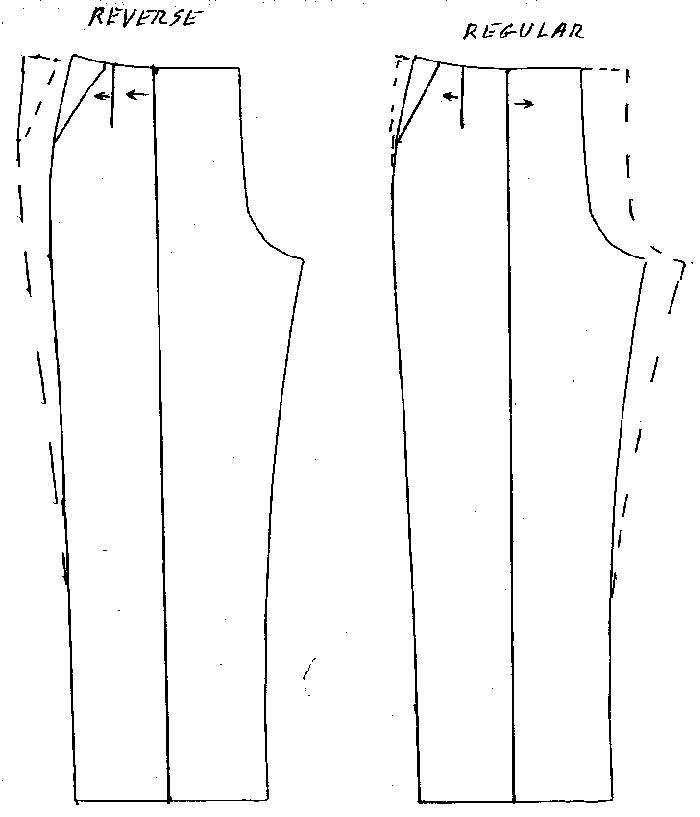
The waist of a pair of trousers can be let in or taken out 2-3”. Look inside the seat for extra fabric at the waistband - this, minus half an inch or so, is as far as you can take the pants out.
Trousers are easily shortened, but lengthening them requires fabric at the hems. You should be able to turn the leg inside out to check how much room you have. Cuffs can also be removed for extra length.
Be careful when lengthening as edge wear could leave an undesirable line when the pant is let out.
Pleats can be removed, but you may not be happy with the result. Either they are replaced with darts, or the pants are substantially re-cut.
Trousers can be slimmed or tapered from the bottom of the pockets down, from either the inside seam, outside seam or both.
Jackets
Jacket waists and torsos can usually be altered by about 2”, though 1” is generally safer.
The top block of jackets - from the armholes up - is very difficult to alter. Don’t try.
Shoulders must fit, if they don’t, put it back.
Jacket sleeves can be taken up or down as long as the buttons are non-functional. To see how far they can be taken down, feel with your fingers inside the lining of the sleeve end for folded-back fabric. Usually there’s an inch or two, but remember that you will need to retain about half an inch to reach the lining on the inside.
If jacket buttons are functional, the sleeve can be taken up from the shoulder, but this is a tricky and expensive process - budget $75 or so, and find a good tailor. It’s possible the sleeves can be taken down a bit, too, but you’d have to ask a tailor to look for extra fabric in the armhole.
When lengthening sleeves from the cuff, you may find that there’s a line of wear, especially on textural fabrics like flannel.
Vents cannot be added to or removed from jackets.
Jacket lengths are alterable, but it’s inadvisable and expensive to try.
Jacket lapels - same deal.
Shoes
Shoes that are slightly too large (1/2 size or less) can sometimes be fit with insoles or tongue pads. This is particularly true if width is the problem, rather than length - just be careful that the ball of your foot hits in the appropriate flex point in the shoe.
Shoes can be stretched, but only in width, not in length. Stretching can usually take a shoe about one width larger - say from D to E. Sometimes two, depends on the shoe.
Socks
Socks are generally inalterable, but if you have notably large feet and are set on second-hand hosiery, try gluing two or more pairs of socks together, then putting both on your foot. I’ve never done it, but it seems like it might work.

Q and Answer: How Much Can My Clothes Be Altered?

Mario writes us to ask: When you’re hunting for used quality clothing, you’re bound to come across pieces that are a couple of sizes too small or a few too big. Some of this, I assume, can be corrected with a visit to a tailor. If that’s the case, my question is: in your experience, what size range can be (relatively) easily retrofitted to your measurements?

It happens to all of us - we put our hand on a perfect garment in a thrift store. We pull it out, and it looks tremendous. We try it on, and it doesn’t quite fit. Immediately, we wonder: can it be altered?

Altering second-hand clothes is the same as altering new clothes. Some procedures are possible, some impossible. Some are easy, some difficult. Let’s take it by garment.

Shirts

  • Shirt sleeves can be easily shortened, but usually they can’t be easily lengthened.
  • Cuffs and collars can be replaced, but only with white (and it may be a bit expensive).
  • The torso of a shirt can be brought in, and the sleeves slimmed, as in episode six of Put This On. Remove more than three or four inches and you may have a badly unbalanced shirt, depending on your shape.
  • The collar button can be moved about a quarter inch either direction to make the collar larger or smaller, but this may throw off the balance of the collar. Your taste should guide you.
  • The shoulders and chest of a shirt are largely inalterable.

Trousers

  • The waist of a pair of trousers can be let in or taken out 2-3”. Look inside the seat for extra fabric at the waistband - this, minus half an inch or so, is as far as you can take the pants out.
  • Trousers are easily shortened, but lengthening them requires fabric at the hems. You should be able to turn the leg inside out to check how much room you have. Cuffs can also be removed for extra length.
  • Be careful when lengthening as edge wear could leave an undesirable line when the pant is let out.
  • Pleats can be removed, but you may not be happy with the result. Either they are replaced with darts, or the pants are substantially re-cut.
  • Trousers can be slimmed or tapered from the bottom of the pockets down, from either the inside seam, outside seam or both.

Jackets

  • Jacket waists and torsos can usually be altered by about 2”, though 1” is generally safer.
  • The top block of jackets - from the armholes up - is very difficult to alter. Don’t try.
  • Shoulders must fit, if they don’t, put it back.
  • Jacket sleeves can be taken up or down as long as the buttons are non-functional. To see how far they can be taken down, feel with your fingers inside the lining of the sleeve end for folded-back fabric. Usually there’s an inch or two, but remember that you will need to retain about half an inch to reach the lining on the inside.
  • If jacket buttons are functional, the sleeve can be taken up from the shoulder, but this is a tricky and expensive process - budget $75 or so, and find a good tailor. It’s possible the sleeves can be taken down a bit, too, but you’d have to ask a tailor to look for extra fabric in the armhole.
  • When lengthening sleeves from the cuff, you may find that there’s a line of wear, especially on textural fabrics like flannel.
  • Vents cannot be added to or removed from jackets.
  • Jacket lengths are alterable, but it’s inadvisable and expensive to try.
  • Jacket lapels - same deal.

Shoes

  • Shoes that are slightly too large (1/2 size or less) can sometimes be fit with insoles or tongue pads. This is particularly true if width is the problem, rather than length - just be careful that the ball of your foot hits in the appropriate flex point in the shoe.
  • Shoes can be stretched, but only in width, not in length. Stretching can usually take a shoe about one width larger - say from D to E. Sometimes two, depends on the shoe.

Socks

  • Socks are generally inalterable, but if you have notably large feet and are set on second-hand hosiery, try gluing two or more pairs of socks together, then putting both on your foot. I’ve never done it, but it seems like it might work.
A Three-Step Process to Finding Good Tailors and Dry Cleaners
I’m moving to Moscow for a few months, and being that it’s my first time there, I’ll have to find a new tailor and dry cleaner. When I was young, I used to worry about having to find a new barber when I travelled. The whole idea of having a new person cut my hair just seemed frightening. What if they chop my hair to uneven bits? I’ve learned, however, that hair grows back. Clothes that you’ve painstakingly poured a lot of time and money into, on the other hand, will never be restored once they’re ruined. That’s why it’s important to find good tailors and dry cleaners - one exchange with a bad one could ruin your favorite garments forever. 
So I’ve developed a kind of system to finding good tailors and dry cleaners in a new area. Perhaps it will be useful for you as well, whether you’ve arrived in a new place or you’re still trying to find someone reliable. Here’s my three-step process:
1. Find the local consensus: The first step is to call the very best upscale stores and hotels in the area. For stores, this can be high-end boutiques such as Saks Fifth Avenue and Neiman Marcus; independent fine menswear stores that sell brands you respect; and internationally known brand stores such as Tom Ford, Ralph Lauren, or Zegna. For hotels, this can include the Four Seasons, St. Regis, Ritz-Carlton, etc. Just check your Zagat Survey for the five-star operations. 
Ask the managers of these places which tailors and dry cleaners they send their work to. Hotels will obviously have dry cleaners they depend on, but menswear stores will often also have a dry cleaner that they send soiled garments to. They will most certainly at least have tailors they work with for alterations. Try to identify a consensus among these recommendations. You’re likely to spot at least two or three that everyone goes to. These will be your candidates.
2. Ask questions and identify quality operations: Call up your candidates and ask them questions about the job you’re looking to have done. Unfortunately, you have to know a little bit about tailoring and dry cleaning in order to know what are the right questions to ask. It’s beyond the scope of this article to cover these subjects, but you should search the archives of StyleForum to get a sense of the processes behind whatever you want done. Ask them about some of these technical details. A good tailor or dry cleaner should be able to discuss these things with you competently. 
Additionally, for dry cleaners, look for places that do the work on-site and, ideally, offer hand ironing. The second part is particularly critical if you have high-end suits, otherwise your nice rolling lapels may come back incorrectly pressed. 
Note that while you can often find a very skilled alterations tailor who is affordable, good dry cleaning never comes cheap. If someone tells you they only charge $25 to clean a suit and $5 to launder a shirt, and you can pick it up in just a few days, you’d be a fool to hand over your garments. 
3. Give them your worst: Everyone has low-end, ill-fitting garments they don’t wear. Send these in before you hand over things you actually favor. After you get the garment back, spend two or three weeks with it - wear it a few times, see how it fits, examine the quality, etc. For me, it takes a few weeks to really review these things. First impressions are often always positive, but three weeks in, I may notice that the work might not be done as cleanly and well as I would like. Before I trust someone with something I’ve spent a considerable amount time to find, and somewhat hefty amount of money to purchase, it’s absolutely critical that I can fully trust their work. Getting to this place can sometimes take two or three “test runs.” It might seem like a lot of hassle, but imagine the hassle you’ll go through if you had to replace some of your favorite clothes. 

A Three-Step Process to Finding Good Tailors and Dry Cleaners

I’m moving to Moscow for a few months, and being that it’s my first time there, I’ll have to find a new tailor and dry cleaner. When I was young, I used to worry about having to find a new barber when I travelled. The whole idea of having a new person cut my hair just seemed frightening. What if they chop my hair to uneven bits? I’ve learned, however, that hair grows back. Clothes that you’ve painstakingly poured a lot of time and money into, on the other hand, will never be restored once they’re ruined. That’s why it’s important to find good tailors and dry cleaners - one exchange with a bad one could ruin your favorite garments forever. 

So I’ve developed a kind of system to finding good tailors and dry cleaners in a new area. Perhaps it will be useful for you as well, whether you’ve arrived in a new place or you’re still trying to find someone reliable. Here’s my three-step process:

1. Find the local consensus: The first step is to call the very best upscale stores and hotels in the area. For stores, this can be high-end boutiques such as Saks Fifth Avenue and Neiman Marcus; independent fine menswear stores that sell brands you respect; and internationally known brand stores such as Tom Ford, Ralph Lauren, or Zegna. For hotels, this can include the Four Seasons, St. Regis, Ritz-Carlton, etc. Just check your Zagat Survey for the five-star operations. 

Ask the managers of these places which tailors and dry cleaners they send their work to. Hotels will obviously have dry cleaners they depend on, but menswear stores will often also have a dry cleaner that they send soiled garments to. They will most certainly at least have tailors they work with for alterations. Try to identify a consensus among these recommendations. You’re likely to spot at least two or three that everyone goes to. These will be your candidates.

2. Ask questions and identify quality operations: Call up your candidates and ask them questions about the job you’re looking to have done. Unfortunately, you have to know a little bit about tailoring and dry cleaning in order to know what are the right questions to ask. It’s beyond the scope of this article to cover these subjects, but you should search the archives of StyleForum to get a sense of the processes behind whatever you want done. Ask them about some of these technical details. A good tailor or dry cleaner should be able to discuss these things with you competently. 

Additionally, for dry cleaners, look for places that do the work on-site and, ideally, offer hand ironing. The second part is particularly critical if you have high-end suits, otherwise your nice rolling lapels may come back incorrectly pressed. 

Note that while you can often find a very skilled alterations tailor who is affordable, good dry cleaning never comes cheap. If someone tells you they only charge $25 to clean a suit and $5 to launder a shirt, and you can pick it up in just a few days, you’d be a fool to hand over your garments. 

3. Give them your worst: Everyone has low-end, ill-fitting garments they don’t wear. Send these in before you hand over things you actually favor. After you get the garment back, spend two or three weeks with it - wear it a few times, see how it fits, examine the quality, etc. For me, it takes a few weeks to really review these things. First impressions are often always positive, but three weeks in, I may notice that the work might not be done as cleanly and well as I would like. Before I trust someone with something I’ve spent a considerable amount time to find, and somewhat hefty amount of money to purchase, it’s absolutely critical that I can fully trust their work. Getting to this place can sometimes take two or three “test runs.” It might seem like a lot of hassle, but imagine the hassle you’ll go through if you had to replace some of your favorite clothes.