Fall and Winter Gloves

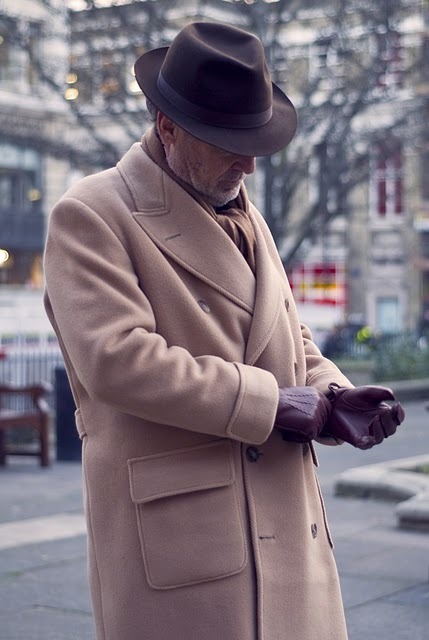
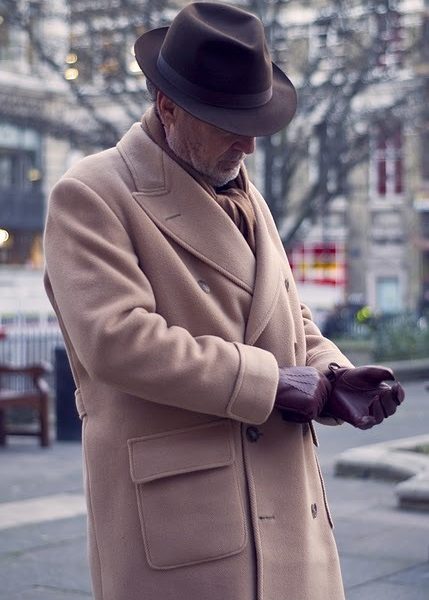
Depending on where you live, it may be time to start wearing gloves. When buying a pair, I recommend you avoid cotton, acrylic, and synthetic leathers; they’re neither warm nor durable. Wool or cashmere can work if they’re tightly knit. I wear Filson’s fingerless wool gloves when I go jogging (they also come in a full fingered variety). For people who are always on electronic devices, there’s also Freehands.

For something a bit sharper looking, try leather gloves. These can be made out of any number of animal skins. Peccary is luxurious and soft, while hairsheep is finer and less bulky. Deerskin has a “tacky” surface that’s good for gripping, but it’s a bit more rugged in appearance. There are also hogskin gloves, which are very hard-wearing.

Additionally, there are the linings. If you plan to use these in cold weather, you’ll want the inside of the gloves lined with cashmere or silk. Cashmere will be softer and warmer, but also a bit bulkier. If you’re going to wear them in a cool climate, opt for a pair that’s unlined. They won’t be as warm, but they’ll be more durable and fit better.

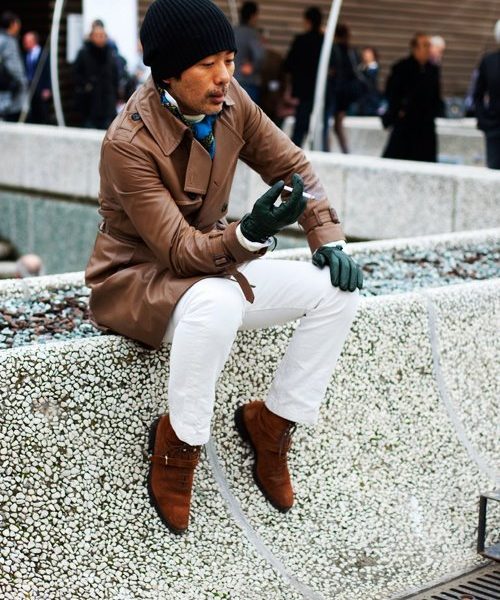
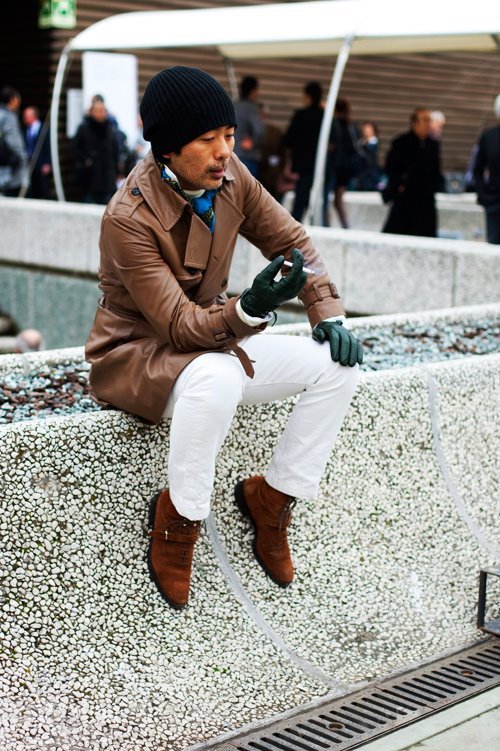
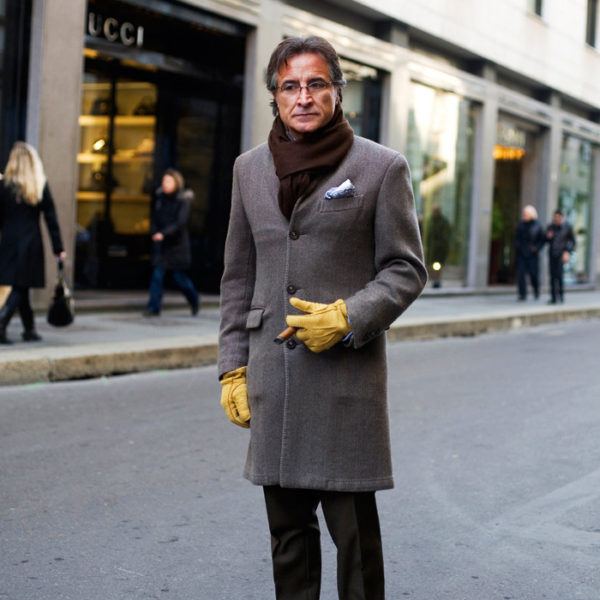
Colorwise, black and brown are the most versatile, but like with shoes and suits, I find black to be overrated. I have a few pairs of gloves that match the range of colors in my shoes - merlot, dark brown, mid-brown, and tan. When I want to add a bit of texture or visual interest, I wear dark green capeskin or grey suede lambskin. I also recently ordered some yellow chamois, which are the classic gentleman’s gloves, but they’ve yet to arrive.

As for where you can buy a a good pair, I recommend Dents and Pickett. American retailers such as Ralph Lauren, Brooks Brothers, Paul Stuart, Hickey Freeman, and Ben Silver also sell very good models. The upside to buying from them is that they often hold seasonal sales. For something a bit more affordable, Nordstrom’s house brand is a pretty good value. Finally, remember that the most important part of a glove is the fit - you want something that fits and flatters your hand. If you’re not able to find a proper pair, try getting custom gloves through Chester Jefferies or Madova. Both will make a glove for you if you send in a tracing of your hand, but I find that photocopies or scans work best.

I really like this ensemble. 

  • Heavy wool trousers with a textured nap and big cuffs.
  • Grey, single-breasted, flannel wool blazer.
  • Tattersall button-up shirt. 
  • Brown wool tie with white pindots.
  • Brown wool scarf with red and yellow detailing.
  • Drab olive green, military-inspired, field jacket with removable down vest.
  • And last, but not least, brown suede shoes. 

I might have opted for a different color scarf, perhaps dark red, just so there isn’t so much brown, but it’s an otherwise really nice fall look. The wools give it a lot of texture, the tattersall shirt is unique but not overpowering, and military field jacket makes for a nice contrast. Great stuff.  

(picture taken from Men’s Ex)

Suede Shoes

I’m a huge fan of suede shoes and wear them more or less year-round. The word “suede” comes from the French word “Suède,” which simply means Sweden. At one point, Swedish suede gloves were the most common form of luxury, and the French word for Sweden ended up being used for the leather itself.

Suede can be made from almost any leather. You often find it made from lambskin, goatskin, and calfskin. In Germany they make it from stag and in Louisiana, there’s a producer that makes alligator suede. To get the texture, the animal’s skin is buffed with an abrasive. This can be done to the grain side of the leather, which will give you a finer, more velvety texture, or on the flesh side, which will give you a slightly coarser feel. Each animal will produce a slightly different feel to the suede, however, so the variation isn’t just through top vs. flesh side usage.

I personally prefer finer, velvety suede. To examine the quality, I examine to see if the fibers of the nap are uniform in length and packed tightly together. If the nap is firm, dense, and compact, the suede will be a bit more resilient. I eschew suedes with longer naps, as I find that they get a bit ragged and develop bald spots over time. I also avoid any suede that feels a bit greasy.

Since it’s fall, I suggest that you try suede shoes with wool flannel, corduroy, and moleskin trousers. Those tend to have “softer” looking textures, and I think they look quite well next to suede. The above are just some of the options - oxfords, Norwegian split toe bluchers, chukka boots, field boots, double monks, and tassel loafers. I myself just ordered a pair of Crockett & Jones Belgraves in Polo suede from Pediwear and plan to wear it often on weekends. In being an oxford, this shoe is a bit dressy; in being made from suede, however, it’s also a bit casual. They’re the perfect way to look sharp in a non-business, casual setting, I think.

(Pictures above by MostExerent, Ethan Desu, Leffot, and Run of the Mill)

Your Fall/ Winter Scarf

As the temperatures begin to dip, it will be important for you to have a few scarves on hand. If it’s cold enough, you’ll obviously wear yours with an overcoat or some kind of heavy winter outerwear. If it’s not, however, a scarf can be even more important, as it may be your only source of warmth. 

When buying one, it’s important to pay attention to a few key things:

  • Material: Generally speaking, cashmere will be softer and warmer than wool or lambswool, but it really depends on the quality. A lambswool/ angora blend by Alex Begg, for example, will be nicer than any cheap cashmere. You can also get scarves in either silk or cotton, but those tend to not be as warm. Whichever you choose, I recommend staying away from acrylic. There are too many affordable, good scarves, made from natural materials, to justify buying an acrylic scarf. 
  • Nap and size: Pay attention to the size and nap. I personally prefer scarves to be around 70” long, and never go below 63”. As Will from A Suitable Wardrobe shows, if your scarf is too short, you won’t be able to tie it. You’ll also want to pay attention to the width. If your scarf is too thin, it will hang like a silly noodle around your neck. Lastly, note that rougher materials, such as some lambswools, will be more difficult to tie into knots.
  • Color and patterns: As I’ve written before, I think scarves are worn best when they complement, but not match, the rest of your ensemble. That means picking one with complementary colors or a secondary color that matches your jacket or coat. I personally find solid colored scarves, or those with plaids, windowpanes, and stripes, to be the easiest to wear, but you can also get scarves in Fair Isle, dip dye, or houndstooth designs. 

So with that, what are some of your best options? 

Of course, there are hundreds of good scarves to be had, so the above list isn’t meant to be exhaustive. If you’re on the market to buy one, however, the above can be a good place to start. 

Park & Bond asked me to write some more tips on seasonal storage, so I put something together. Check it out if you’re thinking about packing your summer clothes away.

Park & Bond asked me to write some more tips on seasonal storage, so I put something together. Check it out if you’re thinking about packing your summer clothes away.

Gilt has a wool/ cashmere blend scarf in that burnt orange color I talked about last week. I think it would look great next to navy or flannel grey jackets. If you wanted to incorporate burnt orange into your fall wardrobe, this might be an easy way to do it.
The scarf costs $59, but I don’t know anything about its quality. Fortunately, Gilt has a fairly easy return system, and shipping is only $6. Might be worth a try. You can check it out here.

Gilt has a wool/ cashmere blend scarf in that burnt orange color I talked about last week. I think it would look great next to navy or flannel grey jackets. If you wanted to incorporate burnt orange into your fall wardrobe, this might be an easy way to do it.

The scarf costs $59, but I don’t know anything about its quality. Fortunately, Gilt has a fairly easy return system, and shipping is only $6. Might be worth a try. You can check it out here.

The covert coat at Men’s Flair

Ochre, Burnt Orange, Rust, and Camel

It’s easy to wear color in the summer, but it takes a bit of thinking to do it in the fall. One way is to start with a foundation of your basic blues, browns, and grays, and then add one item from a non-traditional, but still autumnal, color. Racing green, burgundy, and eggplant can all be good. For example, a white oxford-cloth button-down shirt, navy sport coat, pair of grey trousers, and dark brown shoes would all look great with a racing green v-neck sweater. 

Some of my favorite autumnal colors, however, are in this muddy, orangish range that includes ochre, burnt orange, rust, and camel. I particularly like it in casual trousers such as chinos or corduroys. As you can see above, you can wear them with cream or charcoal colored sweaters, but I’ve also found that they work just as great with white button-up shirts and mid-grey sport coats.

If you already have your standard khakis chinos and dark brown corduroys, and you’re looking to incorporate some more color into your fall wardrobe, pants in this kind of muddy, orangish color can be a good place to start.

Q and Answer: Should I Wear a Sweater with a Suit?
Peter asks: As the weather gets cooler, but still too warm for topcoats, do you  think it’s appropriate/advisable to layer v-neck sweaters with suits in  a business setting? I guess the idea would be to use a sweater-vest  (!!!) to avoid over-stuffing the sleeves of a suit jacket.
Absolutely.
The sweater (or sweater-vest, if you prefer your arms unencumbered) is most at home with a sportcoat ensemble like the one that Jack Nicholson is wearing above. That’s a classic look (particularly with a bow tie, as it reduces the amount of shirt showing in the same way a three-piece would). It’s comfortable and smart.
You can wear a similar combination with a suit, but you should be aware that it will make your ensemble a little less formal. I wouldn’t necessarily wear a sweater vest to a board meeting, but I think it would be fine even in most conservative business dress environments.
When you’re picking what sweater to go for, choose a more muted tone (say gray or navy) if you’re thinking of wearing it with a suit. You want the sweater to contrast significantly with the jacket, but you don’t necessarily want it to stand out. You should also consider a finer, harder-finished sweater - say a lightweight merino wool - especially with harder-finished suiting.
You also want to remember the cut of the jacket: if a jacket is cut very close, as some suit jackets are, adding a layer could lead to a stuffed-sausage situation. When you’re having your suit jackets altered, be sure that your tailor knows to leave a little room for a sweater (or wear a sweater to your fitting).
An added advantage to this combination is that it lends a somewhat more finished look to your outfit when your jacket is off. Since many men doff their coats upon stepping into their offices, this can be a nice bonus. This is particularly true when the office is a bit too cool for shirtsleeves.

Q and Answer: Should I Wear a Sweater with a Suit?

Peter asks: As the weather gets cooler, but still too warm for topcoats, do you think it’s appropriate/advisable to layer v-neck sweaters with suits in a business setting? I guess the idea would be to use a sweater-vest (!!!) to avoid over-stuffing the sleeves of a suit jacket.

Absolutely.

The sweater (or sweater-vest, if you prefer your arms unencumbered) is most at home with a sportcoat ensemble like the one that Jack Nicholson is wearing above. That’s a classic look (particularly with a bow tie, as it reduces the amount of shirt showing in the same way a three-piece would). It’s comfortable and smart.

You can wear a similar combination with a suit, but you should be aware that it will make your ensemble a little less formal. I wouldn’t necessarily wear a sweater vest to a board meeting, but I think it would be fine even in most conservative business dress environments.

When you’re picking what sweater to go for, choose a more muted tone (say gray or navy) if you’re thinking of wearing it with a suit. You want the sweater to contrast significantly with the jacket, but you don’t necessarily want it to stand out. You should also consider a finer, harder-finished sweater - say a lightweight merino wool - especially with harder-finished suiting.

You also want to remember the cut of the jacket: if a jacket is cut very close, as some suit jackets are, adding a layer could lead to a stuffed-sausage situation. When you’re having your suit jackets altered, be sure that your tailor knows to leave a little room for a sweater (or wear a sweater to your fitting).

An added advantage to this combination is that it lends a somewhat more finished look to your outfit when your jacket is off. Since many men doff their coats upon stepping into their offices, this can be a nice bonus. This is particularly true when the office is a bit too cool for shirtsleeves.