Preventing Spotting on Shell CordovanI’m a big fan of wearing shell cordovan on rainy days. In addition to being a beautiful, lustrous leather, shell is also a dense material that’s packed with oils and waxes, making it much more water resistant than suede or calfskin. Plus, unlike your typical pair of rubber rain boots, shell cordovan boots can do double duty on both dry and wet days – pairing just as well with your fine lambskin bombers as they do with heavy raincoats and parkas.The only problem: shell can spot once it gets wet, much like you see above. If subjected to the rain long enough, those spots can turn into welts.Luckily, the damage isn’t permanent. You can get rid of those spots by letting your shoes dry naturally for a day, and then brushing them down with a soft, horsehair brush. To take care of any bumps, burnish your shoes with the backside of a metal spoon. The process can take up to five minutes, but with enough effort, your shoes will restore to their original condition. Of course, needing to do that extra five minutes of work can prevent you from wearing your boots at all, so a couple of months ago, I picked up a bottle of Alden’s Leather Defender. It’s essentially a water protectant for calfskins and shell cordovan. Not that shell needs it to shed water – just to prevent those spots from happening in the first place. To apply, spray the solution on a soft cloth, then gently wipe your shoes. Afterwards, buff them out to a high shine and you’ll be ready to go. I’ve been wearing my protected shell boots this past weekend. After a full day out in the rain, I was glad to see they didn’t spot one bit. My only concern: in protecting the leather from water, I wonder if it also prevents leather from soaking up conditioners. For what it’s worth, dozens of Alden fans seem to use it without any ill-effects. I don’t know if I’d use this on calfskin, but shell cordovan is already so full of oils and waxes, I’ve been happy to save myself that extra work of brushing.(Photo via mg428)

Preventing Spotting on Shell Cordovan

I’m a big fan of wearing shell cordovan on rainy days. In addition to being a beautiful, lustrous leather, shell is also a dense material that’s packed with oils and waxes, making it much more water resistant than suede or calfskin. Plus, unlike your typical pair of rubber rain boots, shell cordovan boots can do double duty on both dry and wet days – pairing just as well with your fine lambskin bombers as they do with heavy raincoats and parkas.

The only problem: shell can spot once it gets wet, much like you see above. If subjected to the rain long enough, those spots can turn into welts.

Luckily, the damage isn’t permanent. You can get rid of those spots by letting your shoes dry naturally for a day, and then brushing them down with a soft, horsehair brush. To take care of any bumps, burnish your shoes with the backside of a metal spoon. The process can take up to five minutes, but with enough effort, your shoes will restore to their original condition. 

Of course, needing to do that extra five minutes of work can prevent you from wearing your boots at all, so a couple of months ago, I picked up a bottle of Alden’s Leather Defender. It’s essentially a water protectant for calfskins and shell cordovan. Not that shell needs it to shed water – just to prevent those spots from happening in the first place. 

To apply, spray the solution on a soft cloth, then gently wipe your shoes. Afterwards, buff them out to a high shine and you’ll be ready to go. I’ve been wearing my protected shell boots this past weekend. After a full day out in the rain, I was glad to see they didn’t spot one bit. 

My only concern: in protecting the leather from water, I wonder if it also prevents leather from soaking up conditioners. For what it’s worth, dozens of Alden fans seem to use it without any ill-effects. I don’t know if I’d use this on calfskin, but shell cordovan is already so full of oils and waxes, I’ve been happy to save myself that extra work of brushing.

(Photo via mg428)

Getting Tan in NovemberTan shoes can be tricky to wear, especially during the colder months. Most men rely on dark jackets with lighter-colored trousers and dark shoes, so inverting that combination can feel unnatural. Tan shoes can be easier to pull off in the spring and summer seasons, when everything we wear naturally becomes a bit brighter, but for the brown tweeds and grey flannel trousers most of us rely on for fall and winter, darker colored footwear is almost always a better choice. There are exceptions though. If you want to add a little variety to your wardrobe, try a pair of traditional country shoes, such as hefty, double-soled boots or Norwegian split toes. In tan suede or pebble grain leather, they go great with brown moleskin trousers, lighter-colored jackets, and light-blue shirts. The textures and patterns in the picture above, for example, keep things autumnal, while the color combination is a bit more interesting than your usual mix of dark browns, grays, and navy blues. You can also wear tan shoes with khaki or olive chinos and a mid-brown sport coat, or some jeans and a causal jacket. The only caveat when searching for the right pair: watch out for tans that are either too bright or have red undertones. Those that are subdued and have earthy, cooler yellows and greens at their base are often easier to wear, especially if most of your wardrobe also relies on cool colors (e.g. an earthier tweed, rather than a warm, reddish tweed). Edward Green’s burnt pine is an example of a good, versatile tan, while Allen Edmond’s walnut can be tougher to pull off. For a versatile tan that’s (relatively) affordable, look into Loake’s 1880 line. I dig these pebble grained chukkas. 

Getting Tan in November

Tan shoes can be tricky to wear, especially during the colder months. Most men rely on dark jackets with lighter-colored trousers and dark shoes, so inverting that combination can feel unnatural. Tan shoes can be easier to pull off in the spring and summer seasons, when everything we wear naturally becomes a bit brighter, but for the brown tweeds and grey flannel trousers most of us rely on for fall and winter, darker colored footwear is almost always a better choice.

There are exceptions though. If you want to add a little variety to your wardrobe, try a pair of traditional country shoes, such as hefty, double-soled boots or Norwegian split toes. In tan suede or pebble grain leather, they go great with brown moleskin trousers, lighter-colored jackets, and light-blue shirts. The textures and patterns in the picture above, for example, keep things autumnal, while the color combination is a bit more interesting than your usual mix of dark browns, grays, and navy blues. You can also wear tan shoes with khaki or olive chinos and a mid-brown sport coat, or some jeans and a causal jacket. 

The only caveat when searching for the right pair: watch out for tans that are either too bright or have red undertones. Those that are subdued and have earthy, cooler yellows and greens at their base are often easier to wear, especially if most of your wardrobe also relies on cool colors (e.g. an earthier tweed, rather than a warm, reddish tweed). Edward Green’s burnt pine is an example of a good, versatile tan, while Allen Edmond’s walnut can be tougher to pull off. For a versatile tan that’s (relatively) affordable, look into Loake’s 1880 line. I dig these pebble grained chukkas

Hyp-knot-ic How-To on Shoe LacingI’ve watched this gif of a shoe slowly lacing itself over and over again. It’s mesmerizing. It’s part of a Bloomberg piece by Stephen Pulvirent on how to lace and tie your shoes–Stephen recommends slightly different lace styles for different shoe styles, and I’m inclined to agree. Although for knots, I prefer the reef knot recommended in Put This On Episode 2. The tip of pulling the second loop from the other side? Changes lives. Bonus in that clip? Official Put This On jumpsuit sighting.-Pete

Hyp-knot-ic How-To on Shoe Lacing

I’ve watched this gif of a shoe slowly lacing itself over and over again. It’s mesmerizing. It’s part of a Bloomberg piece by Stephen Pulvirent on how to lace and tie your shoes–Stephen recommends slightly different lace styles for different shoe styles, and I’m inclined to agree. Although for knots, I prefer the reef knot recommended in Put This On Episode 2. The tip of pulling the second loop from the other side? Changes lives. Bonus in that clip? Official Put This On jumpsuit sighting.

-Pete

“Always wear shoes that are good for running or fighting.” — Joe Strummer
Q & Answer: Fear and Clothing (aka How to Take Care of Your Suede Shoes)Nathan writes: I recently bought a pair of Alden unlined chukkas as a graduation present for myself. The process wasn’t without a lot of anxiety, however, over the ridiculousness of spending this much money on shoes. Now I’m afraid of wearing these boots because I don’t want to ruin them. Do you have any advice on proper shoe care, so I can actually enjoy my purchase?There’s this old story about George Hoby, a famous bootmaker in London during the early 19th century. Supposedly, a customer walked into his shop one day complaining about a pair of split top boots. Hoby took one look and them and exclaimed: “Good God! You’ve been walking in them!”Shoes are meant to be worn, of course, and the good news is that when you buy something well-made, they’ll only look better with age. That goes for everything from dress shoes to work boots, suede to shell cordovan. Like a pair of raw jeans, good leather looks better once it has some character beaten into it. That said, there are good and bad forms of wear-and-tear. Here’s how to make sure you get the good kind:Practice Basic Shoe Care: Rotate your shoes so you’re not wearing the same pair two days in a row. The sweat from your feet can break down the leather, so give your shoes a day to dry before wearing them again. Also, insert cedar shoe trees when you’re not wearing your shoes. Good ones can be had at Sierra Trading Post for about $12/ pair (just use their DealFlyer coupons).Use a Waterproofer: Protect your shoes from dirty roadside splashes and spilled drinks by spraying the uppers down with a silicone-free waterproofer, such as the ones sold by Allen Edmonds and Tarrago. Check out this video from Leffot, where they pour a full cup of coffee on ~$500 suede shoes after spraying them with a protectant. Seriously, this stuff is like magic. Clean Them Up: If your shoes start to get dirty, brush them down with a suede brush and eraser. You can also give them a more serious cleaning by washing them with a 50/ 50 mixture of water and Saphir’s Omni Nettoyanat Shampoo, scrubbing them with a suede brush as you go, and then letting them dry naturally outside in the sun. For more serious stains, put some kind of absorbent powder on the area, such as baking soda, talcum powder, or Terre de Sommieres. Those three steps should take care of most jobs. Other than that, just enjoy your shoes. Suede will naturally get a bit dirty, and even bald in certain places over time, but that’s all part of the charm. Once the soles grind down, send them to Alden or B. Nelson for a resoling. With good care, your chukkas should last you ten or fifteen years (and look even better than the day you first got them). (Photo via Yo-han)

Q & Answer: Fear and Clothing (aka How to Take Care of Your Suede Shoes)

Nathan writes: I recently bought a pair of Alden unlined chukkas as a graduation present for myself. The process wasn’t without a lot of anxiety, however, over the ridiculousness of spending this much money on shoes. Now I’m afraid of wearing these boots because I don’t want to ruin them. Do you have any advice on proper shoe care, so I can actually enjoy my purchase?

There’s this old story about George Hoby, a famous bootmaker in London during the early 19th century. Supposedly, a customer walked into his shop one day complaining about a pair of split top boots. Hoby took one look and them and exclaimed: “Good God! You’ve been walking in them!”

Shoes are meant to be worn, of course, and the good news is that when you buy something well-made, they’ll only look better with age. That goes for everything from dress shoes to work boots, suede to shell cordovan. Like a pair of raw jeans, good leather looks better once it has some character beaten into it. 

That said, there are good and bad forms of wear-and-tear. Here’s how to make sure you get the good kind:

  • Practice Basic Shoe Care: Rotate your shoes so you’re not wearing the same pair two days in a row. The sweat from your feet can break down the leather, so give your shoes a day to dry before wearing them again. Also, insert cedar shoe trees when you’re not wearing your shoes. Good ones can be had at Sierra Trading Post for about $12/ pair (just use their DealFlyer coupons).
  • Use a Waterproofer: Protect your shoes from dirty roadside splashes and spilled drinks by spraying the uppers down with a silicone-free waterproofer, such as the ones sold by Allen Edmonds and Tarrago. Check out this video from Leffot, where they pour a full cup of coffee on ~$500 suede shoes after spraying them with a protectant. Seriously, this stuff is like magic. 
  • Clean Them Up: If your shoes start to get dirty, brush them down with a suede brush and eraser. You can also give them a more serious cleaning by washing them with a 50/ 50 mixture of water and Saphir’s Omni Nettoyanat Shampoo, scrubbing them with a suede brush as you go, and then letting them dry naturally outside in the sun. For more serious stains, put some kind of absorbent powder on the area, such as baking soda, talcum powder, or Terre de Sommieres. Those three steps should take care of most jobs. 

Other than that, just enjoy your shoes. Suede will naturally get a bit dirty, and even bald in certain places over time, but that’s all part of the charm. Once the soles grind down, send them to Alden or B. Nelson for a resoling. With good care, your chukkas should last you ten or fifteen years (and look even better than the day you first got them). 

(Photo via Yo-han)

Stockholm: Skoaktiebolaget (Sp?)

As I wandered around Stockholm in a jetlagged haze, I managed to throw open the door on a remarkable little shoestore. Skoaktiebolaget can’t be more than a couple hundred square feet, but the walls are lined with leather treasures.

The shop carries the absolute best in men’s shoes, from the reasonably priced Carmina to the astronomically priced (and astronomically beautiful) St. Crispin’s. The patient man at the counter was unbothered by my browsing, and indeed was notably friendly, a pleasant change of pace in such a high-end shop. The store does a brisk online business, as well, and takes care of the shoes they sell - a man was bringing his in for what sounded like new heels.

Shops like this one aren’t usually on my shopping itinerary - I feel like I’m taunting myself - but Skoaktiebolaget was particularly unpretentious and lovely. If only I could spell the name. Or pronounce it. Or remember it. Or…

Travel Shoes: How To Pick ‘Em & What I Picked

I’m never more vexed than when I’m trying to figure out what shoes to bring on a trip, and my recent trip to Europe was no exception. I knew I’d have to wear business casual for a series of conferences, but also that I’d be walking a lot. Plus, I needed gym shoes in case I managed to work out on the road.

I settled on two pairs (bringing more than two pairs of shoes on the road is folly). For business casual, I brought Dr. Martens’ “Sawyer” boots, in brown pebble grain. For working out and casual wear, I brought a pair of grey New Balance 574s. I couldn’t be happier with my decision.

The Docs are my first pair since the mid-90s, when all students at San Francisco arts high schools were required to own several pairs by law. (Back then, I had purple, red, forest green, and even a pair in disco sparkles that I bought at a garage sale being held by a more reasonable person.) For a couple of years, I’ve been thinking about buying Dainite-soled, pebble-grained chukkas by a fine British maker like Crockett & Jones, but hadn’t been able to convince myself to pull the trigger on $600 boots. The Docs, which ran about $125, were a fallback position.

These boots aren’t super-fine footwear like the C&Js, but they really performed admirably on my trip. They’re comfortable and good-looking, if you’re cool with the look and feel of Dr. Martens’ signature “bouncing sole.” The boot is sharp enough to wear with a casual sportcoat and chinos or jeans, but comfortable enough for my six and eight hour days of walking around Copenhagen. The quality is only fair - the inside of the heel is made of some sort of leather composite that’s wearing alarmingly quickly, and they scuff shockingly easily - but the shoes’ grain hides the mediocre quality of the leather, and if what I hear from punk rock and mod pals is true, they’ll hold up for quite a long time, even if they aren’t quite as nice as they used to be when they were made in the UK.

The New Balances’ simple aesthetic was nice enough to pair with sharp casual wear, and they’re incredibly comfortable. Normally I work out in a pair of Nike Flyknit Lunar 3s, which I love, but I’d feel a little goofy wearing them around town, especially with a wardrobe chosen to match with brown Docs. I wouldn’t choose 574s to wear in a footrace, but they’re very solid shoes which are comfortable for very long walks.

It was great to have two pairs of shoes to rotate on my trip - both for the business-y bits and the general tourism. With all the walking I did, I think I came home svelter than I left - quite an accomplishment given some of the meals I ate. Thanks, shoes!

The Science in Our SneakersPRI’s Science Friday explores the history of innovation and technology in our everyday sneakers. Interestingly, while sneakers today are more technologically advanced (lighter weight, better for our knees, etc), they’re not as durable as they were a generation or two ago. Hear the show at their site.

The Science in Our Sneakers

PRI’s Science Friday explores the history of innovation and technology in our everyday sneakers. Interestingly, while sneakers today are more technologically advanced (lighter weight, better for our knees, etc), they’re not as durable as they were a generation or two ago. Hear the show at their site.

The Wonderful World of Slip-On ShoesThe weather has been so miserable lately. Everyone is waiting for fall to arrive, but with temperatures being in the mid-90s, things still feel like the middle of summer. I’m still lounging around these days in chinos and linen shirts – and the occasional linen suit when I can bear it. The perfect kind of footwear for this weather? Slip-on shoes – simple, carefree, and supremely comfortable when you’re trying to just stay cool. Here are some of my favorite styles:Penny Loafers: An all-American classic, these can be as casual or dressy as you want them to be. Something like these round-toe Rancourts will go well with jeans, while sleeker designs are sometimes better for casual suits and sport coats. Just keep them away from dark business suits, as they can be considered too casual in some circles. Tassel Loafers: A little more aggressively trad than their penny loafer cousins. I mostly wear mine with Shetland sweaters and corduroy pants in the fall, but they also go really well with casual suits in the summer. I prefer American brands in this case, such as Alden and Allen Edmonds. Camp Mocs and Trail Mocs: Another American classic, although casual enough that you’ll only want to keep them to chinos, jeans, and shorts. Mine come from Oak Street Bootmakers, but you can also find them from labels such as Rancourt, Quoddy, and Eastland (stick to the higher-end Made-in-Maine line). Arrow and Town View can also make you camp mocs with cushy crepe soles. Turkish Slippers: For a more casual style, check out Kilim slippers, which are made from Turkish tapestries. They’re available at Kilim Arts. For a slightly quieter style, Sabah has a slightly modified version of traditional Turkish slippers. Gear Patrol did a nice feature on them a while back.Minimalist Slip-Ons: No fuss, all leather slip-ons can be had through Singh & Sons. Their site is under construction at the moment, but you can check their Instagram to see photos. The Japanese label moto also has great looking leather slip-ons, but they’re hard to buy in the US (try going through a proxy). Espadrilles: The style we associate with an easy life on the French Riviera. Best worn with shorts or slim chinos, ideally at the beach, by the poolside, or when just generally lounging. Check Ropey Soles, A Suitable Wardrobe, and No Man Walks Alone. For an espadrille alternative, try Rivieras Leisure Shoes (I like the ones with tighter weaves). Huaraches: Like with Panama hats, some of these sandals are made with such fine weaves, they approach art. This guy maintains a blog, webstore, and directory just dedicated to the style. There’s also a beautiful documentary about a huarache maker here.Driving Mocs: Great for quick errands, but you don’t want to walk too long in them – those soles just don’t last long on hot concrete. On the upside, they have a bit of sophisticated Italian cool, especially if you wear them with slim-tailored trousers and shirts. Ones from Car Shoe can be found on sale pretty easily for about $250/ pair. For other options, check A Suitable Wardrobe, Rancourt, and Arfango on Yoox. Birkenstocks: A crunchy, neo-hippie shoe that has recently been adopted by the fashion crowd. The Arizona and Boston are the most popular models. See Pete’s recent Real People feature for style inspiration. Vans: A classic skate shoe that has been endlessly copied by fancier labels. These Engineered Garments x Vans collabs have been my go-to sneakers this past summer. (pictured above: Ernest Hemmingway’s collection of penny loafers)

The Wonderful World of Slip-On Shoes

The weather has been so miserable lately. Everyone is waiting for fall to arrive, but with temperatures being in the mid-90s, things still feel like the middle of summer. I’m still lounging around these days in chinos and linen shirts – and the occasional linen suit when I can bear it. The perfect kind of footwear for this weather? Slip-on shoes – simple, carefree, and supremely comfortable when you’re trying to just stay cool. Here are some of my favorite styles:

  • Penny Loafers: An all-American classic, these can be as casual or dressy as you want them to be. Something like these round-toe Rancourts will go well with jeans, while sleeker designs are sometimes better for casual suits and sport coats. Just keep them away from dark business suits, as they can be considered too casual in some circles
  • Tassel Loafers: A little more aggressively trad than their penny loafer cousins. I mostly wear mine with Shetland sweaters and corduroy pants in the fall, but they also go really well with casual suits in the summer. I prefer American brands in this case, such as Alden and Allen Edmonds
  • Camp Mocs and Trail Mocs: Another American classic, although casual enough that you’ll only want to keep them to chinos, jeans, and shorts. Mine come from Oak Street Bootmakers, but you can also find them from labels such as Rancourt, Quoddy, and Eastland (stick to the higher-end Made-in-Maine line). Arrow and Town View can also make you camp mocs with cushy crepe soles. 
  • Turkish Slippers: For a more casual style, check out Kilim slippers, which are made from Turkish tapestries. They’re available at Kilim Arts. For a slightly quieter style, Sabah has a slightly modified version of traditional Turkish slippers. Gear Patrol did a nice feature on them a while back.
  • Minimalist Slip-Ons: No fuss, all leather slip-ons can be had through Singh & Sons. Their site is under construction at the moment, but you can check their Instagram to see photos. The Japanese label moto also has great looking leather slip-ons, but they’re hard to buy in the US (try going through a proxy). 
  • Espadrilles: The style we associate with an easy life on the French Riviera. Best worn with shorts or slim chinos, ideally at the beach, by the poolside, or when just generally lounging. Check Ropey Soles, A Suitable Wardrobe, and No Man Walks Alone. For an espadrille alternative, try Rivieras Leisure Shoes (I like the ones with tighter weaves). 
  • Huaraches: Like with Panama hats, some of these sandals are made with such fine weaves, they approach art. This guy maintains a blog, webstore, and directory just dedicated to the style. There’s also a beautiful documentary about a huarache maker here.
  • Driving Mocs: Great for quick errands, but you don’t want to walk too long in them – those soles just don’t last long on hot concrete. On the upside, they have a bit of sophisticated Italian cool, especially if you wear them with slim-tailored trousers and shirts. Ones from Car Shoe can be found on sale pretty easily for about $250/ pair. For other options, check A Suitable Wardrobe, Rancourt, and Arfango on Yoox
  • Birkenstocks: A crunchy, neo-hippie shoe that has recently been adopted by the fashion crowd. The Arizona and Boston are the most popular models. See Pete’s recent Real People feature for style inspiration. 
  • Vans: A classic skate shoe that has been endlessly copied by fancier labels. These Engineered Garments x Vans collabs have been my go-to sneakers this past summer. 

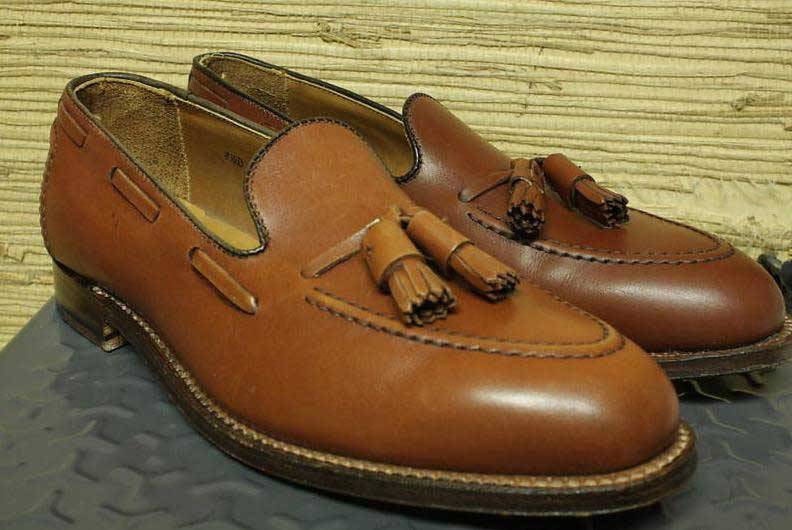
(pictured above: Ernest Hemmingway’s collection of penny loafers)

New and Emerging Workboot Options

Although the craze for workwear and all things Americana seems to have died down, workboots remain one of the more useful options for guys who need something sturdy and handsome. Even if you don’t care to dress like a lumberjack, you can pair workboots with Barbour jackets, leather bombers, military field coats, and peacoats. We rounded up fourteen solid options last year, going from more affordable models to expensive niche lines. Since publishing that post, three more options have come up – all of which are appreciably lower-priced than some of their direct competitors. 

  • Sagara ($198): A relatively new Indonesian company offering slim-lasted workboots with chunky welts. Available in both made-to-order and ready-to-wear options. The pricing and styles look very attractive, although you’ll want to do your due diligence when ordering (only because making returns with an overseas company can be difficult). This Reddit user has a review of their Sagara boots both when they were new and nearly five-months worn
  • Gustin ($199): Gustin is using their online crowd sourcing model to offer classically styled, made-in-America workboots at an impressive price of $199. Produced at the same Arkansas factory that has manufactured for Rag & Bone and Wolverine, these boots are Goodyear welted, made from Horween leathers, and offer nice details, such as leather linings and speed hooks. Gustin tells me they plan to offer this same workboot in other materials in the future (such as kudu and roughout suede), as well some entirely new models (such as a chukka they’re working on). 
  • Truman ($410): OK, not exactly affordable, but appreciably lower-priced than their direct competitor Viberg. Truman is a small, Pennsylvania shop operating on just three people. Like Viberg’s offerings, Truman’s boots nicely straddle the line between fashion and true workwear. Boots are made using a Pacific Northwest construction method called a stitchdown, where the uppers are literally stitched down to the sole, and the uppers are all hand-lasted. Since everything is made-to-order, you can easily ask for small changes to the designs with little upcharge (e.g. request an unstructured or structured toe, or ask for changes to the cap toe, pull tab, and speed hook design details). Vince Romano, the co-founder of the shop, tells me that he has other models planned for the future, including variations on the mid-century service boot, a tall military boot, and a masculine looking Chelsea.

Disclosure: Gustin is a sponsor of Put This On. However, this post is not paid promotion. Our editorial policies can be read here.